
Short Answer
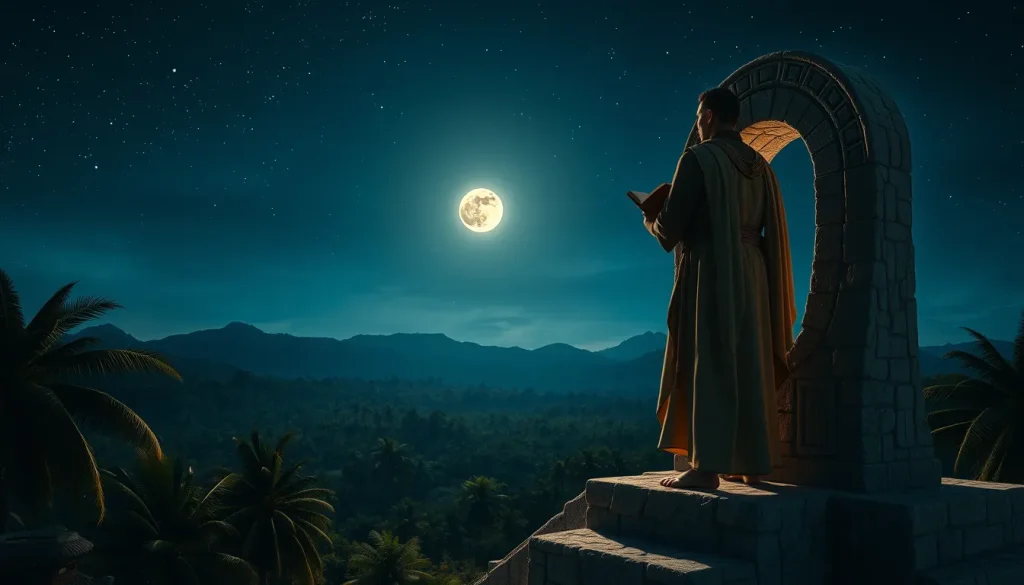
For the ancient Maya, the sky was not merely a backdrop but a dynamic realm of divine activity that directly influenced terrestrial events. Among the celestial bodies observed with rigorous precision, Venus held a preeminent position, second only to the Sun and Moon in cosmological importance. The planet’s complex synodic cycle, alternating between morning and evening star phases, was interpreted as a period of danger and power. This astronomical phenomenon was inextricably linked to the timing of warfare, ritual sacrifice, and political legitimization among the Maya city-states. Understanding this connection requires an examination of both the astronomical capabilities of the Maya and the epigraphic evidence recorded on stone monuments and codices.
The influence of Venus on Maya warfare was not superstitious guesswork but rather a calculated component of statecraft. Rulers utilized the planet’s appearances to justify military campaigns, framing conflicts as cosmologically mandated events. The synchronization of human action with celestial cycles was believed to ensure success and maintain cosmic order. This practice extended beyond the Maya to other Mesoamerican societies, including the Aztecs, indicating a shared regional understanding of Venus as a harbinger of conflict and sacrifice. The integration of astronomy into politics demonstrates the sophistication of Maya intellectual achievements and their worldview where the celestial and terrestrial realms were deeply interconnected.
Main Explanation
The Venus cycle relevant to Maya warfare is the synodic period, which averages 584 days. This cycle encompasses the planet’s visibility as the Evening Star, its disappearance into superior conjunction behind the Sun, its reappearance as the Morning Star, and its disappearance into inferior conjunction. The most critical phase for warfare was the heliacal rising of Venus as the Morning Star. This event, where Venus first becomes visible in the pre-dawn sky after a period of invisibility, was viewed as a moment of heightened celestial power and potential danger. The rays of the Morning Star were metaphorically associated with spears or arrows, suggesting an aggressive influence upon the earth.
Maya rulers and priests tracked these cycles using sophisticated astronomical tables, such as those found in the Dresden Codex. These tables allowed them to predict Venus’s appearances with remarkable accuracy over long periods. When a heliacal rising coincided with other calendrical auspices, it was deemed an opportune time to launch military attacks. These events were often recorded on stelae using specific glyphs that denote star warfare. The intention was not merely to win a battle but to align the polity with the divine forces represented by the planet. By acting in concert with Venus, rulers demonstrated their ability to channel cosmic power, thereby reinforcing their authority and divine right to rule.
The association between Venus and warfare also extended to ritual sacrifice. Captives taken during campaigns initiated under Venusian auspices were often sacrificed to commemorate the event. This practice served to release energy back into the cosmos, maintaining the balance required for agricultural fertility and societal stability. The connection between Venus, rain, maize, warfare, and sacrifice suggests a complex web of beliefs where celestial events governed the essentials of life and death. Thus, the timing of warfare was a ritual act intended to secure the prosperity of the community through alignment with celestial cycles.
Evidence & Sources
Archaeological and epigraphic evidence provides substantial support for the link between Venus and Maya warfare. The primary source of information comes from hieroglyphic inscriptions on monuments found at major Classic period sites such as Tikal, Calakmul, and Caracol. These inscriptions often record dates alongside specific glyphs associated with celestial events. One of the most significant symbols is the “Star War” glyph, which depicts a star over a shell or earth symbol. This glyph is frequently associated with records of military conquests and the installation of new rulers following conflicts.
Scholarly reassessment of the “Star War” glyph highlights the agency of Maya rulers in utilizing astrology. While earlier interpretations might have suggested a deterministic view where stars compelled action, current research emphasizes how rulers actively used these celestial omens to legitimize political agendas. The glyph serves as a historical marker, indicating that the warfare was conducted under specific astrological conditions. Furthermore, the Venus “Shell-Over-Star” hieroglyph has been examined specifically for its connection to warfare. This symbol reinforces the idea that Venus was not just observed but was integral to the iconography of power and conflict.
The Dresden Codex, a Postclassic Maya manuscript, contains detailed tables for tracking Venus. These pages include almanacs that prescribe rituals and activities based on the planet’s position. The codex illustrates the continuity of these beliefs from the Classic into the Postclassic period. Additionally, architectural alignments at sites like Chichén Itzá, specifically the Caracol observatory, suggest that buildings were oriented to track Venus’s extreme positions. This architectural evidence complements the textual data, showing that the observation of Venus was institutionalized within the physical landscape of Maya cities. Together, these sources confirm that Venus was a central component in the planning and execution of warfare and ritual timing.
Deep Dive Analysis
Celestial Object
Venus is the brightest natural object in the night sky after the Moon. For the Maya, it was not a single entity but a dual manifestation: the Evening Star and the Morning Star. These manifestations were often associated with different deities or aspects of the same deity, possessing distinct attributes. The Morning Star, in particular, was linked to warfare and danger, while the Evening Star had connections to other cosmic forces. The planet’s brightness and variability made it a potent symbol for divine intervention in human affairs.
Observational Cycle
The synodic cycle of Venus lasts approximately 584 days. This period is divided into phases of visibility and invisibility. The Maya recognized that five Venus cycles equaled eight solar years (5 x 584 = 2920 days; 8 x 365 = 2920 days). This mathematical relationship allowed them to integrate Venus cycles into their broader calendar systems. The heliacal rising, marking the end of inferior conjunction, was the most watched event. Precision in predicting this moment was crucial for scheduling rituals and military actions.
How Maya Observed It
Maya astronomers, who were often members of the priesthood or ruling elite, observed Venus using naked-eye techniques. They likely used horizon markers and specialized architecture to track the planet’s rising and setting points. The Caracol structure at Chichén Itzá contains windows and shafts aligned to Venus’s extreme northern and southern setting positions. These observations were recorded in codices and on stone monuments, creating a long-term database of celestial movements that could be used for prophecy and planning.
Archaeological/Textual Evidence
The primary textual evidence comes from the Dresden Codex Venus Tables and Classic period stelae. The “Star War” glyph appears frequently in contexts describing military victories. For example, inscriptions at Tikal and Calakmul record dates of battles that correlate with Venus risings. The Venus “Shell-Over-Star” hieroglyph is another key piece of evidence, examined in thesis research as a specific symbol linking the planet to warfare. These inscriptions provide dates that modern astronomers can verify, confirming the accuracy of Maya records.
Calendar Connection
Venus cycles were interlocked with the Maya Calendar Round and Long Count. The 584-day cycle was integrated with the 260-day sacred calendar (Tzolk’in) and the 365-day solar calendar (Haab’). This integration created specific days when Venus phenomena coincided with significant calendrical dates. These intersections were considered particularly powerful or dangerous. The mathematical sophistication required to maintain this synchronization over centuries demonstrates the high level of Maya astronomical knowledge.
Architecture Connection
Maya architecture often reflects astronomical knowledge. Observatories like the Caracol were designed to monitor celestial bodies. Temples and pyramids were sometimes oriented to align with the rising or setting of Venus on specific dates. This architectural alignment sanctified the space, turning the city itself into a instrument of cosmic observation. It ensured that the rulers residing within were constantly aligned with the movements of the gods in the sky.
Cultural Meaning
Culturally, Venus represented a force of disruption and renewal. Its appearance as the Morning Star was seen as a time when the cosmos was vulnerable to conflict. Warfare conducted during this time was believed to harness this energy. The association with rain and maize indicates that Venus was also tied to agricultural cycles. Warfare and sacrifice were thus linked to fertility, suggesting that conflict was a necessary mechanism to ensure the continuation of life and the favor of the gods.
Uncertainty/Debate
While the connection between Venus and warfare is well-supported, debates remain regarding the extent of this influence. Some scholars argue that Venus was the primary leader of Maya warfare, while others suggest it was one of several factors including political and economic motives. Recent reassessments of the “Star War” glyph emphasize human agency, suggesting rulers used astrology strategically rather than being controlled by it. Additionally, the exact identification of deities associated with Venus varies across different regions and time periods within Mesoamerica. Ongoing research continues to refine our understanding of how these beliefs evolved over the three millennia before the Spanish Conquest.
FAQ
Why was Venus considered dangerous by the Maya?
Venus was considered dangerous primarily during its heliacal rising as the Morning Star. The Maya believed the planet's rays acted like spears or arrows that could bring harm, disease, or conflict to the earth, necessitating ritual protection and timed warfare.
What is the Star War glyph?
The Star War glyph is a Maya hieroglyphic symbol that typically depicts a star (often Venus) over a shell or earth sign. It is used in inscriptions to mark dates of significant military campaigns or conquests linked to astrological events.
Did Venus cause the warfare?
Archaeological evidence suggests Venus did not magically cause warfare but provided ritual timing. Rulers used the planet's cycles to legitimize conflicts, aligning political agendas with cosmological events to ensure divine favor and public support.
How accurate were Maya Venus observations?
The Maya acquired quite accurate knowledge about the regularities of the planet's apparent motion. Their calculations in the Dresden Codex allowed them to predict Venus cycles over long periods with minimal error, integrating them into their calendar systems.

Leave a Reply