
Short Answer
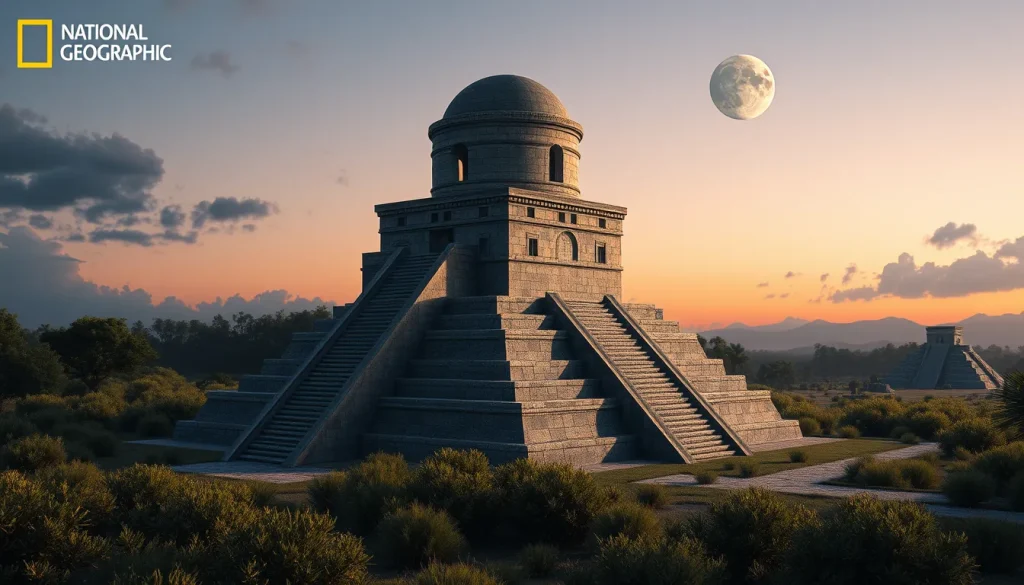
El Caracol, situated within the ancient Maya city of Chichén Itzá in the Yucatán Peninsula of Mexico, remains one of the most intriguing structures in Mesoamerican archaeology. Often referred to simply as “the observatory,” this building distinguishes itself from the typical step-pyramid architecture prevalent across the site. Its unique cylindrical form and strategic positioning suggest a specialized function deeply rooted in the Maya observation of celestial cycles. While modern eyes might mistake its rounded dome for a housing for telescopic instruments, archaeological evidence indicates it served as a high-altitude platform for naked-eye astronomy, crucial for tracking the motions of Venus, the sun, and the moon.
The significance of El Caracol extends beyond its physical presence; it represents a sophisticated intersection of architecture, cosmology, and political power. In the dense scrub brush and flat terrain of the Yucatán, sky-watching requires elevation to rise above the leafy canopy. The tower atop El Caracol sits high on a four-cornered platform, providing unobstructed views of the skies and the surrounding landscape. This vantage point was not merely practical but ceremonial, allowing Maya leaders to align their actions with celestial events, particularly those involving Venus, which was considered the sun’s twin and a war god. The following analysis details the architectural features, archaeological investigations, and astronomical interpretations that define our current understanding of this ancient structure.
Main Explanation
The structure known as El Caracol derives its name from the Spanish word for “snail,” referencing the spiral staircase believed to exist within the tower, although the interior is largely decayed. The building’s appearance has elicited strong reactions from observers over the decades, ranging from admiration of its engineering to critiques of its aesthetic compared to other Maya structures. Despite these varied opinions, the consensus among archaeologists and archaeoastronomers is that the building was designed with specific astronomical orientations in mind. The primary function appears to be the monitoring of celestial bodies that held tremendous significance for the Maya civilization.
Central to the function of El Caracol is the alignment of its architectural features with celestial phenomena. The grand staircase marking the front of the structure faces 27.5 degrees north of west. This orientation is notably out of line with the other buildings at the site, suggesting a specific purpose rather than adherence to a general city grid. This deviation is almost perfectly aligned with the extreme northern setting position of Venus. Venus had tremendous significance for the Maya; it was not merely a bright object in the sky but a deity associated with war and leadership. Mayan leaders used the changing position of Venus to plan appropriate times for raids and battles, making the accurate observation of its cycle a matter of state security and religious obligation.
Furthermore, the structure’s design facilitates the observation of other celestial bodies. The windows and shafts within the tower are thought to frame specific sightlines toward the horizon. While the dome that sits atop the structure today is the decayed remains of what was once a cylindrical structure, it originally housed viewing ports. These openings allowed astronomers to track the heliacal rising and setting times of stars and planets. Such observations could serve to mark important dates in the calendar, synchronizing the ritual life of the city with the movements of the heavens. The building, apart from being a monument related to Quetzalcoatl, was inferred to be a functional instrument in the Maya astronomical toolkit.
Evidence & Sources
The scientific understanding of El Caracol’s function relies heavily on systematic studies involving careful measurement of its architectural orientations. A pivotal interdisciplinary approach was initiated to test ancient Mesoamerican architecture for astronomical orientation, with the Caracol of Chichen Itza being a primary subject of investigation. A landmark study published in Science on June 6, 1975, by Anthony F. Aveni, Sharon L. Gibbs, and Horst F. Holborn, provided the first rigorous analysis of the tower’s alignments. This study revealed a number of significant astronomical events coinciding with many of the measured alignments presented in their data tables.
However, the evidence also presents complexities. The 1975 investigation noted that not every alignment appears to have an astronomical match which researchers can recognize. It may be that only some of the sighting possibilities discussed were actually functional. Moreover, the search for significant astronomical events to match the alignments has included only those which seem of obvious functional importance to modern researchers: sun, moon, and planetary extremes and the setting positions of the brightest stars. The authors emphasized those celestial bodies which are documented in the literature as having been of importance. This caution highlights the difficulty in interpreting ancient intent without written records explicitly detailing the use of every window and shaft.
Modern interest in the site continues to validate its importance. Accounts from contemporary researchers, such as those from the Vatican Observatory visiting the site in 2018, underscore the enduring allure of El Caracol. Visitors travel significant distances, including cruises and bus rides across the Yucatán peninsula, specifically to encounter the observatory. These modern pilgrimages highlight the structure’s status as a key site for understanding the history of astronomy. The physical evidence remains on the ground: the platform, the tower, and the alignments persist as a testament to a civilization that prioritized the observation of the cosmos within their urban planning.
Deep Dive Analysis
Module B: Building/Site Analysis
Location and Context
El Caracol is located within the ceremonial center of Chichén Itzá, Yucatan, Mexico. The region is characterized by dense trees and scrub brush and is flat as a tortilla. In such an environment, sky-watching of any kind is impossible without some way to rise above the leafy canopy. The tower atop El Caracol sits high on a four-cornered but not quite square platform, giving excellent unobstructed views of the skies and surrounding landscape. This elevation was critical for accurate horizon observations required for calendrical and astronomical precision.
Construction and History
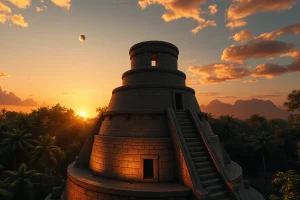
The structure features a large stone dome atop a cylindrical tower. To modern eyes, the rounded dome looks like it could house a telescope, but it does not. It is actually the decayed remains of what was a cylindrical structure. The building has elicited strong feelings regarding its aesthetics, with some historical commentary comparing it unfavorably to other architectural works. However, its construction prioritizes function over form, specifically regarding the placement of windows and the orientation of the main staircase. The building is related to Quetzalcoatl, indicating a cultural and religious significance beyond pure science.
Architecture and Alignments
The architectural design is defined by specific angular measurements. The grand staircase that marks the front of El Caracol faces 27.5 degrees north of west. This is out of line with the other buildings at the site, marking it as unique. The windows and viewing shafts are positioned to frame specific sectors of the sky. Investigations reveal a number of significant astronomical events coinciding with many of the measured alignments. These include the extremes of the sun and moon, as well as planetary movements.
Astronomical Interpretation
El Caracol seems to be carefully aligned with the motions of Venus. Venus had tremendous significance for the Maya; this bright planet was considered the sun’s twin and a war god. Mayan leaders used the changing position of Venus to plan appropriate times for raids and battles. Additionally, the heliacal rising and setting times of stars could have served to mark important dates in the calendar. Perhaps hitherto unrecognized constellations were sighted in the windows, or perhaps fainter stars were used for timing rituals.
Archaeological Evidence
The primary evidence comes from metrological studies such as the 1975 Science article by Aveni et al. They initiated an interdisciplinary approach to test the architecture for astronomical orientation. Their search included sun, moon, and planetary extremes. While many alignments match significant events, the evidence suggests that not every alignment appears to have an astronomical match which can be recognized by modern standards. This implies a selective functionality where only specific windows were used for specific events.
Alternative Interpretations
While the astronomical function is dominant, the building is also a monument related to Quetzalcoatl. Some alignments may serve symbolic rather than observational purposes. The study notes that they propose no grand cosmic scheme for the astronomical design of the Caracol. It is inferred that the building served multiple roles, blending religious monumentality with practical astronomy. The decayed state of the dome also leaves room for debate regarding the exact original height and viewing capacity.
Scholar Consensus
The scholarly consensus supports the view that El Caracol was used as a lookout on the heavens. There is plenty of evidence suggesting this function, despite the lack of telescopic technology. The systematic studies involving careful measurement made in Mexico support the belief that positional astronomy may have been widely practiced. The structure is accepted as a functional observatory within the limits of naked-eye technology.
Visitor Misconception
A common misconception arises from the building’s appearance. To modern eyes, the rounded dome looks like it could house a telescope. It doesn’t, of course. Visitors often assume technological capabilities anachronistic to the period. The structure was designed for human observation, not instrument housing. Understanding this distinction is crucial for appreciating the sophistication of Maya astronomy, which relied on precise architectural alignment rather than optical magnification.
FAQ
Did the Maya use telescopes in El Caracol?
No. Although the dome looks like it could house a telescope, it was used for naked-eye observation. The structure provided elevation above the tree canopy.
Why is the staircase oriented 27.5 degrees north of west?
This alignment corresponds almost perfectly with the extreme northern setting position of Venus, which was critical for Maya warfare and calendar planning.
Do all windows in El Caracol have astronomical alignments?
Not necessarily. Studies indicate that while many alignments match astronomical events, not every sighting possibility was functional or recognized by modern researchers.
Leave a Reply