
Short Answer
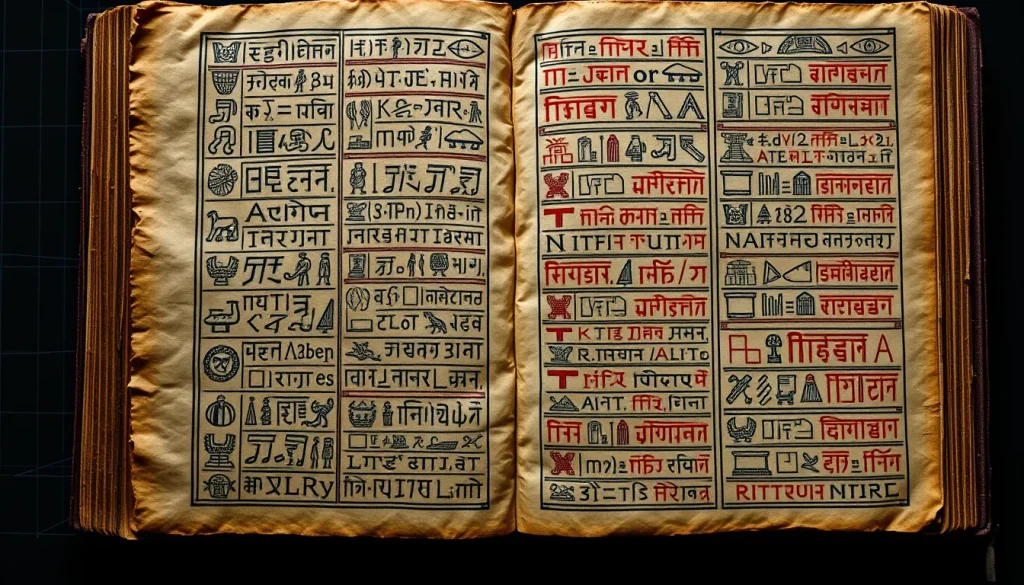
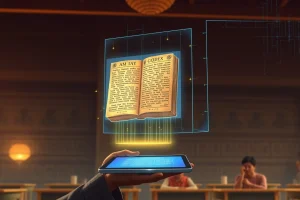
The preservation of human knowledge is a fundamental imperative of archaeology, yet few documents face as precarious a existence as the ancient Maya codices. These folding manuscripts, crafted from beaten fig-bark paper known as huun and coated in white lime plaster, represent the pinnacle of pre-Columbian intellectual achievement. Among them, the Dresden Codex stands as humanity’s most precious book from the Americas, containing astronomical tables of unparalleled accuracy for their time. However, the physical fragility of these artifacts necessitates a modern solution: digitization. The process of digitizing Maya codices is not merely about creating photographic replicas; it involves complex multimedia analysis, 3D surveying, and semi-automatic annotation to make ancient astronomical tables accessible to scholars and the public alike.
The Imperative for Digital Preservation
The survival of the Maya codices is nothing short of miraculous. Created before 1345 AD, likely within the greater Peninsula of Yucatan during the Post-classic period, these manuscripts survived Spanish book-burnings, transatlantic journeys, and even the firebombing of Dresden in 1945. The Dresden Codex, a 78-page folding manuscript, contains Venus calculations accurate to within 2 hours over 481 years, along with eclipse prediction tables and almanacs. Despite their resilience, the physical materials—organic paper and mineral pigments—are susceptible to degradation from light, humidity, and handling. Digital heritage initiatives aim to halt this decay by creating high-fidelity virtual surrogates. This allows researchers to study the hieroglyphic text, numerical tables, and deity images painted in red, black, blue, and brown inks without risking damage to the original artifact. Furthermore, digitization democratizes access, allowing epigraphers worldwide to collaborate on decipherment without requiring physical travel to archives in Dresden, Paris, Madrid, or Mexico City.
Evidence & Sources
The groundwork for modern digitization efforts is laid upon decades of epigraphic progress. Archaeology and epigraphy have made significant progress to decipher the hieroglyphic writings of the Ancient Maya, which today can be found in various digital repositories. A seminal initiative in this field is the MAAYA Project (Multimedia Analysis and Access for Documentation and Decipherment of Maya Epigraphy). Led by researchers from the Ecole Polytechnique Fédérale de Lausanne (EPFL) and the University of Bonn, including Daniel Gática-Pérez and Nikolai Grube, this project focuses on advanced image and video retrieval techniques applied to cultural heritage. The project utilizes data sources from existing codices to develop methods for visualization and browsing of glyph data. Additionally, recent work by Christian M. Prager and Cristina Vertan on the semi-automatic annotation of Maya hieroglyphic texts highlights the transition from manual transcription to digital standards. Their work on the “Text Database and Dictionary of the Classic Maya” records texts in TEI XML based on a digital sign and graph catalog, stored in the TextGrid virtual repository. These sources confirm that while the Maya script consists of more than 1000 word signs and syllables, digital tools are now essential for managing this complexity.
Deep Dive Analysis: Digital Archaeology in Epigraphy
The digitization of Maya codices falls squarely within the realm of Digital Archaeology, specifically utilizing multimedia methods to support epigraphic analysis. This module analyzes the technological framework employed to transform physical inscriptions into accessible digital data.
Technology Description
The core technology involves multimedia analysis systems capable of handling high-resolution imagery and 3D surveying data. Projects like MAAYA integrate advanced image retrieval and classification techniques with 3D surveying of cultural heritage objects. This allows for the creation of textured 3D models of codex pages, capturing not just the visual information but also the physical topography of the paper and ink layers. Complementary to this is the use of TEI (Text Encoding Initiative) XML for structuring the textual data. Because the Maya script is only partially deciphered, texts are often documented numerically using a digital sign catalog rather than direct phonemic transliteration, ensuring accuracy despite gaps in linguistic understanding.
How It Works
The workflow begins with high-resolution imaging, often using multispectral photography to reveal faded pigments invisible to the naked eye. These images are then processed through computer vision algorithms designed for image retrieval and classification. The system identifies glyph blocks and segments them for analysis. Researchers then annotate these segments using specialized software that links the visual glyph to its corresponding entry in a digital catalog. This metadata is stored in virtual repositories like TextGrid, allowing for complex queries across the entire corpus of Maya writing. The integration of 3D surveying ensures that the physical context of the inscription—such as stroke depth or layering of paint—is preserved alongside the semantic content.
Field Workflow
While codices are typically housed in museums, the workflow mimics field archaeology in its rigor. Conservationists first stabilize the manuscript. Digital specialists then capture data in controlled lighting environments to prevent further degradation. The data is immediately backed up and processed through pipelines that correct for distortion and color variance. Collaboration is key; the MAAYA project, for instance, involved institutions across Switzerland and Germany, demonstrating a distributed workflow where image analysis occurs remotely from the physical object.
Output & Data
The primary output is a multimedia repository containing high-resolution images, 3D models, and annotated XML texts. This data supports visualization and browsing of glyph data, enabling users to search for specific signs across different codices. For the Dresden Codex, this means the Venus tables and eclipse predictions are not just images but structured data that can be computationally analyzed to verify astronomical accuracy.
Example: The Dresden Codex
The Dresden Codex serves as the primary example for these technologies. As the oldest known book from the Americas, its Venus tables continue to reveal the depth of Maya intellectual achievement. Digitization projects focus on the 78 pages of the manuscript, ensuring that the numerical tables and deity images are captured with sufficient resolution to study the minute variations in ink that might indicate corrections or later additions by Maya scribes.
Strengths
The primary strength of digital archaeology in this context is preservation without access restriction. Scholars can manipulate images—enhancing contrast, rotating views—in ways impossible with the physical book. It also facilitates semi-automatic annotation, reducing the human error inherent in manual transcription of complex glyphs.
Limitations
Despite advancements, limitations remain. The state of decipherment means it is not always possible to record hieroglyphic texts directly in phonemically transliterated values. Digital tools cannot yet fully automate the decipherment process; human expertise is still required to interpret context. Furthermore, the exact origin and dating of some codices are not entirely known, which limits the historical contextualization of the digital data.
Accuracy
Accuracy is maintained through the use of standardized catalogs and XML schemas. The Venus calculations in the Dresden Codex, for instance, are accurate to within 2 hours over 481 years, and digital models must preserve this precision. However, digital color representation can sometimes vary from the original pigments, requiring careful calibration.
Cultural Heritage Considerations
Digitizing sacred or culturally sensitive materials requires ethical consideration. While the codices are ancient, they remain vital to the cultural identity of modern Maya communities. Digital access must balance scholarly openness with respect for cultural heritage, ensuring that the data is used to enhance understanding rather than exploit the artifacts. Projects like MAAYA emphasize documentation and decipherment as a means of honoring the intellectual legacy of the Ancient Maya.
FAQ
Why is digitizing the Maya codices necessary?
The codices are fragile organic artifacts susceptible to degradation. Digitization preserves them virtually and allows global access without handling the originals.
How accurate are the astronomical tables in the Dresden Codex?
The Venus calculations are accurate to within 2 hours over a period of 481 years, representing the most accurate pre-telescopic astronomical tables ever created.
Can computers fully decipher Maya glyphs automatically?
No. While semi-automatic annotation exists, the script is only partially deciphered, and human expertise is required to interpret context and phonemic values.

Leave a Reply