
Short Answer
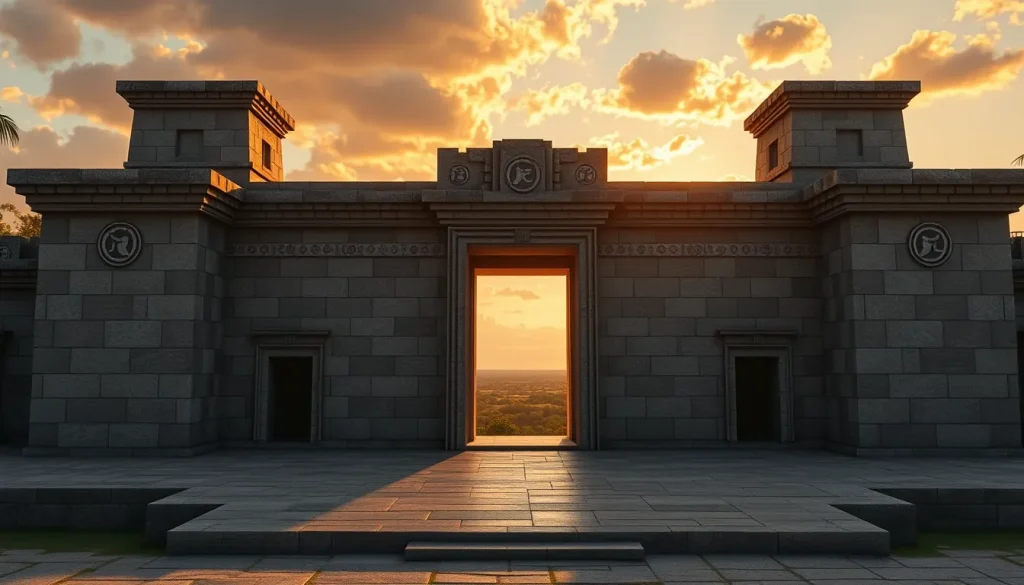
While the Observatory at Chichén Itzá remains the most iconic example of Maya archaeoastronomy, recent systematic research demonstrates that astronomical orientations, particularly those related to the planet Venus, were a widespread phenomenon across the ancient Maya world. Archaeoastronomical studies indicate that orientations in ancient Maya architecture were largely astronomical, referring mostly to sunrises and sunsets on particular dates, but also significantly to the extremes of Venus. These alignments were not purely utilitarian; since repeatedly occurring directions are most consistently incorporated in monumental architecture of civic and ceremonial urban cores, they must have held an important place in religion and worldview. The characteristics of urban layouts, as well as architectural elements associated with important buildings, reveal that Maya architectural and urban planning was dictated by a complex set of rules that integrated celestial cycles with terrestrial construction.
Main Explanation
The significance of Venus to the ancient Maya is well documented, yet the architectural manifestation of this knowledge extends far beyond the Yucatán Peninsula’s most famous site. Systematic research into the use and significance of astronomical orientations in ancient Maya architecture has shown that by applying rigorous methodology to a large number of orientations, scholars can detect alignment patterns that shed light on the validity of former hypotheses. Measurements and analysis confirm that while orientations to the Sun’s position on the horizon largely prevail, allowing for observational calendars composed of multiples of 13 and 20 days to facilitate agricultural scheduling, specific buildings recorded Venus extremes. These orientations were intended to facilitate proper scheduling of activities, but their incorporation into monumental cores suggests a deeper cosmological significance. The architecture served as a fixed instrument for observation, marking the extreme northern and southern rising and setting points of the Morning and Evening Star.
Furthermore, some important buildings, aside from exhibiting astronomical orientations, are aligned to prominent features of natural or cultural landscape, implying a deliberate selection of these places for their construction. This integration of landscape and sky underscores the Maya worldview where the built environment mediated between the human realm and the celestial sphere. The prevalence of these alignments indicates that knowledge of Venus cycles was not restricted to a single elite center but was a shared cultural currency among Maya polities, expressed through stone and mortar. The architectural evidence suggests that the tracking of Venus was critical for timing warfare, ritual ceremonies, and agricultural cycles, embedding the planet’s erratic movements into the static geometry of the city.
Evidence & Sources
Archaeological and textual evidence supports the prevalence of Venus alignments across multiple sites. At the Classic Maya city of Uxmal, the orientation of the Governor’s Palace can be related to the extremes of the planet Venus on the horizon. The sculptural decoration of the building contains iconographic elements clearly indicating an association with the planet, including over 350 Venus glyphs on the Palace’s facade which indicate the cultural importance of the celestial body. Interpretations of the Palace’s orientation include connections to both morning and evening star positions, with recent analysis suggesting the Governor’s Palace at Uxmal likely aligns with Venus’s northerly extremes as the evening star. This specific alignment demonstrates a sophisticated understanding of the planet’s 584-day synodic cycle and its eight-year grand cycle.
Similarly, at Copán, Temple 22 provides critical evidence of Venus observation mechanisms. Studies discuss the orientation of Venus in the architecture, the iconography of Temple 22, and the appearances of Venus through the inusitada window in the western wall of this temple. Using Temple 22 as a nexus, researchers have gathered material from diverse sources to reveal one of the most significant cosmological-mythical roles of Venus in the Maya world. The Venus table in the Dresden Codex reveals that these people kept close watch on the planet, tracing its heliacal rise to an accuracy of one hour in 400 years. This textual precision matches the architectural precision found in the stone alignments. The ethnohistorical data concerning the agricultural cycle of the Maya further connects these astronomical observations to practical societal needs, reinforcing the dual utilitarian and sacred nature of these structures. The convergence of iconography, orientation, and textual records creates a cohesive picture of Venus worship and observation.
Deep Dive Analysis
Celestial Object: The planet Venus, known to the Maya as Chak Ek’ (Great Star), was the most scrutinized object in the heavens after the Sun and Moon. Its dual appearance as the Morning Star and Evening Star framed much of Maya ritual life.
Observational Cycle: Venus undergoes a synodic cycle of approximately 584 days, alternating between visibility as the Morning Star and Evening Star, separated by periods of invisibility during superior and inferior conjunctions. The Maya tracked the extreme northern and southern rising and setting points of these phases, which shift over an eight-year period.
How Maya Observed It: Observation was conducted through architectural sightlines. Buildings were constructed with specific orientations to mark the horizon points where Venus appeared at its extremes. Windows, doorways, and facade alignments served as fixed viewing ports.
Archaeological/Textual Evidence: Beyond Chichén Itzá, the Governor’s Palace at Uxmal features over 350 Venus glyphs and an orientation linked to Venus extremes. At Copán, Temple 22 includes a western window designed to frame Venus appearances. The Dresden Codex contains a Venus Table accurate to one hour in 400 years, corroborating architectural data.
Calendar Connection: Venus cycles were integrated into the sacred calendar (Tzolk’in) and the solar calendar (Haab’). Orientations allowed the use of observational calendars composed of multiples of 13 and 20 days, facilitating the scheduling of agricultural activities and ritual events.
Architecture Connection: Monumental architecture in civic and ceremonial urban cores consistently incorporates these directions. The orientations cannot be understood in purely utilitarian terms; they dictate urban layouts and are associated with important buildings, revealing that planning was dictated by complex cosmological rules.
Cultural Meaning: Venus was associated with warfare, rain, and agricultural fertility. Its appearances were often seen as omens. The alignment of buildings to Venus extremes implies a deliberate selection of places for construction to harness this cosmic power.
Uncertainty/Debate: Regarding the Governor’s Palace at Uxmal, two opposing interpretations have been forwarded regarding its orientation. One links it with the southernmost rising point of the morning star, while the other suggests it refers to the northerly extremes of the evening star. Current key takeaways suggest the latter is more likely, but debate persists on specific horizon points.
FAQ
Why is Venus more significant than other planets in Maya architecture?
Venus was the brightest object in the night sky after the Moon and had a complex cycle associated with warfare and agriculture. The Dresden Codex shows they tracked it with extreme precision, and architectural alignments reflect this importance.
What is the debate regarding the Governor's Palace at Uxmal?
Scholars debate whether the palace aligns with the southernmost rising point of the morning star or the northerly extremes of the evening star. Current evidence leans toward the northerly evening star extremes.
Did all Maya buildings align with Venus?
No. While solar orientations largely prevail for agricultural calendars, specific monumental buildings in civic cores were aligned to Venus extremes, indicating their special religious and political function.


Leave a Reply