

Short Answer
In the pantheon of celestial bodies observed by the ancient Maya, Mars held a distinct and powerful position known as Chak Ek, or the “Red Star.” Unlike the more frequently cited Venus, which dominated many architectural alignments, Mars presented a unique challenge due to its erratic retrograde motion and variable brightness. Recent archaeological and archaeoastronomical analyses have illuminated the sophisticated methods Maya scribes and astronomers employed to track this planet. Far from being merely a wandering light, Mars was integrated into a complex system of timekeeping, mythology, and agricultural forecasting. The primary evidence for this advanced understanding resides within the pages of the Dresden Codex, one of the few surviving pre-Columbian Maya books. Through the decipherment of specific tables within this manuscript, scholars have uncovered empirical data regarding both the synodic and sidereal cycles of Mars, demonstrating a level of mathematical precision that rivals early modern European astronomy.
Main Explanation
The role of Mars in Maya astronomy was multifaceted, serving as both a chronological marker and a mythological symbol. Astronomically, the Maya were concerned with commensurate relationships among celestial cycles. This means they sought to find common multiples between the movements of planets and their own ritual calendars. The movement of Mars was not viewed in isolation but was related to other nonastronomical cycles of cultural interest. The ancient Maya astronomers distinguished between two types of motion for the Red Star: the synodic cycle, which tracks the planet’s position relative to the Sun as seen from Earth, and the sidereal motion, which tracks the planet’s position against the background stars. This distinction is critical because it reveals that Maya observation was not solely focused on heliacal risings or settings but included the tracking of the planet across the zodiac. This capability allowed them to relate the movements of Mars to terrestrial seasons and the 260-day sacred calendar, known as the Tzolk’in. By anchoring planetary motion to their sacred timekeeping system, the Maya could predict favorable or unfavorable periods for various activities, potentially including warfare and agriculture, although the specific associations remain a subject of scholarly interpretation.
Evidence & Sources
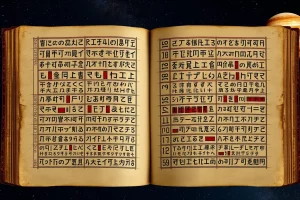
The primary textual evidence for Maya Mars astronomy is found in the Dresden Codex. For a long time, pages 43b through 45b of the Codex were known to be concerned with the synodic cycle of Mars. However, new work reported in proceedings from the National Academy of Sciences has revealed a concern with the sidereal motion of Mars as well, specifically within a complex table located on pages 69 through 74. These documents indicate that the Maya used two kinds of empiric sidereal intervals for Mars. The first was a long interval of 702 days, which included a retrograde loop. The second was a short interval that did not include retrograde motion. The use of these intervals permitted the tracking of Mars across the zodiac. This data is significant because it shows an empirical approach to astronomy. The anonymous but equally skilled Maya astronomers solved the sidereal problem of Mars through observation and record-keeping centuries before Johannes Kepler proposed an elliptical heliocentric orbit to solve similar problems in Europe. The cyclic nature of planetary movements made this task feasible for the Maya, as they could determine the position of Mars on a certain date in the calendar for several years in succession. The continuity of these mythological and astronomical traditions is further supported by studies of the Postclassic period, which show a continuation of traditions from the Classic period heartland into the northern Maya lowlands.
Deep Dive Analysis
Celestial Object: The object of study is Mars, referred to in Maya contexts as Chak Ek. It is characterized by its reddish hue and variable luminosity. In the night sky, Mars exhibits retrograde motion, where it appears to move backward against the stars before resuming its forward path. This looping movement was a puzzle to keen observers and required sophisticated mathematical modeling to predict.
Observational Cycle: The Maya utilized two primary intervals for tracking Mars. The long sidereal interval was 702 days. This period was significant because it included a retrograde loop, allowing astronomers to account for the planet’s apparent backward motion. The short interval did not include this loop. These intervals allowed for the synchronization of Mars’ position with the stellar background. The synodic cycle, dealing with the planet’s relationship to the Sun, was also recorded, particularly on pages 43b–45b of the Dresden Codex.
How Maya Observed It: Observation was conducted by patient observers of the night sky who relied on the cyclic nature of planetary movements. By recording the position of Mars on certain dates over several years, astronomers could disentangle Mars’ motion from that of Earth, even without a heliocentric model. They projected the line joining Mars and Earth to the stars to mark the position of Mars relative to the stars as seen from Earth. This required long-term data accumulation and record-keeping within codices.
Archaeological/Textual Evidence: The Dresden Codex is the central artifact. Pages 69–74 contain the complex table revealing the sidereal motion. Pages 43b–45b cover the synodic cycle. These documents serve as the primary source for understanding Postclassic Maya astronomy. The physical survival of these bark-paper books is rare, making the data within them invaluable for reconstructing Maya scientific thought.
Calendar Connection: A key function of tracking Mars was relating its movements to the 260-day sacred calendar. The empiric sidereal intervals were used to relate planetary positions to this ritual cycle. This connection allowed the Maya to integrate celestial phenomena into their ritual life. The commensurate relationships among celestial cycles were explored to align with other cycles of cultural interest, ensuring that astronomical events could be anticipated within the framework of sacred time.
Architecture Connection: While specific Mars-aligned architecture is less publicly documented than Venus alignments at sites like Chichén Itzá, the tracking of Mars across the zodiac implies a knowledge of the ecliptic path. The ability to relate movements to terrestrial seasons suggests that astronomical data may have influenced agricultural timing or ceremonial scheduling tied to specific locations, though the Dresden Codex remains the primary evidence rather than standing structures.
Cultural Meaning: Mars is referenced in creation mythology concerning Chaak and Chak Chel. Studies of prehispanic Maya culture indicate that mythological traditions continued into the Postclassic period. The Red Star was likely associated with specific deities or forces. The introduction of new mythologies occurred as a result of extensive cultural contact between populations in the northern Maya lowlands, the Gulf Coast region, and highland central and southern Mexico. Mars was not just a scientific object but a participant in the cosmic narrative.
Uncertainty/Debate: While the intervals are known, the full extent of how this data was applied in daily life remains debated. Some interpretations suggest warfare associations, common in Mesoamerican cultures for Mars, but the codices focus heavily on the mathematical and calendrical integration. Additionally, the exact method of initial observation without telescopic aid relies on our understanding of naked-eye astronomy limits. The comparison to Kepler highlights the sophistication of the Maya work, yet the lack of a heliocentric model means their geometric explanations differed fundamentally from modern astronomy, focusing instead on cyclic commensurability.
FAQ
What is Chak Ek in Maya culture?
Chak Ek is the Maya name for the planet Mars, literally translating to 'Red Star.' It was tracked meticulously by astronomers for calendrical and mythological purposes.
Where is the evidence for Maya Mars astronomy found?
The primary evidence is found in the Dresden Codex, specifically on pages 43b-45b for synodic cycles and pages 69-74 for sidereal motion tables.
How accurate were Maya calculations for Mars?
They used empiric sidereal intervals, such as a 702-day cycle, allowing them to track Mars across the zodiac and relate it to seasons with significant precision.
Did the Maya know Mars orbited the Sun?
No, they did not propose a heliocentric model like Kepler. Instead, they focused on cyclic relationships and commensurate periods between celestial bodies and their calendars.




Leave a Reply