
Short Answer
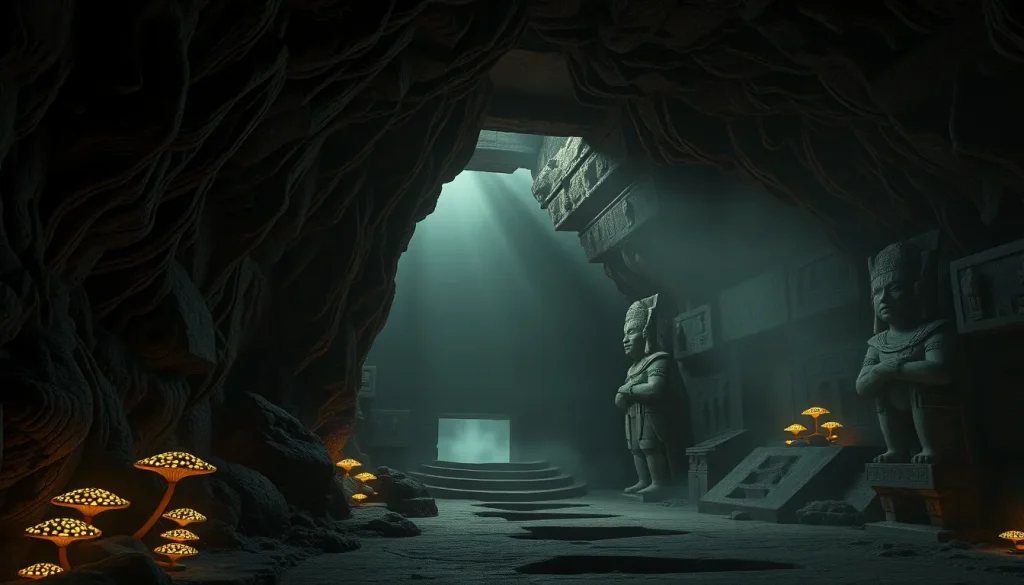
The visualization of the Maya underworld, known as Xibalba, represents a convergence of ancient cosmology, archaeological evidence, and modern digital heritage technology. Xibalba, often translated as the “Place of Fright” or “Place of Fear,” is not merely a mythological destination but a complex spatial concept rooted in the physical landscape of caves and sinkholes (cenotes) across the Maya region. Contemporary digital models aim to reconstruct this concept by merging textual evidence from the K’iche’ Maya Popol Vuh with high-resolution imaging of ritual cave sites. These visualizations serve dual purposes: they act as educational tools to explain Maya cosmology to the public and as analytical instruments for archaeologists to evaluate spatial relationships within sacred underground architectures.
Understanding how digital models visualize Xibalba requires examining the intersection of myth and materiality. Ancient Maya beliefs posited that caves were entrances to the underworld, inhabited by lords of death and disease. Modern digital heritage specialists utilize game engines and 3D modeling software to recreate these environments, allowing users to navigate the “houses” of Xibalba virtually. This process involves significant interpretive work, balancing the literal archaeological record of cave shrines with the symbolic narrative of the Hero Twins’ descent. The resulting models are not perfect replicas of reality but rather interpretive landscapes that dramatize the psychological and spiritual dimensions of the Maya afterlife.
Main Explanation
Xibalba is central to Maya cosmology, functioning as the subterranean realm where souls journey after death and where deities associated with decay and sickness reside. According to the Popol Vuh, this realm is ruled by lords such as One Death and Seven Death, who preside over ten other lords governing specific afflictions. Digital visualizations often structure this concept as a series of trials or “houses,” such as the House of Darkness or the House of Cold, which the Hero Twins had to navigate. In a digital context, these houses are rendered as distinct spatial zones within a 3D environment. The visualization process treats Xibalba as a psychological landscape as much as an physical afterlife, dramatizing different kinds of fear that must be confronted before rebirth can occur.
The physical counterpart to Xibalba is found in the cave systems of the Maya lowlands, particularly in regions like Northern Quintana Roo. Archaeological evidence confirms that these caves were used for rituals involving offerings of ceramics, incense, jewelry, and occasionally sacrificial victims. Digital models incorporate data from these sites to ground the mythological concept in tangible geography. By using high-resolution panoramic visualization and 3D modeling, researchers can capture features within their broader spatial contexts. This allows for the evaluation of potentially meaningful relationships between natural cave formations and human-made modifications, such as shrines or altars. The digital representation thus bridges the gap between the abstract theology of the Popol Vuh and the concrete archaeology of cave shrines.
Modern projects often employ game engines like Unity to craft these worlds. These engines handle lighting, materials, and post-processing effects to create an atmospheric experience that mimics the dim, oppressive environment of a cave underworld. Functionality including walking, moving, and looking is scripted to allow user interaction. Characters and garments, as well as statues and pyramids associated with the underworld journey, are created using modeling tools like Blender. This technical pipeline enables the creation of immersive experiences where users can select trials to reveal stories about the Twins’ demise or their strategies to outwit death. The interpretive lens applied in these visualizations emphasizes the resilience of Maya religion, noting that these caves possess a sacred consideration among modern Maya communities today.
Evidence & Sources
The construction of digital models of Xibalba relies on a multidisciplinary array of sources. Primary textual evidence comes from the K’iche’ Maya Popol Vuh, which details the summoning of the Hero Twins and their fathers to face deceptive tests in the underworld. This narrative provides the structural logic for interactive maps and games, where users follow glowing paths deeper into the Houses of Xibalba. The mythic content is adapted from scholarly translations, ensuring that the lords present and the nature of the trials align with established epigraphic and ethnohistoric records.
Archaeological evidence is equally critical. Research conducted in Northern Quintana Roo, Mexico, utilizes innovative imaging techniques to document cave shrines. Studies led by researchers such as Holley Moyes and Dominique Rissolo highlight how caves document ancient Maya offerings left for powerful beings inhabiting underground spaces. These findings confirm that the underworld was not just a story but a physical destination for ritual activity. Digital models integrate this data by replicating the topography of fear described in academic literature, where the “topography of fear” includes darkness, cold, predatory animals, and the sharpness of blades. The presence of sacrificial victims and domestic objects in caves attests to the seriousness with which the ancient Maya approached these spaces.
Furthermore, digital heritage projects themselves serve as sources of methodological evidence. Senior projects and academic repositories, such as those from the State University of New York System, document the technical processes used to visualize indigenous history and culture. These records detail how Unity’s engine was used to craft and design the world, handling lighting and functionality. They provide transparency on how 3D modeling, rigging, and animation were employed to create the main character and garments. This documentation ensures that the visualizations are recognized as creative projects inspired by mythology rather than definitive historical reconstructions, maintaining academic integrity while engaging public interest.
Deep Dive Analysis
Module F: Digital Archaeology
Technology Description
The visualization of Xibalba relies on a suite of digital archaeology tools designed for immersive heritage presentation. Core technologies include real-time 3D creation engines like Unity and modeling software such as Blender. These tools are complemented by field imaging technologies, including high-resolution panoramic cameras and LiDAR scanning, which capture the physical geometry of cave sites. The integration of these technologies allows for the production of 3D models that can be explored interactively via web browsers or virtual reality headsets.
How It Works
The workflow begins with data acquisition from physical cave sites or interpretation of textual descriptions. In the case of physical sites, photogrammetry or laser scanning creates a point cloud of the cave interior. For mythological elements, artists model assets based on iconographic evidence from ceramics and codices. These assets are imported into the game engine where lighting and materials are applied to simulate underground conditions. Scripting languages within the engine define user interactions, such as clicking a trial to reveal a story. Post-processing effects are used to enhance the atmosphere, simulating the “Place of Fright” through visual cues like darkness and shadow.
Field Workflow
Archaeologists and digital specialists collaborate during the field workflow. Researchers document cave shrines in regions like Northern Quintana Roo, noting the spatial context of offerings and natural features. This data is digitized and georeferenced. Digital heritage specialists then use this data to construct the virtual environment. The workflow emphasizes the capture and display of features within their broader spatial contexts, enabling the evaluation of relationships between natural formations and ritual use. This ensures that the digital model respects the archaeological integrity of the site.
Output/Data
The primary output is an interactive 3D experience or map. Users can navigate the environment, selecting trials to reveal narratives about the Hero Twins. The data generated includes 3D meshes, texture maps, and interactive scripts. Some projects produce high-resolution panoramic visualizations that allow for detailed inspection of cave walls and formations. These outputs serve as both educational tools and analytical datasets, allowing researchers to test hypotheses about visibility and movement within sacred spaces.
Example
A prominent example is the “Xibalba – Interactive Mayan Underworld Map,” an interpretive game inspired by the Popol Vuh. In this project, users begin at a crossroads and follow a glowing path deeper into the Houses of Xibalba. Another example involves senior projects using Unity to create 3D experiences centered on indigenous religious concepts. These projects utilize Blender to create statues and pyramids, demonstrating how academic training intersects with digital heritage production.
Strengths
Digital models offer immersive engagement that static text or images cannot achieve. They allow users to experience the scale and atmosphere of the underworld, fostering a deeper understanding of Maya cosmology. As analytical tools, they enable the evaluation of spatial relationships within cave architecture that might be difficult to perceive in situ due to lighting or access constraints. They also preserve the digital record of fragile cave environments that may be subject to erosion or human impact.
Limitations
Visualizations are inherently interpretive. Treating Xibalba as a psychological landscape involves subjective decisions about how to represent fear or death. There is a risk of conflating mythological geography with physical cave systems, potentially misleading users about the literal beliefs of the ancient Maya. Additionally, technical limitations in lighting and texture resolution may fail to capture the full sensory experience of a real cave, such as humidity or smell.
Accuracy
Accuracy varies between projects. Those grounded in specific archaeological surveys, such as imaging Maya cave shrines in Quintana Roo, maintain high spatial accuracy regarding the physical environment. However, mythological elements, such as the specific appearance of the Lords of Death, are reconstructed based on artistic interpretation rather than direct observation. Academic projects typically disclose this interpretive lens, distinguishing between historical evidence and creative adaptation.
Cultural Heritage Considerations
Respect for modern Maya communities is paramount. Caves possess a sacred consideration among current Maya populations, attesting to the resilience of their religion. Digital projects must navigate the ethics of visualizing sacred spaces, ensuring that sensitive ritual information is not exploited. Collaborative approaches involving indigenous stakeholders help ensure that the visualization honors the living tradition associated with Xibalba, rather than treating it solely as a dead relic of the past.
FAQ
Is Xibalba a real physical place?
Xibalba is a mythological realm, but archaeologically it is associated with physical cave systems and cenotes used for rituals by the ancient Maya.
What software is used to model the Maya underworld?
Digital projects often utilize Unity for game engine functionality and Blender for 3D modeling of characters and environments.
Are these digital models accurate to history?
They are interpretive; while based on archaeological data and the Popol Vuh, they involve creative decisions to visualize psychological and mythological concepts.
Leave a Reply