
Short Answer
In the complex tapestry of ancient Maya chronometry, time was not merely a linear progression but a cyclical manifestation of divine will. Among the most intriguing of these cycles are the Lords of the Night, a series of nine deities who governed the nocturnal hours in a repeating sequence. These entities, identified in epigraphy as the G-series (G1 through G9), represent a specialized ritual and divinatory layer of the Maya calendar that operated alongside the more widely known 260-day Tzolk’in and 365-day Haab’. By assigning a specific deity to each night, the Maya integrated the celestial and the terrestrial, ensuring that every moment of darkness was under the stewardship of a known divine force.
Main Explanation
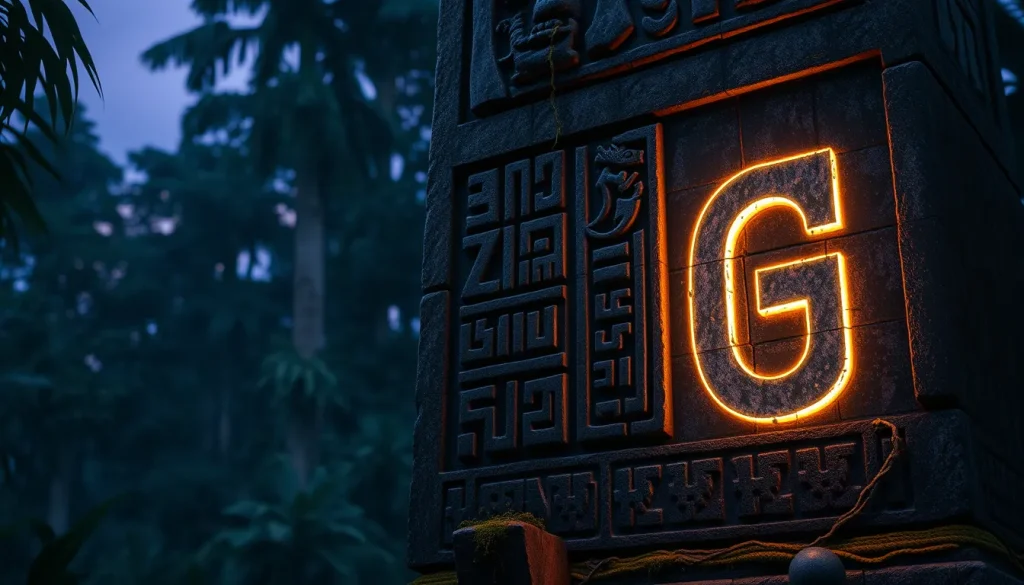
The Lords of the Night cycle is a nine-day sequence of deities that governs successive nights. In the Maya Supplementary Series—a set of glyphs that follow the Initial Series Long Count date on monuments—this cycle is recorded as Glyph G. Each night is associated with one of nine specific gods, designated by modern scholars as G1, G2, G3, G4, G5, G6, G7, G8, and G9. Once the ninth deity completes their tenure, the cycle restarts immediately with G1.
These deities were not merely passive markers of time; they were active participants in the ritual life of the Maya. The presence of a specific Lord of the Night on a given date could influence the perceived quality of that night, determining whether it was auspicious for specific rituals, sacrifices, or political events. Because the cycle is prime (9), it creates a shifting relationship with other calendrical cycles. For instance, the interaction between the 9-day cycle and the 20-day uinal (month) ensures that the same Lord of the Night does not fall on the same day-sign for a significant period, adding a layer of complexity to Maya divination.
The Nature of the Deities
While the identities of the Maya Lords of the Night are more elusive than those of the Aztec counterparts, scholars have attempted to correlate them based on iconography and attributes. Some researchers suggest that these deities may represent specific aspects of the underworld (Xibalba) or celestial bodies. For example, discussions regarding the Fourth Lord of the Night (G4) have explored correlations with maize deities, reflecting the agricultural and regenerative cycles tied to the earth and the night.
Evidence & Sources
The primary evidence for the Lords of the Night comes from Classic period monuments (roughly CE 278 to CE 909). On hundreds of stelae and altars, the Long Count date is followed by a series of glyphs known as the Supplementary Series. Glyph G is the specific marker for the Lord of the Night. The interpretive framework for this cycle was largely established by J. Eric S. Thompson, who in 1929 and later in his 1950 monograph, Maya Hieroglyphic Writing: An Introduction, demonstrated that these glyphs cycle through a fixed period of nine.
Archaeological evidence further supports the existence of this cycle through comparative studies with Central Mexican cultures. The Aztecs also utilized a system of Nine Lords of the Night. While early scholars like Thompson initially struggled to find a perfect one-to-one sequential match between the Maya and Aztec lists, more recent analysis suggests a correlation of “job descriptions” or spheres of influence. For example, scholars like Barbara MacLeod have suggested correlations between specific Maya glyphs (G1, G8, G9) and the Aztec sequence, suggesting a shared Mesoamerican cosmological heritage regarding the division of the night.
Deep Dive Analysis: Calendar System
Units and Calculation
The Lords of the Night cycle is a simple linear sequence of 9 units. Unlike the Tzolk’in, which combines a number (1-13) with a named day (20 total), the Lord of the Night cycle is a pure sequence of nine distinct divine entities. The calculation is a simple modulo-9 operation: if today is G1, tomorrow is G2, and the tenth day returns to G1.
Relationship to Other Calendars
The Lord of the Night cycle did not exist in isolation. It functioned as a tertiary layer of timekeeping:
- Long Count: The Lords of the Night provide a specific ritual “flavor” to the absolute date provided by the Long Count.
- Tzolk’in: The 260-day ritual calendar interacts with the 9-day cycle. Because 260 is not divisible by 9, the Lord of the Night associated with a specific Tzolk’in date changes every cycle, creating a larger super-cycle of 2,340 days (the least common multiple of 260 and 9).
- Haab’: The 365-day solar year also interacts with the 9-day cycle, ensuring that the ritual governance of the nights shifted annually relative to the seasons.
Historical Use and Ritual Application
In practice, the Lords of the Night were used by the aj k’in (day-keepers) to determine the ritual suitability of a date. The recording of Glyph G on public monuments served as a permanent record of the divine sponsorship of the event being commemorated—such as the accession of a king or the completion of a k’atun. By anchoring a political event to a specific Lord of the Night, the Maya ruler claimed a cosmic alignment, suggesting that the event was ordained by the nocturnal deities.
Common Misconceptions
A common misconception in popular “New Age” interpretations is that the Lords of the Night were purely astrological symbols used for personal horoscopes. In reality, the archaeological record indicates they were primarily ritual and political tools used by the elite and priestly classes to legitimize power and time the state’s ceremonial activities. Furthermore, while some suggest the Maya system was a direct copy of the Aztec system, evidence suggests a more complex process of cultural diffusion where the “spheres of influence” remained consistent even if the specific names or sequential orders of the gods evolved independently.
FAQ
What is Glyph G?
Glyph G is the specific hieroglyphic marker in the Maya Supplementary Series used to identify which of the nine Lords of the Night governed a specific date.
Are the Maya Lords of the Night the same as the Aztec ones?
They are closely related and share a similar structural concept of a 9-day cycle. However, scholars debate whether the sequential order is identical, suggesting instead a correlation of 'spheres of influence' or ritual roles.
How did the 9-day cycle interact with the 260-day Tzolk'in?
Because 260 is not divisible by 9, the Lord of the Night associated with any given Tzolk'in date shifted every cycle, creating a larger ritual super-cycle of 2,340 days.
Leave a Reply