
Skip to content
Maya Skies | Maya Astronomy, Calendars & Archaeology
  • Home
  • Tools
    • Calendar Round Calculator
    • Chichen Itza Architecture Explorer
    • Long Count Calculator
    • Maya Calendar Converter
    • Maya Number Converter
    • Maya Numerals Chart
    • Maya Time Units Calculator
    • Venus Cycle Explorer
  • Topics
    • Archaeology
    • Calendar Systems
    • Chichén Itzá
    • Digital Heritage
    • Math & Writing
    • Maya Astronomy
    • Maya Cosmology
  • About Us
    • Project History
    • Research Standards
    • Editorial Policy
    • Corrections Policy
    • Image Credits

Recent Posts

  • LiDAR Revelations: Maya Population Density and Urban Complexity in Guatemala
  • Sacred Numbers in Maya Cosmology: Meaning of 13, 9, and 20
  • Did the Maya Record Comets in Their Codices? Evidence and Interpretation
  • The Maya 819-Day Count: Deciphering an Ancient Calendar Mystery
  • Chak Ek: The Role of Mars in Maya Astronomy and Cosmology

Recent Comments

  1. pornip on Digital Visualizations of the Maya Underworld: Modeling Xibalba

Archives

  • October 2026
  • September 2026
  • August 2026

Categories

  • Archaeology
  • Calendar Systems
  • Chichén Itzá
  • Digital Heritage
  • Math & Writing
  • Maya Astronomy
  • Maya Cosmology

Husai Anguiano Tamayo

The Four Surviving Maya Codices: Contents and Historical Significance

The Four Surviving Maya Codices: Contents and Historical Significance

September 27, 2026 | Math & Writing | Husai Anguiano Tamayo

Only four Maya codices survived the Spanish conquest, offering invaluable insights into ancient astronomy, rituals, and calendar systems. This article examines the Dresden, Madrid, Paris, and Grolier codices, their physical construction, and their scholarly significance.
Read More →
Maya Head Variant Numerals vs. Bar and Dot Notation: An Epigraphic Analysis

Maya Head Variant Numerals vs. Bar and Dot Notation: An Epigraphic Analysis

September 27, 2026 | Math & Writing | Husai Anguiano Tamayo

The Maya civilization utilized two distinct systems for recording numbers: the standard bar-and-dot notation and the anthropomorphic head variant numerals. While the former served practical arithmetic functions, the latter integrated mathematical values with divine personification within calendrical contexts.

Read More →
How Does the Haab Calendar Differ from the Tzolkin Cycle

How Does the Haab Calendar Differ from the Tzolkin Cycle

September 27, 2026 | Calendar Systems | Husai Anguiano Tamayo

The Haab and Tzolkin calendars form the core of Maya timekeeping, differing primarily in duration and function. The Haab is a 365-day solar calendar used for agriculture, while the Tzolkin is a 260-day sacred cycle used for ritual purposes.

Read More →
The Maya Ballgame: Ritual Significance and Cosmic Symbolism

The Maya Ballgame: Ritual Significance and Cosmic Symbolism

September 27, 2026 | Archaeology | Husai Anguiano Tamayo

The Maya ballgame was a complex ritual sport deeply embedded in cosmology, politics, and mythology. Far more than athletics, it served as a theatrical reenactment of cosmic battles and political power dynamics within ancient Mesoamerican society.

Read More →
The 819-Day Count: Connecting Planetary Cycles to Maya Ritual Time

The 819-Day Count: Connecting Planetary Cycles to Maya Ritual Time

September 26, 2026 | Calendar Systems | Husai Anguiano Tamayo

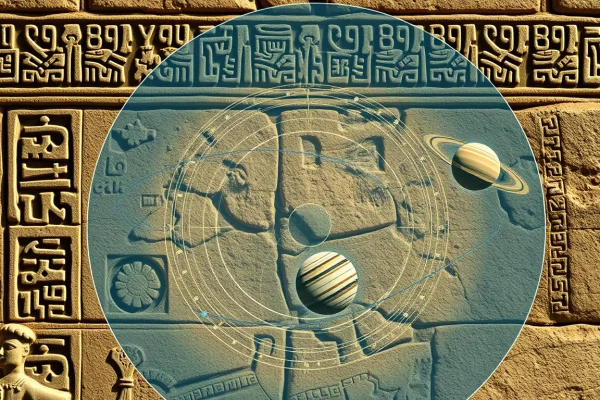
The Maya 819-day count has long been considered one of the most enigmatic cycles in Mesoamerican calendrics. Recent breakthroughs in 2023 by anthropologists John Linden and Victoria Bricker have finally deciphered its astronomical significance, revealing a complex system linking ritual time to planetary synodic periods.

Read More →
Modern Descendants of Classic Maya: Linguistic Lineage and Evidence

Modern Descendants of Classic Maya: Linguistic Lineage and Evidence

September 25, 2026 | Math & Writing | Husai Anguiano Tamayo

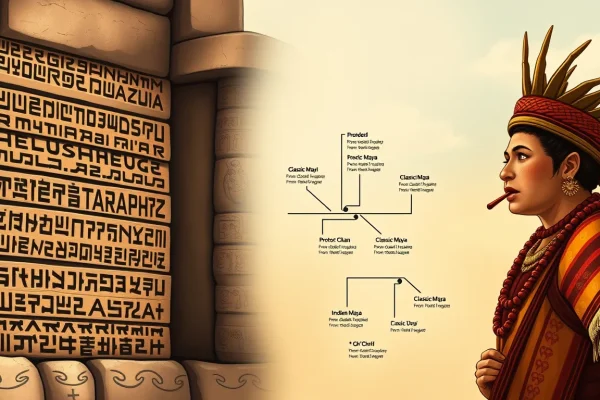
Classic Maya is the oldest historically attested member of the Mayan language family, serving as the ancestor to modern Ch’olan languages. Contemporary descendants include Ch’ol and Ch’orti’, spoken by indigenous communities today. Linguistic reconstruction and epigraphic evidence confirm this direct evolutionary link.

Read More →
The Function of Maya Lunar Series Glyph C: Astronomy and Calendar Mechanics

The Function of Maya Lunar Series Glyph C: Astronomy and Calendar Mechanics

September 25, 2026 | Math & Writing | Husai Anguiano Tamayo

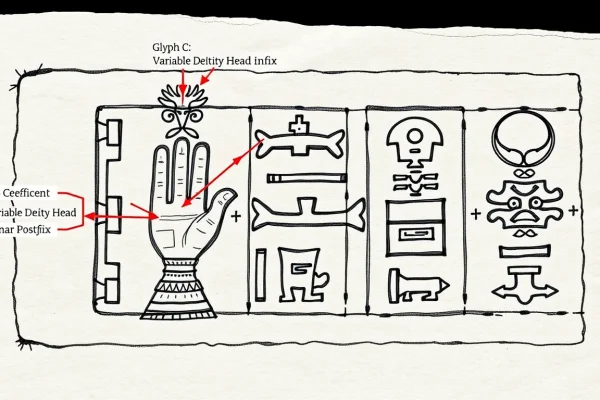
Glyph C is a critical component of the Maya Lunar Series, functioning as a marker for lunar months and deity patrons within the Supplementary Series. It records the age of the moon and utilizes variable deity heads to track six-month semesters within an eighteen-month cycle.

Read More →
Maya Deities Governing Celestial Events and Stars

Maya Deities Governing Celestial Events and Stars

September 25, 2026 | Maya Cosmology | Husai Anguiano Tamayo

Ancient Maya cosmology assigned specific deities to govern celestial bodies such as Venus, the North Star, and the Sun. This article explores the archaeological and codicial evidence linking gods like Xaman Ek and the Morning Star manifestations to astronomical phenomena.

Read More →
Acoustic Phenomena at El Castillo: The Quetzal Bird Echo

Acoustic Phenomena at El Castillo: The Quetzal Bird Echo

September 24, 2026 | Chichén Itzá | Husai Anguiano Tamayo

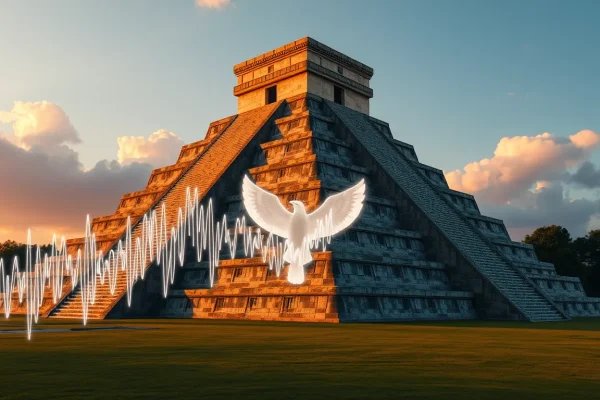
A handclap at the base of El Castillo pyramid produces a chirped echo resembling the call of the Quetzal bird. This phenomenon results from diffraction effects on the staircase steps, interpreted by scholars as potentially intentional archaeoacoustic design.

Read More →
Digital Epigraphy: How Software Helps Decipher Maya Calendar Texts

Digital Epigraphy: How Software Helps Decipher Maya Calendar Texts

September 23, 2026 | Digital Heritage | Husai Anguiano Tamayo

Digital epigraphy combines computational tools with traditional archaeology to analyze Maya hieroglyphic script. Software aids in pattern recognition, database management, and the decipherment of complex calendar systems within ancient inscriptions.

Read More →

Posts pagination

← Previous 1 … 7 8 9 10 11 … 18 Next →

About This Site

Reading the Sky, Time, and Architecture of the Maya

Recent Articles

  • LiDAR Revelations: Maya Population Density and Urban Complexity in Guatemala
  • Sacred Numbers in Maya Cosmology: Meaning of 13, 9, and 20
  • Did the Maya Record Comets in Their Codices? Evidence and Interpretation
  • The Maya 819-Day Count: Deciphering an Ancient Calendar Mystery
  • Chak Ek: The Role of Mars in Maya Astronomy and Cosmology
  • Home
  • Privacy Policy
  • About Us
  • Contact Us
  • Disclaimer
  • Terms of Service
© 2026 Maya Skies | Maya Astronomy, Calendars & Archaeology. All rights reserved. Powered by WordPress