
Short Answer
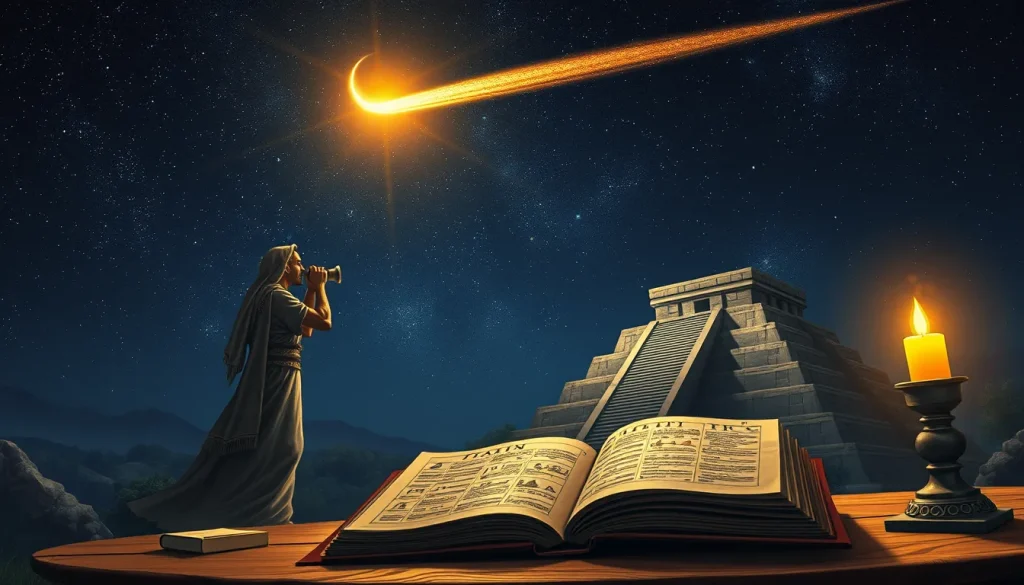
The question of whether the ancient Maya civilization recorded comets and meteor showers in their hieroglyphic script has long been a subject of intense scholarly debate. For much of the twentieth century, the consensus was that while the Maya meticulously tracked cyclical phenomena such as the movements of Venus, the Sun, and the Moon, irregular events like comets remained absent from their surviving corpus. However, emerging research in the twenty-first century, utilizing advanced orbital integrations and refined calendar correlations, has begun to challenge this view. Recent studies suggest that specific instances of comet appearances and meteor outbursts were indeed noted, often in conjunction with significant political events such as royal accessions.
This shift in understanding relies on the intersection of archaeology, astronomy, and digital heritage methodologies. By numerically integrating meteoroid-sized particles released by Comet Halley and comparing them with hieroglyphic dates, researchers have identified potential records of Eta Aquariid outbursts. Furthermore, new analyses of stelae at sites like Cobá and Ek’ Balam have uncovered correlations between Maya royal accessions and comets recorded in contemporary East Asian histories. These findings do not suggest that comets were central to Maya cosmology in the way Venus was, but rather that they were observed and recorded as significant omens or markers of time.
Main Explanation
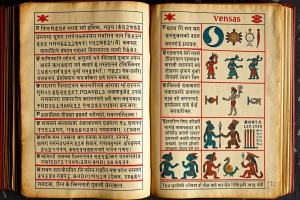
The ancient Maya possessed one of the most sophisticated astronomical traditions in the pre-Hispanic world. Their observational capabilities were grounded in a complex calendar system that allowed them to predict eclipses and planetary cycles with remarkable accuracy. The Dresden Codex, for instance, contains detailed tables for the synodic periods of Venus. However, comets differ fundamentally from planets; they are irregular, unpredictable, and often transient. This irregularity made them difficult to incorporate into the cyclical calendar systems that defined Maya timekeeping.
Historically, the lack of firm evidence led researchers to conclude that the Maya either did not notice comets or did not deem them worthy of inscription. A 1973 investigation highlighted in Science News noted that comparing dates of known historic novas and comets with Maya dates found no acceptable correlation. Even as recently as 2023, updates indicated that solid evidence continues to elude archaeologists, partly because Spanish conquistadores destroyed many original codices, leaving only copies made well after the Classic period. The destruction of these primary texts created a significant gap in the historical record, complicating efforts to verify astronomical observations.
Despite these challenges, the hieroglyphic script contains signs that researchers believe may refer to celestial phenomena beyond the standard planets. The difficulty lies not only in decipherment but also in accurately correlating the ancient Maya calendar to the European Julian or Gregorian calendars. Recent examination by researchers has proposed alternative decipherments of astronomical signs, suggesting it is possible to recognize written accounts of meteor showers embedded in the hieroglyphic corpus, especially the codices. These screen-fold books were the tools of the astronomer-priests, and while few survive, those that do contain rich astronomical data that may yet yield further secrets regarding irregular celestial visitors.
Evidence & Sources
The turning point in this debate comes from multidisciplinary studies combining archaeological epigraphy with modern astrophysics. In 2017, a study published in Planetary and Space Science by J. Hutch Kinsman and D. J. Asher presented evidence of Eta Aquariid outbursts recorded in the Classic Maya hieroglyphic script using orbital integrations. The authors numerically integrated meteoroid-sized particles released by Comet Halley to determine when outbursts would have been visible from Earth. They matched these windows with specific dates found in Maya inscriptions, arguing that no firm evidence had existed prior to this work that the ancient Maya civilization recorded specific occurrences of meteor showers or outbursts.
Further evidence emerged in 2026 regarding specific comet sightings. Sergio Martínez-González published research on the Maya Sky-Sun Inscription at Cobá and the East Asian Records of Comet X/773 B1. This study focused on Stela 20 at the Classic Maya site of Cobá, which records the accession of a ruler on 773 January 15 in the Julian calendar. Only two days later, on 773 January 17, Chinese histories report a “long star” in or beneath Shen, the seven principal stars of Orion. This object is now designated comet X/773 B1. A Japanese source records its visibility on 773 January 20. This tight temporal correlation suggests the Maya may have recorded the comet’s appearance in the context of royal legitimacy.
An earlier correspondence between a Maya royal accession and another comet recorded in Chinese histories is documented at Ek’ Balam, about 60 km northwest of Cobá. There, Ukit Kan Le’k Tok’ acceded on 770 May 26, exactly the date on which Chinese histories record comet C/770. These parallel records across hemispheres provide a robust framework for validating Maya astronomical observations against independent historical sources. While the 1973 search for proof came up short, these modern analyses utilizing digital orbital tools and cross-cultural historical records provide a compelling case that the Maya did track and record these events.
Deep Dive Analysis
Celestial Object
The primary celestial objects in question are comets and meteor showers associated with cometary debris, specifically Comet Halley and Comet X/773 B1. Comets are icy bodies that release gas and dust when they approach the Sun, creating a visible atmosphere and sometimes a tail. Meteor showers, such as the Eta Aquariids, occur when Earth passes through the debris trail left by a comet.
Observational Cycle
Unlike planets, comets do not follow a predictable short-term cycle visible within a human lifetime, with the exception of periodic comets like Halley. The Eta Aquariid meteor shower occurs annually in May, but outbursts are irregular. The comets identified in the Cobá and Ek’ Balam inscriptions were non-periodic or long-period visitors, making their appearance unique events rather than cyclical markers.
How Maya Observed It
Maya astronomers observed the sky with the naked eye, often from elevated structures or observatories like El Caracol. They recorded observations using hieroglyphic text on stone stelae and in bark-paper codices. The observation of a “long star” or a shower of falling stars would have been noted by priest-astronomers responsible for maintaining the calendar and advising rulers.
Archaeological/Textual Evidence
The evidence is twofold: epigraphic and cross-cultural. Epigraphically, specific glyphs on Stela 20 at Cobá and monuments at Ek’ Balam coincide with comet dates. Textually, Kinsman and Asher’s 2017 work identifies glyphic accounts of meteor showers in the codices. Cross-culturally, Chinese and Japanese histories from the eighth century CE record the same comets visible over Mesoamerica, providing an independent verification of the sky conditions during the Maya Classic period.
Calendar Connection
The Maya Long Count calendar allows for precise dating of events over millennia. By correlating Long Count dates to the Julian calendar, researchers can pinpoint exact nights when comets were visible. The accession dates of rulers were chosen carefully, often aligning with auspicious celestial events. The proximity of the comet sightings to royal accessions in 770 and 773 CE suggests these events were used to legitimize power.
Architecture Connection
While no specific “comet temple” exists, Maya architecture is generally aligned to cardinal directions and significant astronomical rise/set points. Observations of irregular events would likely take place from standard observational platforms. The recording of these events on stelae, which were public monuments, indicates that the architecture of memory (stone monuments) was used to preserve these transient sky events.
Cultural Meaning
In Maya cosmology, the sky was a realm of deities and ancestors. Irregular events like comets were often interpreted as omens. Associating a ruler’s accession with a rare celestial event like a comet would imply divine favor or a unique connection to the cosmos. Meteor showers, linked to Comet Halley, may have been associated with specific deities or ancestral messages, given the connection between Halley and the Eta Aquariids.
Uncertainty/Debate
Despite new evidence, debate persists. The destruction of most Maya codices by Spanish clergy means the sample size for textual evidence is incredibly small. Correlation of the Maya calendar to the European calendar still has a margin of error, though it has tightened significantly. Some scholars argue that the “long star” glyphs could refer to other phenomena. However, the convergence of orbital integration data, epigraphic decipherment, and East Asian historical records makes the comet hypothesis increasingly robust.
FAQ
Did the Maya track comets regularly like they did Venus?
No, comets were irregular and unpredictable. Unlike Venus, they could not be incorporated into cyclical calendar tables, but specific appearances were recorded as unique events.
What evidence links Maya inscriptions to comets?
Recent studies correlate specific Long Count dates on stelae at Cobá and Ek’ Balam with comet sightings recorded in contemporary Chinese and Japanese histories.
Why was evidence hard to find previously?
Most Maya codices were destroyed by Spanish conquistadores, and correlating the Maya calendar to the European calendar historically had significant margins of error.


Leave a Reply