Short Answer
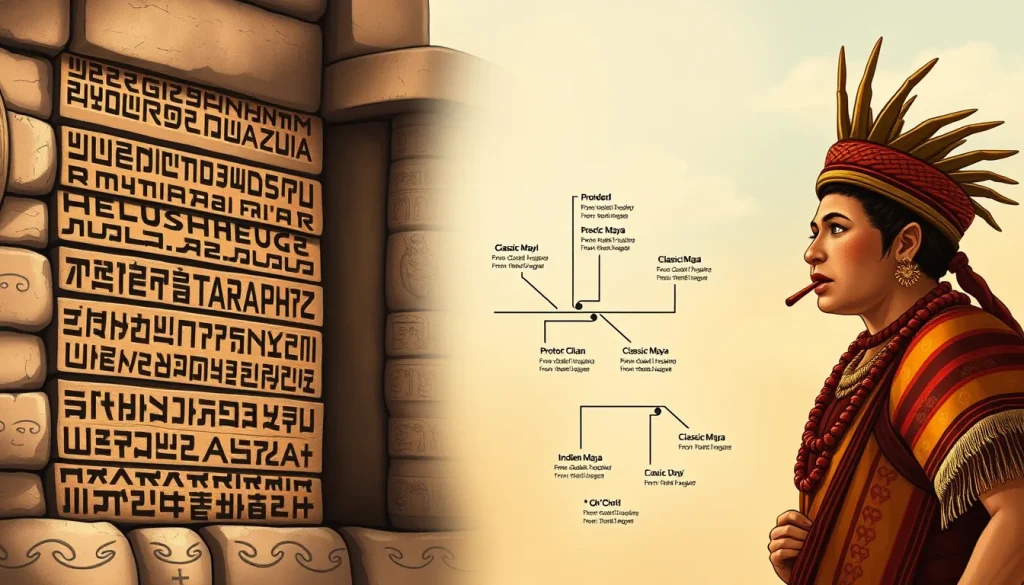
The question of which modern languages are related to the Classic Maya language is central to understanding the continuity of Maya civilization. Classic Maya, known endonymically as Ch’olti’, is the oldest historically attested member of the Mayan language family. It served as the primary language documented in the pre-Columbian inscriptions of the classical period, spanning roughly from 200 to 900 AD. While the civilization that produced the great hieroglyphic texts of the Maya Lowlands underwent significant political and social transformations, the language itself did not vanish. Instead, it evolved. Contemporary descendants of Classical Maya include Ch’ol and Ch’orti’, languages still spoken by indigenous Maya populations in Mexico, Guatemala, Belize, and Honduras. Speakers of these modern languages can often understand many Classic Mayan words, demonstrating a remarkable linguistic resilience over more than a millennium.
Main Explanation
The Mayan language family is a robust linguistic group associated with the Classic Mayan civilization, consisting of thirty-one languages still spoken today by at least six million indigenous Maya. Within this vast family, Classic Maya occupies a specific historical and structural position. It is the common ancestor of the Cholan branch of the Mayan language family. This branch is part of the larger Western Cholan–Tzeltalan subgroup. The relationship between the ancient script and modern speech is not merely theoretical; it is grounded in comparative linguistics and epigraphic analysis. The language is quite morphologically binding, meaning most words consist of multiple morphemes with relatively little irregularity. This structural consistency aids linguists in tracing the evolution from the ancient standard to modern vernaculars.
Regional and temporal variations exist within the Classic Maya corpus, which is considered normal given the long period of use spanning seven centuries. However, the texts make it clear that it functioned as a standard language across the Lowlands. The identification of the specific affiliation of this standard language has been a subject of scholarly debate. Some specialists posit that the language recorded in the Classic Maya hieroglyphic script belongs to the Ch’olti’an subgroup of the Cholan family. This classification places it directly in the lineage leading to modern Ch’orti’. Other linguistic reconstructions suggest a Proto-Ch’olan stage as the standard language of Classic Lowland Mayan texts. Regardless of the specific subgroup classification, the consensus remains that the modern Ch’olan languages are the direct heirs to the language of the stelae and codices.
The continuity of this language family is a testament to the cultural endurance of the Maya people. Despite the collapse of the Classic period political structures around 900 AD, the linguistic framework persisted. Modern speakers maintain grammatical structures and vocabulary that resonate with the inscriptions found at sites like Palenque. This connection allows contemporary communities to engage with their ancestral history not just as archaeological subjects, but as linguistic inheritors. The survival of Ch’ol and Ch’orti’ provides a living bridge to the past, enabling a deeper comprehension of the nuances within the hieroglyphic script that might be lost if the language were entirely extinct.
Evidence & Sources
The identification of the language of Mayan hieroglyphs relies on a combination of archaeological evidence, textual analysis, and linguistic reconstruction. Epigraphy can often profit by paying close attention to the verb morphology of close cousins such as Tzeltal and Tzotzil. By comparing the grammatical markers found in ancient inscriptions with those in modern languages, linguists can reconstruct the historical stage of the standard language. Recent debate has centered on the specific affiliation and historical stage of the Ch’olan language that served as the standard of the texts. Some linguists had already posited Ch’olan as the most likely language for the texts prior to more detailed morphosyntactic analyses.
Key evidence comes from morphosyntactic data relevant to the reconstruction of the historical stage of the standard language of Classic Lowland Mayan hieroglyphic texts. Markers unique to Eastern Ch’olan or Western Ch’olan, as well as markers reconstructible to Common Ch’olan through backward reconstruction, provide crucial data points. Furthermore, markers reconstructible to Proto-Ch’olan through forward reconstruction help establish the timeline of linguistic evolution. Scholars such as Houston, Robertson, and Stuart have proposed that the language belongs to the Ch’olti’an subgroup. Conversely, other experts like Mora-Marín have suggested a Proto-Ch’olan language as the standard. These debates highlight the complexity of historical linguistics but reinforce the core finding: the language is Ch’olan.
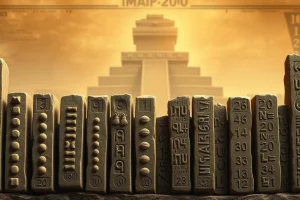
The physical evidence includes inscriptions from the Classic period, such as those found at Palenque. These texts utilize the Lowland Maya Hieroglyphs writing system. The consistency of the script across a wide geographic region suggests a standardized literary language, much like Latin in medieval Europe. This standardization supports the theory of a prestige dialect that influenced regional variations. The survival of this linguistic tradition is documented in comprehensive surveys of the language family, which account for the historical evolution and the social context in which they are spoken. The data confirms that the thirty-one languages of the family share a common origin, with Classic Maya representing a pivotal historical node in that development.
Deep Dive Analysis
Module A: Definition of Linguistic Lineage
Definition: The linguistic lineage of Classic Maya refers to the historical evolutionary path connecting the ancient standard language of the Classic period (200–900 AD) to contemporary Mayan languages. It defines the genetic relationship within the Mayan language family, specifically tracing the Cholan branch.
How it works: This relationship is established through comparative linguistics and epigraphy. Linguists analyze grammatical sketches, verb morphology, and morphemes found in hieroglyphic texts and compare them with modern spoken languages. By identifying shared irregularities and consistent morphological binding, researchers map the descent from Proto-Ch’olan to Classic Maya and finally to modern dialects.
Key components: The primary components of this lineage include the Western Cholan–Tzeltalan subgroup, the Cholan branch, and the specific Ch’olti’an subgroup. Key elements involve the writing system (Lowland Maya Hieroglyphs), the era of use (200–900 AD), and the geographic region (Maya Lowlands). The morphemes and syntactic markers serve as the genetic code of the language.
Example: A concrete example of this relationship is found in the mutual intelligibility of vocabulary. Speakers of modern Ch’ol and Ch’orti’ can understand many Classic Mayan words. For instance, specific verb forms and honorifics used in ancient inscriptions at Palenque have direct cognates in modern Ch’orti’ speech.
Historical evidence: The evidence is derived from pre-Columbian inscriptions of the classical period. These texts provide the oldest historically attested records of the language. Archaeological contexts, such as stelae and temple lintels, preserve the language in situ. Additionally, colonial documents and modern fieldwork with indigenous communities provide the comparative data necessary for reconstruction.
Common misconceptions: A common misconception is that Classic Maya is a dead language with no living speakers. In reality, while the specific classical dialect is no longer spoken as a daily vernacular, its direct descendants are vibrant living languages. Another misconception is that the language was monolithic without variation. Texts show regional and temporal variations, which is normal considering the long period of use. Finally, some believe the language is unrelated to modern Maya tongues, ignoring the robust evidence of the Cholan branch continuity.
FAQ
Is Classic Maya the same as modern Maya languages?
No, Classic Maya is the ancestral language. Modern languages like Ch’ol and Ch’orti’ are descendants that have evolved over time, though they share significant vocabulary and structure.
Can modern Maya speakers read hieroglyphs?
While they cannot automatically read the script without training, speakers of Ch’olan languages can often understand the spoken value of the words due to linguistic continuity.
When was Classic Maya spoken?
Classic Maya was primarily used during the Classic period of Maya civilization, approximately from 200 to 900 AD.
Leave a Reply