
Short Answer
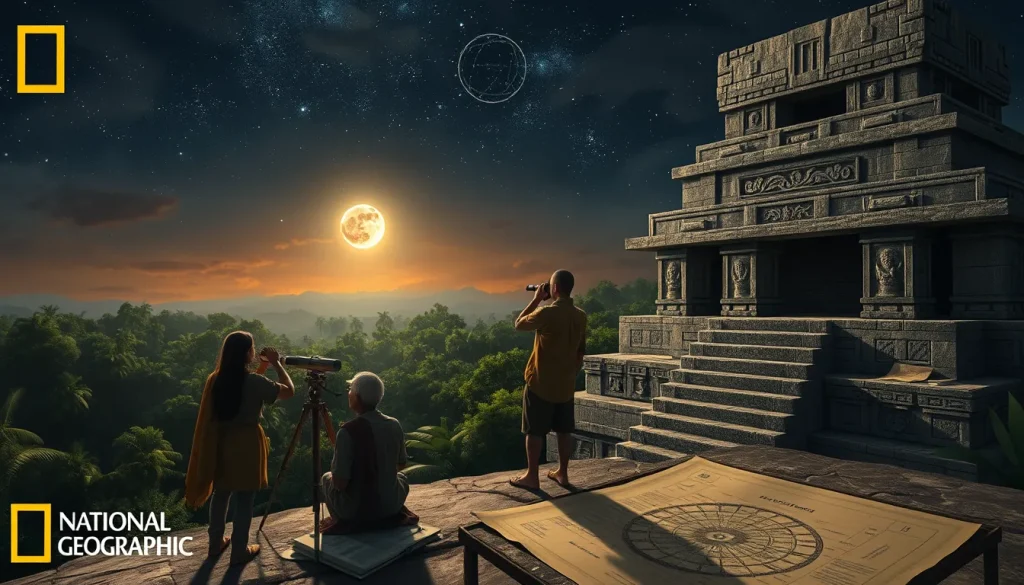
For the ancient Maya and other Mesoamerican societies, the planet Venus was not merely a bright object in the night sky but a powerful deity whose movements dictated the rhythm of life, death, and renewal. During the last three millennia before the Spanish Conquest, peoples living in central and southern modern Mexico and northern Central America evolved complex societies that expressed sophisticated astronomical concepts in their religion and government. Venus was one of the most important celestial bodies to these cultures, particularly the Aztecs and the Maya, who recognized that the brightest star appearing in the pre-dawn sky was identical to the one visible in the evening after sunset. This realization allowed them to acquire accurate knowledge about the regularities of the planet’s apparent motion, integrating these cycles into their calendrical systems and ritual activities.
Main Explanation
The importance of Venus to the Maya stemmed from its perceived influence over natural forces and human affairs, specifically regarding rain, maize, warfare, and sacrifice. While Venus was assiduously observed and studied, it also inspired various beliefs in which its morning and evening manifestations had different attributes. The Morning Star aspect was often linked to malevolent forces or warfare, while the Evening Star had connections to the underworld and fertility. According to written sources from post-Conquest central Mexico and iconographic elements in various codices, the morning star at its first appearance after inferior conjunction was believed to inflict harm on nature and mankind. However, recent studies reveal the inadequacy of assuming the heliacal rise was the only important Venus phenomenon. The Evening Star, which disappears into inferior conjunction in the underworld, held equal, if not greater, significance in certain contexts.
This duality was central to the Venus-Rain-Maize complex in the Mesoamerican world view. The planet’s cycles were synchronized with agricultural needs, as the observation of the sky facilitated a proper scheduling of agricultural and associated ritual activities in the yearly cycle. The familiarity with the regularities of the apparent motion of the Sun, the Moon, and bright planets is attested in a large amount of astronomical data contained in codices and monumental hieroglyphic inscriptions. Consequently, the symbolism surrounding Venus was not static; it evolved to encompass both the destructive power of drought or war and the life-giving potential of rain and harvest. Ethnographic and ethnohistoric sources further link the morning star aspect of Venus with a series of bearded hunting deities, highlighting its role in divinatory and astronomical texts.
Evidence & Sources
Archaeological and textual evidence provides a robust foundation for understanding the reverence accorded to Venus. The study of architectural alignments has disclosed that civic and ceremonial buildings were largely oriented on astronomical grounds. These structures were mostly aligned to sunrises and sunsets on certain dates, allowing the use of observational calendars. While many alignments focused on the Sun, the precision required to track Venus suggests that specific architectural features were designed to mark its extreme positions or significant phases. This architectural evidence complements the data contained in codices, such as the Postclassic Maya codices, which explore the mythology surrounding the appearances and disappearances of Venus from the sky.
Textual evidence is primarily found in hieroglyphic inscriptions and surviving manuscripts. The importance of the evening star and events other than heliacal risings is attested in Mayan inscriptions and codices. These documents reveal that the Maya acquired quite accurate knowledge about the regularities of the planet’s apparent motion. The data suggests that while the heliacal rise was significant, the entire cycle was monitored. Modern archaeological analysis continues to validate these records, showing that the observation of the sky had an important role among the Maya, Aztecs, and other prehispanic peoples of Mesoamerica. The integration of this data into sophisticated calendrical systems demonstrates a high level of scientific achievement intertwined with spiritual belief.
Deep Dive Analysis
Celestial Object
Venus is the brightest planet in the solar system and appears as either the Morning Star or the Evening Star. To the Maya, this was not seen as two separate objects but as a single entity undergoing transformation. The planet’s brightness and visibility made it a primary focus of astronomical attention, distinct from the fixed stars and other planets.
Observational Cycle
The Venus cycle involves periods of visibility and invisibility. Key phases include the heliacal rise (first appearance as Morning Star), superior conjunction (behind the Sun), evening star visibility, and inferior conjunction (between Earth and Sun). Although there is a considerable amount of data regarding the malevolent aspect of the heliacal rise, it has been argued that the Evening Star which disappears into inferior conjunction in the underworld had an equal, if not greater, significance. This full cycle was tracked with precision.
How Maya Observed It
The Maya observed Venus with the naked eye, recording its positions over centuries. They were aware that the brightest star appearing in certain periods in the pre-dawn sky was identical to the one that at other times was visible in the evening after sunset. This long-term observation allowed them to predict its movements and integrate them into their ritual calendar.
Archaeological and Textual Evidence
Evidence is found in codices and monumental hieroglyphic inscriptions. Relevant information is provided by archaeological data, including iconographic elements in various codices that seem to confirm reports of Venus’s influence. The Dresden Codex, for instance, contains tables dedicated to Venus cycles. Ethnographic and ethnohistoric sources link the morning star aspect of Venus with a series of bearded hunting deities, providing context for the iconography found in these texts.
Calendar Connection
Venus cycles were integrated into the sophisticated calendrical system of the Maya. The planet’s apparent motion regularities were used to schedule ritual activities. The synchronization of Venus cycles with the 260-day sacred calendar and the 365-day solar calendar allowed for complex divinatory computations. This facilitated a proper scheduling of agricultural and the associated ritual activities in the yearly cycle.
Architecture Connection
Civic and ceremonial buildings were largely oriented on astronomical grounds. The study of architectural alignments has disclosed that these orientations allowed for the use of observational calendars. While mostly oriented to sunrises and sunsets, the precision of Maya architecture suggests specific venues for observing planetary events like the extremes of Venus’s path.
Cultural Meaning
Venus was associated with rain, maize, warfare, and sacrifice. For the Aztecs, the Maya, and many other Mesoamerican societies, Venus was one of the most important celestial bodies. Its morning and evening manifestations had different attributes, influencing whether it was seen as a bringer of rain or a harbinger of war. The Venus-Rain-Maize complex highlights how astronomical observation was directly tied to subsistence and survival.
Uncertainty and Debate
Recent studies have revealed the inadequacy of the common assumption that the heliacal rise was the most, if not the only, important Venus phenomenon. Scholars debate the relative weight of the Morning Star versus the Evening Star in different periods and regions. Some argue the Evening Star had greater significance due to its association with the underworld and regeneration, challenging earlier interpretations that focused solely on the warfare aspects of the Morning Star.
FAQ
Did the Maya know Venus was a planet?
Yes, they were aware that the brightest star appearing in the pre-dawn sky was identical to the one visible in the evening after sunset, indicating knowledge of its planetary nature.
Why was the Morning Star considered dangerous?
According to written sources and codices, the morning star at its first appearance after inferior conjunction was believed to inflict harm on nature and mankind.
How did Venus influence agriculture?
Venus observations facilitated a proper scheduling of agricultural and associated ritual activities, forming part of the Venus-Rain-Maize complex.
Are there buildings aligned to Venus?
Yes, the study of architectural alignments has disclosed that civic and ceremonial buildings were largely oriented on astronomical grounds, including planetary positions.

Leave a Reply