
Short Answer
The Tzolk’in (also spelled Tzolkin) stands as the spiritual heartbeat of Maya timekeeping, a sophisticated 260-day cycle that governed the ritual life, divination practices, and personal identities of the ancient Maya civilization. Unlike solar calendars designed to track agricultural seasons, the Tzolk’in functioned as a sacred almanac, determining auspicious days for warfare, marriage, planting, and religious ceremonies. Its influence extended beyond the Maya realm, finding parallels in the Aztec tonalpohualli and other Mesoamerican systems, demonstrating a shared cosmological understanding across pre-Columbian cultures. Today, the Tzolk’in remains a living tradition, actively counted by Day Keepers in the highlands of Guatemala, bridging over two millennia of continuous human history.
Main Explanation
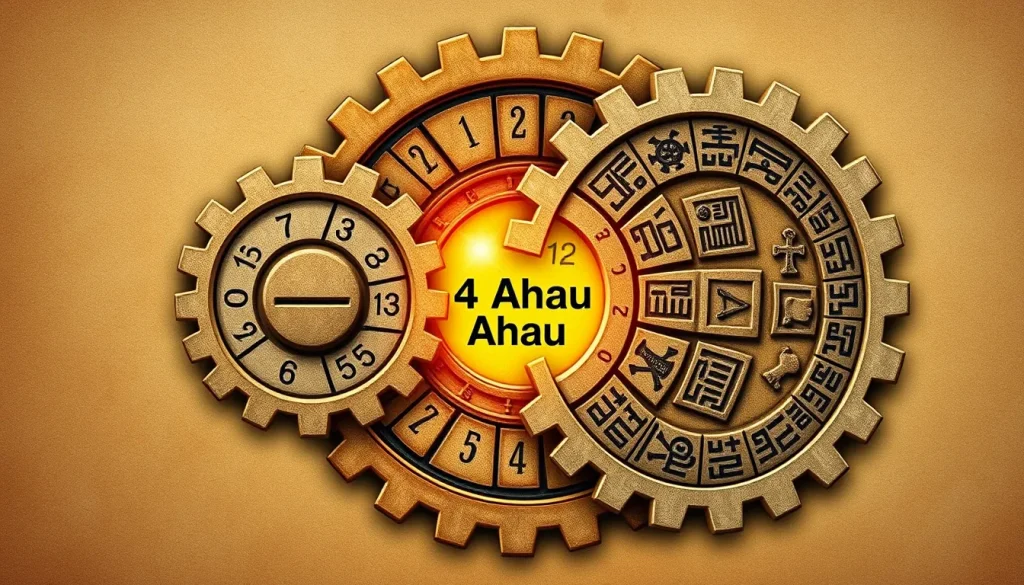
At its core, the Tzolk’in is a permutation cycle generated by the intermeshing of two smaller, independent cycles: a sequence of 13 numbers and a sequence of 20 named days. This structure creates a least common multiple of 260 unique day positions before the cycle repeats. The number 13 held profound cosmological significance for the Maya, often associated with the levels of the upper world or heavens, while the 20 day names represented a complete set of divine forces or deities that influenced daily life.
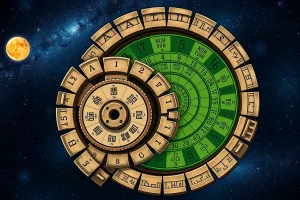
The mechanism operates like two interlocking gears. One gear has 13 teeth (the numbers 1 through 13), and the other has 20 teeth (the day names, such as Imix, Ik, Akbal, etc.). Each day, both gears advance by one position. A day is identified by the combination of the current number and the current name, for example, 1 Imix. The following day would be 2 Ik. Because 13 and 20 share no common factors, the specific combination of a number and a name does not repeat until 260 days have passed. This ensures that every day in the cycle possesses a unique energetic signature used by priests and shamans for divination.
Etymologically, the word tzolk’in is a Western coinage derived from Yucatec Maya, meaning “division of days” or “count of days.” Contemporary Maya groups who have maintained the tradition often use different terms; for instance, the K’iche’ refer to it as Aj Ilabal Q’ij (“the sense of the day”) and the Kaqchikel use Chol Q’ij (“the organization of time”). This linguistic distinction highlights that while the mathematical structure is consistent, the cultural framing varies among different Maya ethnolinguistic groups.
Evidence & Sources
Archaeological and epigraphic evidence confirms the antiquity and persistence of the Tzolk’in. The earliest direct evidence of the 260-day count dates to approximately the 3rd century BC, though scholars suggest its origins may be even older, potentially rooted in the Preclassic period. Inscriptions found on stelae and codices, such as the Dresden Codex, meticulously record Tzolk’in dates alongside Long Count and Haab dates, allowing modern archaeologists to correlate ancient events with the Gregorian calendar.
Historical sources indicate that the Tzolk’in was not merely a theoretical construct but a practical tool embedded in the fabric of society. It dictated the timing of critical state and personal decisions. Britannica notes that within the Tzolk’in are two smaller cycles of days numbered from 1 to 13 and an ordered series of 20 named days, a structure that varied slightly in day names throughout Mesoamerica but retained the 260-day total. The persistence of this system is remarkable; despite the Spanish Conquest and subsequent religious suppression, the calendar survived in oral and practical traditions.
Modern ethnographic studies confirm that the Tzolk’in is still in active use in several Maya communities in the Guatemalan highlands. However, its practice is not universal; sources indicate that while use is spreading in some regions, it is opposed by Evangelical Christian converts in other Maya communities. This contemporary dynamic underscores the calendar’s role not just as a historical artifact, but as a living element of cultural identity and religious practice that continues to evolve.
Deep Dive Analysis
To fully understand the mechanics and cultural weight of the Tzolk’in, we must examine its structural units, calculation methods, and relationship to other timekeeping systems. This analysis utilizes the framework of Mesoamerican calendrics to deconstruct how this 260-day cycle functioned as a precise instrument of cosmic order.
Units and Structure
The basic unit of the Tzolk’in is the kin, or day. Unlike the Haab, which groups days into months (uinals) of 20 days to approximate the solar year, the Tzolk’in does not group days into months in the same linear fashion. Instead, it relies on the continuous cycling of the two coefficients:
- The 13 Numbers (Tones): Representing the conceptual framework or “tone” of the day.
- The 20 Day Names (Suns): Representing the specific deity or natural force governing the day.
The 20 day names in the Yucatec tradition include Imix, Ik, Akbal, Kan, Chicchan, Cimi, Manik, Lamat, Muluc, Oc, Chuen, Eb, Ben, Ix, Men, Cib, Caban, Etznab, Cauac, and Ahau. Each name carries specific associations with direction, color, and deity, creating a complex matrix of meaning for every single day.
Calculation and the Calendar Round
The mathematical elegance of the Tzolk’in lies in its synchronization with the 365-day solar calendar, known as the Haab’. When the 260-day Tzolk’in and the 365-day Haab’ run concurrently, they create a larger cycle known as the Calendar Round. To calculate the length of the Calendar Round, one finds the least common multiple of 260 and 365.
Mathematically, 260 and 365 share a common factor of 5. The calculation is as follows: (260 × 365) / 5 = 18,980 days. This period equals approximately 52 solar years. For the ancient Maya, the completion of a Calendar Round was a significant milestone, akin to a “century” in modern terms. It was believed that at the end of each 52-year cycle, the world was in danger of ending, necessitating specific rituals to ensure the sun would rise again.
Example Date and Correlation
A specific date in the Maya system is often recorded as a triple combination: the Long Count (absolute time), the Tzolk’in (sacred time), and the Haab’ (civil time). For example, a classic inscription might read: 9.10.10.0.0 13 Ahau 18 K’umku. Here, “13 Ahau” is the Tzolk’in position. Because the Tzolk’in repeats every 260 days, the “13 Ahau” position occurs roughly once every 260 days, but within the context of the 52-year Calendar Round, the combination of “13 Ahau” and “18 K’umku” (the Haab’ date) only occurs once every 52 years. This precision allowed Maya astronomers and priests to schedule events with extreme long-term accuracy.
Historical and Current Traditions
Historically, the Tzolk’in was the domain of the ah kin (priest of the sun) or day keepers. They used the calendar to cast horoscopes, determine the nature of a child’s destiny based on their birth date, and select dates for warfare. The day of birth was believed to imprint specific qualities upon an individual, influencing their profession and character.
In contemporary traditions, particularly among the K’iche’ and Kaqchikel Maya, the calendar continues to guide agricultural rituals and community ceremonies. Day Keepers (Aj Q’ij) interpret the energy of the current day to advise community members. However, as noted in ethnographic records, this practice faces challenges from modern religious conversions, creating a complex landscape where ancient timekeeping coexists with, or is suppressed by, newer belief systems.
Misconceptions
A common misconception regarding the Tzolk’in and Maya calendars in general is the idea that they “ended” in 2012. This confusion stemmed from the completion of a major cycle in the Long Count calendar, not the Tzolk’in. The Tzolk’in is a perpetual cycle; it does not have an end date. It continued seamlessly through 2012 and continues today. Another misconception is that the Tzolk’in is purely astrological in the Western sense. While it involves divination, it is deeply tied to agricultural cycles, community governance, and cosmological balance, rather than individual personality traits alone.
FAQ
How is the Tzolk'in pronounced?
The Tzolk'in is pronounced approximately as [t͡sol ˈkʼin]. The 'tz' is like the 'ts' in 'cats', and the 'k'in' has a glottalized 'k' sound.
Is the Tzolk'in still used today?
Yes, the Tzolk'in is still used by several Maya communities in the Guatemalan highlands, where Day Keepers maintain the count for ritual and ceremonial purposes.
What is the difference between the Tzolk'in and the Haab'?
The Tzolk'in is a 260-day sacred calendar used for rituals and divination, while the Haab' is a 365-day solar calendar used for agriculture and civic events.
Why does the Tzolk'in have 260 days?
Theories suggest 260 days may relate to the human gestation period, the growing cycle of maize, or the orbital period of Venus, though no single origin is definitively proven.
Leave a Reply