
Short Answer
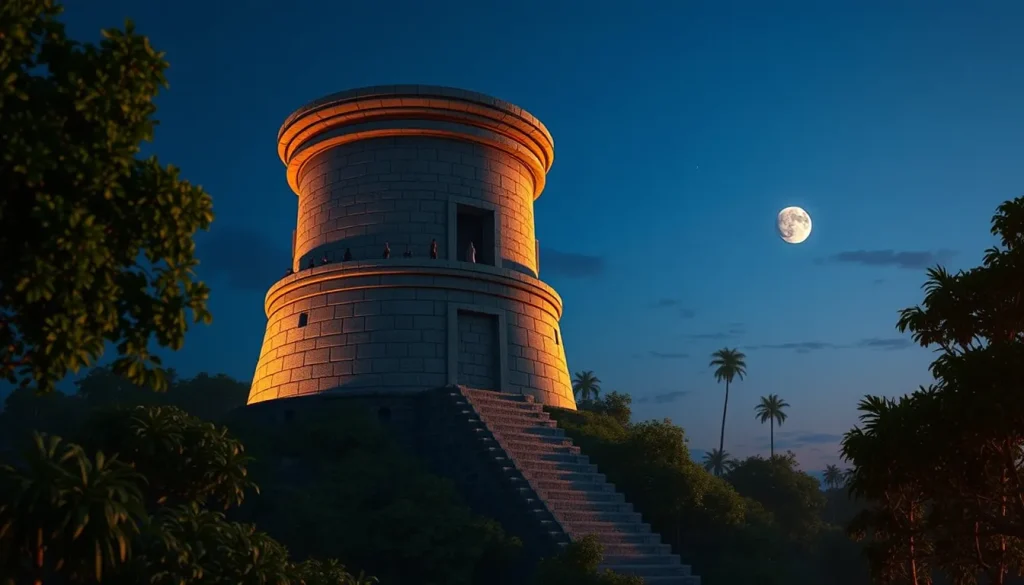
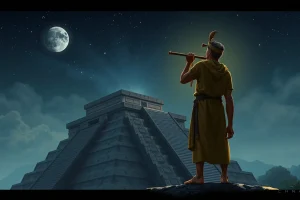
The ancient Maya city of Chichén Itzá stands as a testament to the sophisticated astronomical knowledge possessed by Mesoamerican civilizations. Central to this legacy is the observation of Venus, a celestial body that held profound religious and political significance. Unlike modern astronomers who utilize telescopes and digital sensors, the Maya relied on architectural alignments and naked-eye observation to track the movements of this bright planet. The structure known as El Caracol served as a primary vantage point, designed to rise above the dense Yucatan canopy to facilitate sky-watching. Through careful alignment of windows, staircases, and platforms, Maya astronomers integrated the erratic motions of Venus into their calendar systems and societal decisions, particularly regarding warfare.
Main Explanation
The observation of Venus at Chichén Itzá was driven by the planet’s unique and complex visibility patterns. Seen from the earth, Venus moves in a tricky fashion, appearing, disappearing, then reappearing, first as a morning star, then as an evening star. While observers in the past, such as the ancient Greeks, misconstrued these appearances as two different stars, the Mayans knew better. They recognized Venus in both the morning and evening skies as one and the same celestial entity. This understanding was crucial for their calendrical calculations and cosmological beliefs.
The cycle of Venus is distinct and demanding to track without instrumentation. If one were to watch the horizon at sunrise, Venus might first appear over the horizon just at daybreak. Each day, it would rise a little earlier, climb a little higher, and shine a little brighter, before its light was drowned out by the sun. Then the pattern would reverse, and Venus would rise a little later each day, until finally it would fail to rise. This rise and fall of Venus as a morning star takes approximately 263 days. Following this phase, there is a period of about 50 days where Venus disappears and cannot be seen in the sky at all. Subsequently, Venus reappears in the evening sky, where it remains for another 263-day phase. This intricate cycle required dedicated observation posts to monitor the heliacal rising and setting times accurately.
Venus held tremendous significance for the Maya, far beyond mere curiosity. This bright planet was considered the sun’s twin and was associated with a war god. Mayan leaders used the changing position of Venus to plan appropriate times for raids and battles. The alignment of military campaigns with specific astronomical events was believed to ensure success and divine favor. Therefore, the observation of Venus was not merely a scientific endeavor but a strategic necessity for the governance and security of the city-state.
Evidence & Sources
Archaeological and archaeoastronomical investigations provide substantial evidence regarding how Venus was observed at Chichén Itzá. The primary structure associated with these observations is El Caracol. To modern eyes, the rounded dome of El Caracol looks like it could house a telescope, but it does not. Instead, there is plenty of evidence suggesting that El Caracol was used as a lookout on the heavens. In the Yucatan, dense with trees and scrub brush and flat as a tortilla, sky-watching of any kind is impossible without some way to rise above the leafy canopy. The tower atop El Caracol sits high on a four-cornered but not quite square platform and gives excellent unobstructed views of the skies and surrounding landscape.
Scientific analysis of the building’s orientation supports its function as an observatory. The grand staircase that marks the front of El Caracol faces 27.5 degrees north of west. This orientation is out of line with the other buildings at the site, indicating a specific purpose rather than general urban planning symmetry. This alignment is almost perfect for observing specific astronomical events related to Venus. Investigations published in scientific literature, such as the 1975 study in Science, reveal a number of significant astronomical events coinciding with many of the measured alignments of the structure. While not every alignment appears to have an astronomical match that modern researchers can recognize, the correlation with Venus is strong.
Modern visits and continued study reinforce the historical significance of the site. Contemporary astronomers and historians, such as those from the Vatican Observatory, have traveled to Chichén Itzá specifically to encounter El Caracol. Their observations confirm that the building, apart from being a monument related to Quetzalcoatl, was designed with astronomical functionality in mind. The search for significant astronomical events to match the alignments has included those which seem of obvious functional importance: sun, moon, and planetary extremes. The emphasis on celestial bodies documented in literature as having been of importance validates the interpretation of El Caracol as a tool for tracking Venus.
Deep Dive Analysis
Celestial Object: The primary object of observation was Venus, known to the Maya as a powerful deity linked to warfare and the sun. Its brightness and erratic movement patterns made it a focal point for Maya astronomy.
Observational Cycle: The Venus cycle observed by the Maya consisted of distinct phases. The morning star phase lasted 263 days, followed by a 50-day period of invisibility. The evening star phase also lasted 263 days. This complex motion required long-term tracking to predict future positions accurately.
How Maya Observed It: Observation was conducted using architectural sightlines. The tower atop El Caracol provided the necessary elevation to see over the dense Yucatan forest. Windows and shafts within the structure were likely used to frame specific horizon points where Venus would appear or disappear.
Archaeological/Textual Evidence: The alignment of the El Caracol staircase at 27.5 degrees north of west is a key piece of archaeological evidence. Additionally, Mayan pictographs and codices document the knowledge of Venus as a single object appearing in both morning and evening skies, distinguishing them from contemporary Greek astronomers.
Calendar Connection: The observation of Venus was integral to the Maya calendar system. The 584-day approximate cycle (combining the visible and invisible phases) was tracked to mark important dates. The heliacal rising and setting times could have served to mark important dates in the calendar, potentially including those hitherto unrecognized constellations or fainter stars sighted in the windows.
Architecture Connection: El Caracol is the architectural manifestation of this astronomical knowledge. The building’s design, including its rounded dome and specific platform orientation, was dictated by the need to observe Venus. The structure acts as a monumental instrument, freezing astronomical alignments in stone.
Cultural Meaning: Venus was considered the sun’s twin and a war god. This cultural meaning drove the practical application of astronomical observations. Mayan leaders used the changing position of Venus to plan appropriate times for raids and battles, linking celestial mechanics directly to terrestrial conflict.
Uncertainty/Debate: Despite strong evidence, uncertainties remain. Not every alignment within El Caracol appears to have an astronomical match which researchers can recognize. It may be that only some of the sighting possibilities were actually functional. Furthermore, while a grand cosmic scheme is not proposed by all researchers, the building’s relation to Quetzalcoatl suggests layers of religious meaning beyond pure astronomy. Perhaps fainter stars or unrecognized constellations were sighted in the windows, the functions of which are lost to modern understanding.
FAQ
Did the Maya use telescopes at Chichén Itzá?
No, the Maya did not use telescopes. El Caracol looks like it could house one to modern eyes, but it was used as a lookout to rise above the tree canopy for naked-eye observation.
Why was Venus important to the Maya?
Venus was considered the sun's twin and a war god. Leaders used its changing positions to plan appropriate times for raids and battles.
How long is the Venus cycle observed by the Maya?
The morning star phase takes 263 days, followed by 50 days of invisibility, and then an evening star phase of another 263 days.
Is El Caracol aligned with other buildings at the site?
No, the grand staircase faces 27.5 degrees north of west, which is out of line with the other buildings, indicating a specific astronomical purpose.
Leave a Reply