
Short Answer
The study of Maya astronomy reveals a civilization deeply invested in the cyclical movements of celestial bodies, particularly the Sun. For the Precolumbian Maya, tracking the solar year was not merely an academic pursuit but a fundamental necessity for agricultural planning, ritual scheduling, and cosmological order. Unlike modern societies that rely on mechanical clocks and digital calendars, the Maya utilized the landscape itself, employing architecture, stone monuments, and naked-eye observation to measure time with remarkable accuracy. Recent archaeological investigations and digital modeling have shed new light on these ancient methods, confirming that structures such as Stela D at Copan functioned as sophisticated sundials.
The Maya understanding of the solar year surpassed many contemporary civilizations. Their calculations of the tropical solar year were more accurate than those of the Spanish conquistadors upon first arrival, demonstrating a long-term commitment to observational astronomy. This knowledge was encoded into their architecture, where temples and plazas were oriented to capture specific solar events such as solstices, equinoxes, and zenith passages. By analyzing shadow patterns and architectural alignments, researchers can reconstruct how priest-astronomers interpreted the sky to guide the rhythms of daily life and ceremonial practice.
Main Explanation
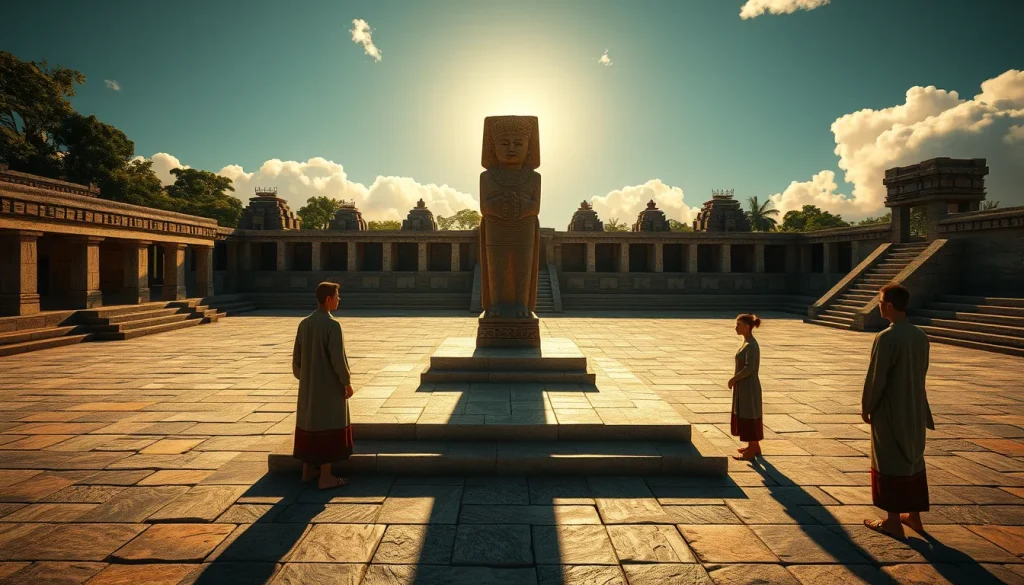
The Maya tracked the movement of the Sun through a combination of direct observation and architectural engineering. The primary method involved monitoring the position of the Sun on the horizon at sunrise and sunset, as well as the length and direction of shadows cast by vertical objects during the day. Vertical monuments, known as stelae, often served as gnomons—the part of a sundial that casts a shadow. When placed in specific orientations within plazas, these stelae cast shadows that aligned with other structures or markers on key dates.
This system allowed the Maya to divide the year into significant periods. The solstices, marking the longest and shortest days, and the equinoxes, where day and night are of equal length, were critical markers. Additionally, the Maya paid close attention to solar zenith passages, moments when the Sun passes directly overhead at noon. In the tropical latitudes where many Maya cities were built, this phenomenon occurs twice a year. The observation of these events required precise knowledge of local geography and consistent record-keeping over generations. The integration of this data into their writing system and positional numeral system facilitated the creation of calendars that could predict these events far into the future.
The purpose of this skywatching was multifaceted. While agricultural schedules were a primary driver, ensuring planting and harvesting occurred at optimal times, the solar cycle also held deep cosmological significance. The movement of the Sun was often associated with the journey of deities through the underworld and the sky. Therefore, tracking the Sun was also a religious act, ensuring that rituals were performed at auspicious moments to maintain balance in the universe. Temples were frequently constructed with features oriented to these celestial events, turning the city itself into a massive observational instrument.
Evidence & Sources
Archaeological evidence supporting Maya sun tracking is found in the alignment of structures and the analysis of specific monuments. A pivotal case study is Stela D at Copan, Honduras. Archaeological investigations indicate that the Maya of Copan used Stela D, its altar, and the surrounding structures as a sundial to record time. Researchers constructed a digital model of Stela D to study the shadows cast at different times of day and on different dates of the year. This digital heritage approach allowed them to simulate shadows during solstices, equinoxes, and solar zenith passages without damaging the ancient stone.
The results suggested that the size and orientation of the shadows served as time markers for ancient residents. Wooden posts and stelae could have been used to measure time and perform associated rites in the northern sector of the Main Plaza of the Copan Archaeological Park. This physical evidence aligns with broader understandings of Maya astronomy. According to general archaeological consensus, the Classic Maya developed some of the most accurate pre-telescope astronomy in the world. Their estimate of the length of the synodic month was more accurate than Ptolemy’s, and their calculation of the length of the tropical solar year was more accurate than that of the Spanish when the latter first arrived.
Further supporting this is the work of modern scholars such as Ivan Šprajc, who notes that the Aztecs, Maya, and other Mesoamerican peoples achieved advanced knowledge of the regularities of the apparent motion of the Sun, Moon, and various planets. Much of this knowledge enabled orientation in space and time and was particularly useful for societal organization. The convergence of textual evidence, architectural alignment, and modern digital analysis provides a robust framework for understanding how the Maya interacted with the solar cycle. These sources confirm that sun tracking was a systematic, scientifically rigorous practice embedded in the physical layout of Maya cities.
Deep Dive Analysis
Celestial Object: The Sun
The Sun was the primary timekeeper for the Maya, governing the Haab’ or solar calendar. Its apparent motion across the sky defined the seasons and the agricultural year. Unlike the complex cycles of Venus, which held specific war-related connotations, the Sun’s cycle was universal and essential for survival. The Maya recognized the Sun not just as a light source but as a deity, often associated with kinship and royalty. Tracking its movement was synonymous with tracking the life force of the cosmos.
Observational Cycle
The Maya focused on several key points in the solar cycle. The tropical solar year, approximately 365.2422 days, was the main unit of measurement. Within this year, the solstices (summer and winter) marked the extremes of solar declination. The equinoxes marked the midpoint. Unique to the tropical zone was the zenith passage, where the Sun reaches 90 degrees altitude. The Maya calibrated their calendars to these events, ensuring their ritual year remained synchronized with the solar year. This required intercalary adjustments similar to leap years, though handled within their complex calendar rounds.
How Maya Observed It
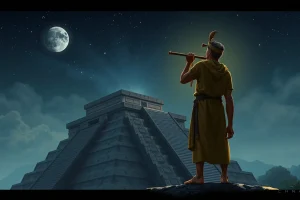
Observation was conducted by priest-astronomers from specific vantage points. One of the purposes that Maya priest-astronomers observed the celestial movement is to discover the pattern that supports the agricultural schedule. They used horizon markers, such as distant mountains or constructed towers, to note where the Sun rose and set. During the day, they utilized gnomonic devices. As noted in investigations at Copan, wooden posts and stelae could have been used to measure time. The shadow cast by a vertical object changes length and direction predictably throughout the year, providing a reliable clock.
Archaeological/Textual Evidence
The primary evidence comes from architecture and epigraphy. At Copan, the digital model of Stela D demonstrated how shadows interacted with the plaza. Many temples from the Maya architecture have features oriented to celestial events. For example, windows or doorways might frame the rising sun on the solstice. Textual evidence includes codices and inscriptions that record astronomical data. The Dresden Codex, for instance, contains tables related to celestial cycles, though solar tables are less common than lunar or Venus tables. However, the architectural evidence is ubiquitous across the Maya region.
Calendar Connection
The solar tracking directly informed the Haab’ calendar, a 365-day solar calendar consisting of 18 months of 20 days plus a short month of 5 days. While the Haab’ did not account for the quarter-day fraction explicitly in its count, the Maya knew the actual length was longer. Their calculation of the length of the tropical solar year was more accurate than that of the Spanish. This knowledge allowed them to maintain long-term accuracy through observation rather than simple arithmetic accumulation. The Calendar Round combined the Haab’ with the sacred Tzolk’in, creating a 52-year cycle that synchronized solar and ritual time.
Architecture Connection
Architecture served as the hardware for Maya astronomy. Structures were not merely buildings but instruments. At Copan, Stela D and its altar functioned as a sundial. Elsewhere, E-Groups are architectural complexes specifically designed for solar observation. These typically consist of a western pyramid and a eastern range of buildings that align with sunrise positions on solstices and equinoxes. The orientation of these structures confirms that urban planning was dictated by astronomical requirements. The size and orientation of the shadows may have served as a time marker that ancient residents of Copan used to coordinate communal activities.
Cultural Meaning
Beyond agriculture, solar tracking legitimized political power. Rulers often claimed descent from the Sun God. By controlling the calendar and predicting solar events, the elite demonstrated their connection to the divine. Rituals performed at solstices reinforced the ruler’s role as the intermediary between the human and celestial realms. The accuracy of their astronomy aided by their fully developed writing system and their positional numeral system, both of which are fully indigenous to Mesoamerica, underscored their intellectual sophistication. This knowledge was a source of pride and power, distinguishing the Maya from neighboring cultures.
Uncertainty/Debate
While the general capability of the Maya to track the Sun is well-established, specific mechanisms vary by site. Not every stela was a sundial, and not every temple was an observatory. Debates continue regarding the precision of certain alignments and whether some were symbolic rather than functional. Additionally, the exact methods used to transmit this knowledge across generations without modern instruments remain a subject of study. However, the consensus among archaeologists and astronomers like Ivan Šprajc is that the Maya achieved advanced knowledge of the regularities of the apparent motion of the Sun. Ongoing digital heritage projects continue to refine our understanding of these ancient technologies.
FAQ
Did the Maya use telescopes to track the Sun?
No, the Maya developed some of the most accurate pre-telescope astronomy in the world using naked-eye observation and architectural alignments.
What is Stela D at Copan?
Stela D is a monument at Copan, Honduras, that archaeological investigations show was used as a sundial along with its altar to record time and shadow patterns.
Why was tracking the Sun important to the Maya?
One of the primary purposes was to discover the pattern that supports the agricultural schedule, ensuring planting and harvesting occurred at the correct times.
Leave a Reply