
Short Answer
The civilization of the Maya, which has existed since about 1800 BC on the Yucatan Peninsula, was at its peak during the Classic Period between 250 and 800 AD. Classical Maya civilization was highly advanced and developed many areas of science, perhaps the most significant being astronomy, which was important for agriculture. Based on astronomical observations, the Maya invented an elaborate system of calendars. Understanding how Maya mathematics worked with calendars requires an examination of their unique numeration system, their conceptualization of time as both cyclical and linear, and the archaeological evidence that preserves these calculations today. The interplay between mathematical notation and calendrical cycles allowed the Maya to track time over millennia with a precision unmatched in the pre-Columbian world.
Main Explanation
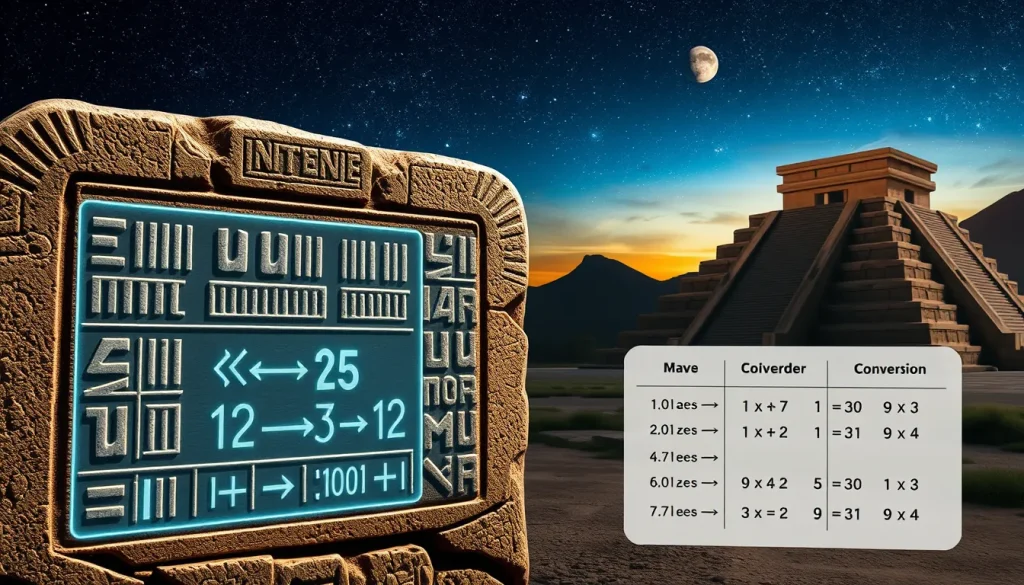
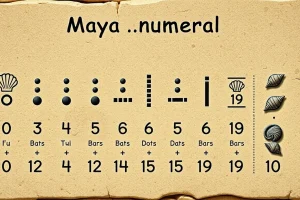
At the heart of Maya chronology lies a sophisticated mathematical framework known as vigesimal numeration, or base-20. Unlike the modern decimal (base-10) system, the Maya counted using units of twenty. This system likely originated from counting on both fingers and toes. Crucially, the Maya independently developed the concept of zero, represented by a shell-like glyph, which served as a placeholder in their place-value system. This innovation was essential for performing complex calculations required for their calendars. The Maya numerical notation used bars to represent five units and dots to represent one unit. By stacking these symbols vertically, they could represent large numbers, with each position representing a higher power of twenty.
However, the application of this mathematics to calendars introduced a critical modification. While the general system was base-20, the calendar system utilized a modified vigesimal structure for the third position. In pure base-20, the positions would represent 1, 20, 400, 8000, etc. In the Maya calendar Long Count, the third position represents 18 units of the second position rather than 20. This adjustment was made to align the mathematical count with the solar year (Haab) of approximately 365 days (18 uinals of 20 days equals 360 days, known as a Tun). This modification demonstrates how mathematical abstraction was bent to serve practical astronomical and agricultural needs. The ability to perform addition and subtraction across these place values allowed scribes to calculate future dates, determine planetary cycles, and record historical events with exactitude.
The integration of math and time was not merely functional but cosmological. Numbers held sacred significance, and the calendars were tools for aligning human activity with divine cycles. The precision of these calculations is evident in their ability to predict eclipses and the cycles of Venus. The mathematical rigor ensured that ritual activities occurred at auspicious times, maintaining cosmic order. This synthesis of arithmetic and astronomy defines the Maya intellectual tradition, distinguishing it from other contemporary civilizations.
Evidence & Sources
Archaeological evidence provides concrete examples of how these mathematical principles were applied. Inscriptions found on stelae, such as those in Coba, display Long Count dates that require complex conversion to understand. The Leyden Plaque is another significant artifact containing early Long Count dates, showcasing the use of the modified vigesimal system. These artifacts serve as primary data points for modern researchers attempting to reconstruct Maya chronology. The Mathematical Association of America highlights these examples to illustrate the relationships between the calendars from a mathematical standpoint, showing how to convert from Long Count dates into other calendar forms.
In the modern era, digital heritage projects have begun to leverage technology to analyze these calculations. The Text Database and Dictionary of Classic Mayan research project, based at the Rheinische Friedrich-Wilhelms-Universität, Bonn, has developed web tools for calculating and reconstructing calendar dates and astronomical information in Maya hieroglyphic texts. Since 2019, this tool allows users worldwide to perform calculations based on the Maya calendar, bridging the gap between ancient computation and modern digital analysis. These digital tools validate the consistency of the Maya mathematical system across different sites and time periods. Furthermore, the persistence of the calendar system is evident today, as the Maya calendar is still used in many modern communities in the Guatemalan highlands, Veracruz, Oaxaca, and Chiapas, Mexico. This continuity underscores the robustness of the underlying mathematical logic.
Deep Dive Analysis
The following analysis details the specific mechanics of the Maya calendar system through the lens of Module D (Calendar), focusing on units, calculations, and relationships.
Units of Time
The Maya Long Count calendar is composed of specific units built upon the modified vigesimal system. The base unit is the Kin (day). Twenty Kins make one Uinal. Eighteen Uinals make one Tun (360 days). Twenty Tuns make one Katun (7,200 days). Twenty Katuns make one Baktun (144,000 days). This hierarchy allows for the recording of vast spans of time. The Tzolkin calendar uses a cycle of 260 days, combining 13 numbers with 20 day names. The Haab calendar approximates the solar year with 365 days, composed of 18 months of 20 days plus a short month of 5 days called Wayeb.
Calculation Methods
Calculating dates involves modular arithmetic for the Calendar Round and linear counting for the Long Count. The Calendar Round is the least common multiple of the 260-day Tzolkin and the 365-day Haab, resulting in a cycle of 18,980 days (approximately 52 solar years). To calculate a future Calendar Round date, one adds the desired number of days to the current date and reduces the result modulo 260 for the Tzolkin component and modulo 365 for the Haab component. The Long Count operates linearly, counting days from a mythical creation date. Converting a Long Count date to the Gregorian calendar requires a correlation constant, often the Goodman-Martinez-Thompson (GMT) correlation.
Diagram Description
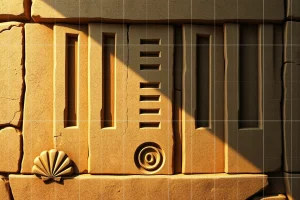
Visually, a Long Count date is represented as a series of five numbers separated by dots, such as 13.0.13.10.8. Each position corresponds to a specific time unit (Baktun, Katun, Tun, Uinal, Kin). In hieroglyphic texts, these numbers are accompanied by specific glyphs representing the units. The vertical arrangement of bars and dots within the glyph blocks corresponds to the numerical value of each unit. This visual representation allows for quick reading of the time elapsed since the creation date.
Example Date
According to modern conversions, the date Sunday, 10 May 2026 CE corresponds to the Maya Long Count date 13.0.13.10.8. This date also carries the Calendar Round designation of 1 Zip, 4 Lamat. This example illustrates how the linear Long Count runs concurrently with the cyclical Calendar Round. Historical examples include dates found on a stela in Coba, which record time spans far exceeding the current era, demonstrating the Maya capacity for conceptualizing deep time.
Relationship to Other Calendars
The Maya system shares many aspects with systems which had been in common use throughout the region, dating back to at least the 5th century BC. It interacts with the Venus Calendar and Eclipse Reckoning tables found in codices like the Dresden Codex. The mathematical precision required to track Venus’s 584-day cycle alongside the 365-day Haab required advanced comprehension of least common multiples and error correction over centuries.
Historical Use
During the Classic Period (250 to 800 AD), these calendars were used to legitimize rulership, schedule wars, and plan agricultural cycles. Kings would ascend to the throne on auspicious dates calculated using these systems. The administration of city-states relied on scribes who were trained in this numeration and computation. The system was essential for the coordination of labor and ritual across the Maya lowlands of southern Mexico, Guatemala, Belize, and western Honduras.
Current Traditions
Today, the essentials of the Maya calendar are based upon a system which is still in use in many modern communities. Daykeepers in the Guatemalan highlands continue to count the 260-day Tzolkin cycle for divination and agricultural planning. This continuity provides ethnographic evidence supporting the archaeological interpretations of Classic Period texts. The survival of these traditions highlights the cultural resilience of the Maya people.
Misconceptions
A common misconception is that the Maya calendar predicted the end of the world in 2012. In reality, the date 13.0.0.0.0 simply marked the completion of a 13th Baktun cycle, akin to an odometer rolling over. There is no archaeological evidence to suggest this was viewed as an apocalypse. Another misconception is that the math was purely mystical; while numerology played a role, the system was fundamentally arithmetic and astronomical, designed for precision rather than solely spiritual purposes.
FAQ
Did the Maya use a base-10 number system like we do?
No, the Maya used a vigesimal (base-20) system, likely counting on both fingers and toes, though they modified this for their calendar year.
Is the Maya calendar still used today?
Yes, the essentials of the Maya calendar are still used in many modern communities in the Guatemalan highlands and parts of Mexico.
What was the significance of the year 2012 in the Maya calendar?
It marked the completion of a 13th Baktun cycle in the Long Count, not the end of the world, similar to an odometer rolling over.
Leave a Reply