
Short Answer
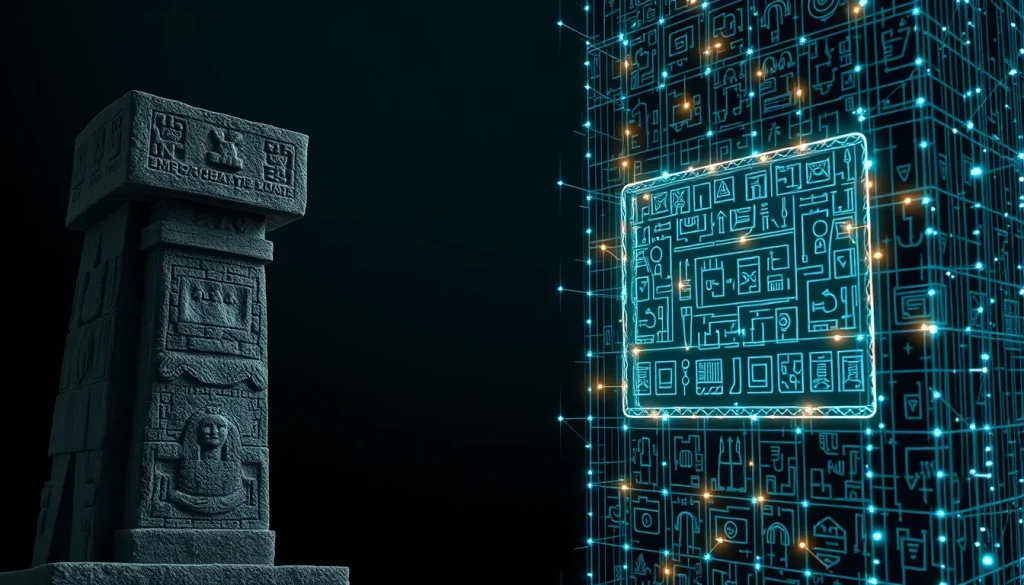
The decipherment of Maya hieroglyphic writing stands as one of the greatest intellectual achievements of modern archaeology, unlocking centuries of history, astronomy, and political narrative embedded in stone and ceramic. However, despite significant progress since the breakthroughs of the mid-20th century, a portion of the Maya script remains undecoded or ambiguous. In recent years, the intersection of computer science and archaeology has given rise to a new methodology: the application of Artificial Intelligence (AI) and Machine Learning (ML) to epigraphic analysis. This digital evolution promises to accelerate the segmentation, classification, and potential decipherment of glyphs that continue to elude comprehensive interpretation.
Main Explanation
The integration of AI into Maya epigraphy does not replace the epigrapher but rather augments their capabilities through advanced pattern recognition and data processing. Traditional decipherment relies heavily on the contextual knowledge of specialists who manually analyze glyph blocks, identify variants, and cross-reference them with known phonetic and logographic values. AI systems, particularly Convolutional Neural Networks (CNNs) and fine-tuned foundation models, offer a novel lens through which to view these inscriptions. These technologies can process vast digital libraries of Maya artifacts, identifying visual patterns that might escape the human eye due to fatigue or the sheer volume of data.
The core function of AI in this domain involves two primary tasks: segmentation and classification. Segmentation refers to the isolation of individual glyphs from complex carved surfaces, which is often complicated by erosion, lighting conditions, and the artistic variability of ancient scribes. Classification involves assigning identified glyphs to known categories or values. Recent studies indicate that while publicly available foundation segmentation models show initial promise, their effectiveness is limited without specific adaptation. To address this, researchers leverage meticulous curation of image and label pairs, often requiring the assistance of experts in Maya art and history. This fine-tuning process significantly enhances model performance, illustrating the necessity of a collaborative workflow between digital specialists and humanities scholars.
Furthermore, AI facilitates quantitative analysis of data that was previously too cumbersome to compile. By automating the retrieval and classification of glyphs, machines enable scholars to perform large-scale statistical analyses on sign usage, regional variations, and temporal changes in script style. This shift from qualitative to quantitative epigraphy allows for the testing of hypotheses regarding literacy rates, scribal training, and the diffusion of writing systems across the Maya region. However, it is crucial to understand that AI operates on probabilistic models; it suggests possibilities based on training data rather than providing definitive linguistic translations without human verification.
Evidence & Sources
The application of machine learning to Maya epigraphy is supported by a growing body of academic research and collaborative projects spanning over a decade. One of the pioneering initiatives is the MAAYA Project (Multimedia Analysis and Access for Documentation and Decipherment of Maya Epigraphy), established around 2014. Led by institutions such as the Idiap Research Institute, EPFL, and the University of Bonn, this project brought together computer scientists like Daniel Gática-Pérez and Jean-Marc Odobez with Mayanists like Nikolai Grube. The MAAYA Project focused on advanced image and video retrieval techniques, 3D surveying, and classification techniques to aid in the documentation and decipherment of Maya epigraphy. Their work laid the groundwork for using multimedia tools to ease the work of scholars in the humanities.
Building on this foundation, more recent developments in 2024 highlight the rapid evolution of these tools. The “Artful Algorithms” project, launched at West Virginia University in June 2024, explores the impact of AI on ancient Maya glyph decipherment. Led by Art History Professor Megan Leight, this collaboration between Art History and Computer Science programs addresses the disheartening lack of in-depth knowledge of ancient cultures in standard AI systems. Supported by a collaboration grant from the WVU Humanities Center, the project aims to change how AI learns and preserves ancient languages essential to understanding our world. This initiative underscores the recognition that general AI models often fail to provide the nuanced cultural context required for accurate historical interpretation.
Technical validation for these approaches is found in publications such as the 2018 study “How to Tell Ancient Signs Apart? Recognizing and Visualizing Maya Glyphs with CNNs.” Researchers from EPFL assessed different CNN architectures and learning approaches, noting that the task is challenging due to the limited availability of segmented ancient Maya glyphs. They investigated transfer learning methods by fine-tuning pretrained networks, which proved more effective than using pretrained networks solely as feature extractors. Further reinforcing this, a 2024 study titled “Segmentation of Maya Hieroglyphs through Fine-Tuned Foundation Models” demonstrated that fine-tuning foundation models with expert-curated image and label pairs significantly enhanced performance. These sources collectively confirm that while AI is a powerful tool, its success is contingent upon high-quality, expert-validated training data.
Deep Dive Analysis
Module F: Digital Archaeology Technology Assessment
Technology Description
The primary technologies employed in this field are Convolutional Neural Networks (CNNs) and Large Foundation Models adapted for computer vision. CNNs are a class of deep neural networks most commonly applied to analyzing visual imagery. In the context of Maya epigraphy, they are used to recognize spatial hierarchies of features, from edges to shapes to complete glyph blocks. Foundation models are large-scale AI models trained on broad datasets that can be adapted (fine-tuned) to specific tasks, such as segmenting Maya hieroglyphs from background stone texture.
How It Works
The process begins with digitization, where stelae, lintels, and ceramics are photographed or 3D scanned to create high-resolution digital surrogates. These images are fed into the AI system. The model attempts to identify boundaries between individual glyphs (segmentation). Once segmented, the glyphs are passed to a classification module that compares the visual features against a training database of known signs. The system outputs a probability score for potential matches, which epigraphers then review.
Field Workflow
The workflow is hybrid, combining digital processing with traditional scholarship. It starts with the curation of image and label pairs, a meticulous process requiring experts in Maya art and history to annotate data correctly. This labeled data is used to fine-tune the foundation models. The model is then tested on unseen data from open-source digital libraries dedicated to Maya artifacts. The output is reviewed by specialists who confirm or correct the AI’s suggestions, feeding this corrected data back into the system to improve future accuracy.
Output/Data
The primary output includes segmented image files of individual glyphs, classification labels with confidence scores, and visualizations of feature activation within the neural network. These outputs allow researchers to visualize how the AI “sees” the glyph, helping to understand which strokes or variations are most significant for classification. This data facilitates the creation of searchable databases where scholars can query specific glyph variants across different sites and time periods.
Example
A concrete example is the segmentation work published in 2024, where researchers leveraged a large foundation model to segment Maya hieroglyphs from an open-source digital library. Initially, the publicly available models had limited effectiveness. However, after fine-tuning with expert assistance, the model performance was significantly enhanced, allowing for the accurate isolation of glyphs from complex inscriptions that previously required manual tracing.
Strengths
The primary strength of AI in this domain is scalability and consistency. Machines can process thousands of images without fatigue, maintaining a consistent standard of analysis that humans might struggle to uphold over large datasets. AI also excels at identifying subtle visual correlations that may not be immediately obvious to human observers, potentially revealing new connections between glyph variants.
Limitations
A significant limitation is the dependency on training data. As noted in 2018 research, the limited availability of segmented ancient Maya glyphs poses a challenge for training robust models. AI lacks cultural context and linguistic intuition; it cannot understand semantics or syntax, only visual patterns. Therefore, it cannot independently decipher a text without human guidance regarding grammar and historical context.
Accuracy
Accuracy is highly variable depending on the quality of the input images and the specificity of the fine-tuning. Baseline approaches relying on pretrained networks as feature extractors often underperform compared to transfer learning methods where the network is fine-tuned for the specific glyph classification task. Expert curation is the critical variable that determines the reliability of the results.
Cultural Heritage Considerations
The use of AI in cultural heritage raises questions about access and interpretation. Projects like Artful Algorithms emphasize that when AI systems fail to provide in-depth knowledge of ancient cultures, it hinders the ability to preserve and understand history. There is a risk that automated interpretations could propagate errors if not rigorously checked by specialists. Furthermore, ensuring that these digital tools aid non-specialists in accessing texts without oversimplifying the complex cultural narrative is a key ethical consideration for projects supported by humanities centers.
FAQ
Can AI fully decipher Maya glyphs without human help?
No. AI assists in segmentation and classification but lacks the linguistic and cultural context required for full decipherment. Human epigraphers are essential for verification.
What is the MAAYA Project?
Initiated around 2014, the MAAYA Project is a collaboration between institutions like EPFL and the University of Bonn focused on multimedia analysis for Maya epigraphy documentation.
Why is fine-tuning necessary for AI models?
Publicly available foundation models have limited effectiveness on Maya glyphs. Fine-tuning with expert-curated data significantly enhances model performance and accuracy.
What is the main challenge in using AI for glyphs?
The limited availability of segmented ancient Maya glyphs makes training robust machine learning models difficult, requiring meticulous curation of image and label pairs.


Leave a Reply