
Short Answer
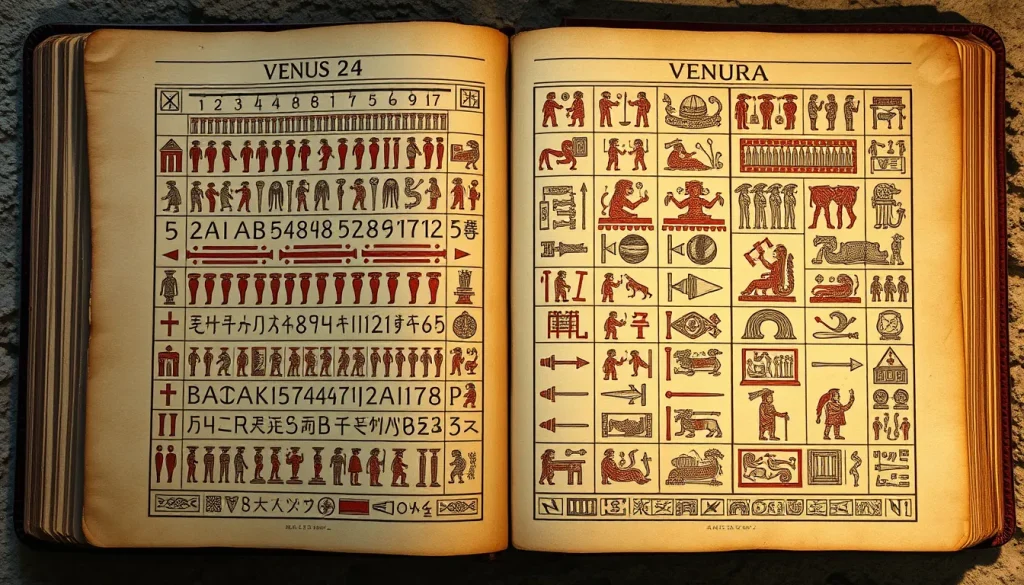
The Dresden Codex represents one of the most significant intellectual achievements of the Precolumbian Maya civilization, preserving complex astronomical data within a screen-fold manuscript. Unlike many other surviving texts that focus primarily on ritual divination, this codex contains detailed astronomical tables designed to predict celestial events such as eclipses and the synodic cycles of Venus. These tables were not merely abstract calculations but served as practical tools for timing agricultural activities, warfare, and religious ceremonies. Modern analysis continues to decode the mathematical logic behind these tables, revealing a sophisticated understanding of celestial mechanics that operated independently of Old World astronomy.
Main Explanation
The Dresden Maya Codex essentially consists of almanacs and astronomical tables that functioned as a comprehensive guide for Maya priests and calendar specialists. The manuscript is divided into 13 different chapters, often extending over several pages, with most pages divided into sections by red-brown lines. The content relies on two primary temporal frameworks: the 260-day ritual calendar known as the Tzolk’in and absolute time indications according to the Long Count, which began in 3114 BC in the Gregorian calendar. With the help of the almanacs, Maya priests prophesied the fate for individual days of the Tzolk’in, which were ruled alternately by 20 deities. These prophecies determined whether a day would be favourable or unfavourable for specific human activities such as sowing, harvesting, trade, hunting, warfare, marriage, birth, and health.
The astronomical tables recorded within the codex provided absolute time indications that allowed for long-term predictions beyond the cyclic nature of the ritual calendar. The calculations of planetary orbits and eclipses recorded on these tables were eventually used for astrological purposes, as in many other cultures, but were deeply rooted in empirical observation. The Precolumbian Maya were closely attuned to the movements of the Sun and the Moon, the stars and the planets. Their rituals and daily tasks were performed according to a timetable established by these celestial bodies, a timetable based on a highly complex calendar system. Agriculture provided the foundation for their civilization, and the skies served as a kind of farmer’s almanac for when to plant and when to harvest. This far-reaching study confirms that the Maya developed these systems independently, utilizing the codices as indigenous hieroglyphic books written before the Spanish Conquest.
Evidence & Sources
Recent scholarly work has significantly revised the understanding of how these tables were constructed and utilized. A pivotal study published in Science Advances in 2025 by John S. Justeson and Justin Lowry explores how ancient Mayan calendar specialists designed a predictive eclipse table, revising a century of interpretation. Their research indicates that the table’s length, 405 months, was originally implemented in a general lunar calendar table of 405 successive months. Within a few passes through this lunar calendar, intervals among observed eclipses could have stimulated an approximation to the series of lunar intervals that were later compiled as stations of an eclipse table. This reconstructible history suggests that the eclipse table was not a static invention but evolved through observation and correction over time.
Further evidence regarding the historical context of these tables comes from research on the Venus Table. A 2016 study presented a new reading of Dresden Codex Page 24, the “Preface” to the Venus Table, demonstrating a much-improved overall coherence. This reading of hieroglyphic text, mathematical intervals, and calendric data specifically identifies the Mayan Long Count dates of the Venus Table’s historical correction. The resulting Long Count placement of the manuscript’s Venus Table suggests that it was an indigenous astronomical discovery made at Chichén Itza, possibly under the patronage of K’ak’ U Pakal K’awiil, one of the most prominent historical figures in the inscriptions of the city during its epigraphic florescence. This links the abstract mathematical data directly to specific political and geographic contexts within the Maya world.
The SLUB Dresden, which houses the manuscript, confirms that the codex can be divided into 13 different chapters. Apart from short hieroglyphic texts and columns of numbers, the manuscript contains detailed imagery supporting the astronomical data. The combination of textual analysis and archaeological context provided by these sources allows researchers to distinguish between the historical Maya beliefs regarding celestial influence and modern interpretations. The calculations were eventually used for astrological purposes, but their foundation was in precise observation of celestial cycles to maintain cosmic order and agricultural productivity.
Deep Dive Analysis
Definition
The Dresden Codex is a Precolumbian Maya book of 11 pages, written in hieroglyphic script on amate paper coated with lime stucco. It is the oldest surviving book written in the Americas and serves as a primary source for understanding Maya astronomy and calendar systems. The text functions as a technical manual for calendar specialists, containing data required to track celestial phenomena over long periods.
How it works
The astronomical tables operate by establishing a base date in the Long Count and providing numerical intervals to calculate future occurrences of celestial events. For example, the eclipse table uses a cycle of 405 months to predict when eclipses might occur. The Maya recognized that eclipses happen only when the Moon is near the nodes of its orbit, and the table tracks these nodal passages. By adding the specified intervals to a known base date, a priest could determine if an upcoming new or full moon would result in an eclipse.
Key components
The codex contains several distinct astronomical sections, including the Eclipse Table, the Venus Table, and possibly tables for Mars and Mercury. The Eclipse Table is designed to track the half-year eclipse seasons. The Venus Table tracks the synodic period of Venus, which averages 584 days. The manuscript also includes almanacs based on the 260-day Tzolk’in calendar, which dictate the ritual quality of days. These components work together to align ritual time with astronomical time.
Example
A specific example of the codex’s precision is the 405-month eclipse cycle. According to Justeson and Lowry (2025), this length was originally implemented in a general lunar calendar table. For all and only these lunar stations to correspond to dates of upcoming eclipses, the table required careful adjustment. The Maya understood that 405 lunations closely approximated a whole number of eclipse half-years, allowing them to predict eclipse seasons with high accuracy over centuries.
Historical evidence
Archaeological evidence links the creation and correction of these tables to specific historical periods and locations. The revised reading of Page 24 suggests the Venus Table was associated with Chichén Itza during the Late Classic to Early Postclassic period. The mention of K’ak’ U Pakal K’awiil provides a historical anchor, suggesting that astronomical innovation was patronized by elite rulers. This supports the view that astronomy was a statecraft tool used to legitimize power through control of time and ritual.
Common misconceptions
A common misconception is that the Dresden Codex was used solely for mystical prophecy or apocalyptic predictions. In reality, the tables served practical purposes related to agriculture and state ritual. The skies served as a kind of farmer’s almanac for when to plant and when to harvest. Another misconception is that the tables were static; evidence shows they underwent historical corrections to maintain accuracy as observational data improved over generations.
FAQ
What is the primary purpose of the Dresden Codex astronomical tables?
The tables were used to predict celestial events like eclipses and Venus cycles to schedule agricultural activities, warfare, and religious rituals.
How accurate is the Maya eclipse table?
The 405-month eclipse table was highly accurate, based on observed lunar intervals and revised over time to maintain correspondence with eclipse seasons.
Where was the Dresden Codex likely created?
Recent research suggests the Venus Table may originate from Chichén Itzá, possibly under the patronage of K’ak’ U Pakal K’awiil.




Leave a Reply