
Short Answer
The production of paper in pre-Hispanic Mesoamerica represents a sophisticated technological achievement independent of Eurasian papermaking traditions. For the Maya civilization, this material, known as huun in the Maya language and related to the Nahuatl term āmatl, served as the foundational substrate for their hieroglyphic books or codices. These manuscripts recorded complex data ranging from astronomy and calendars to tax rolls and religious rituals. The survival of these documents is rare, yet those that remain, such as the Dresden Maya-Codex, provide critical insight into the material culture of the ancient Maya. Understanding how this paper was made requires an examination of botanical resources, chemical processing techniques, and the historical continuity of these practices into the modern era.
Main Explanation
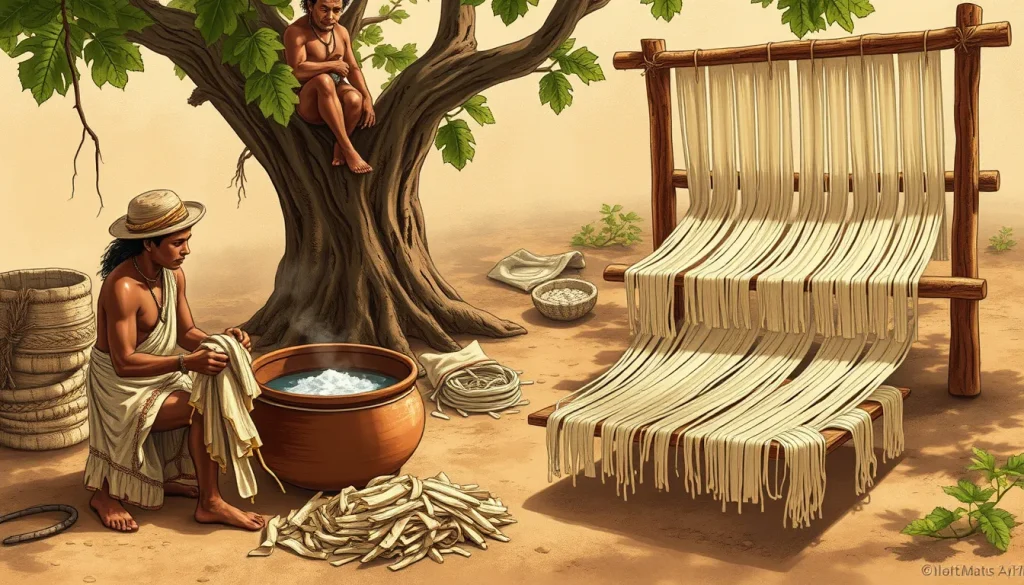
The manufacture of Maya paper was a labor-intensive process rooted in the exploitation of specific botanical resources. The primary raw material was the inner bark, or secondary phloem, of several species of wild fig trees (genus Ficus). In Mexico, these trees are still commonly referred to as amates, while the Maya historically identified them as kopo’. The selection of these trees was not arbitrary; their fibrous structure provided the necessary tensile strength and flexibility required for folding into screen-fold books.
The production technique shared conceptual similarities with other great papermaking traditions, including the nixtamalization process used for corn. Strips of bark were peeled from the tree and subsequently boiled in water. Crucially, the boiling water was treated with lime or ash. This alkaline solution served to soften the fibers, breaking down lignin and other structural components that would otherwise make the bark brittle. Once softened, the fibers were macerated and laid out on a flat surface to dry. The resulting sheets were beaten and smoothed to create a writing surface capable of holding pigment without excessive absorption. This process allowed the Maya to produce long strips of paper, which were then folded accordion-style to create codices.
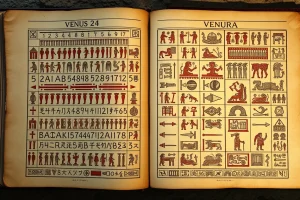
The cultural significance of this material cannot be overstated. When Spanish conquistadors arrived in Mesoamerica, they encountered peoples who maintained libraries and wrote books, a fact that surprised the Europeans given the lack of contact with China or Europe. Unfortunately, this discovery led to the systematic burning of these books by Spanish priests who viewed them as idolatrous. Despite this destruction, a handful of manuscripts survived the tropical climate and the colonial purge. The so-called Dresden Maya-Codex, for instance, consists of two strips of paper made from this traditional bark material, standing as a testament to the durability of the manufacturing technique.
Evidence & Sources
Our understanding of Maya papermaking relies on a combination of ethnohistorical accounts, archaeological artifacts, and modern scientific analysis. One of the earliest historical records regarding the survival of these manuscripts comes from the year 1734. Johann Christian Götze, the court chaplain and librarian at the Electoral Library in Dresden, was sent to Vienna and Rome to procure precious books. Among the hundreds of manuscripts he acquired was a document described as a priceless Mexican book written in hieroglyphs. Götze recognized the rarity of the document, noting that it originated in the pre-Hispanic manuscript culture. This acquisition secured the Dresden library’s possession of what is now known as the Dresden Maya-Codex, one of only four Maya manuscripts to have survived.
Modern archaeological science has further illuminated the production methods without damaging these fragile artifacts. Scholarly investigations, such as those detailed in doctoral research from Leiden University, have focused on the production, use, and re-use of precolonial documents. These studies utilize non-invasive chemical or physical investigations of the originals to identify ingredients and manufacturing traces. By analyzing the fiber characteristics and chemical composition, researchers can confirm the use of specific tree species and processing agents like lime.
Ethnobotanical evidence provides a living link to these ancient practices. Research published in Economic Botany traces the use of bark fibers for Mexican bark paper back to the pre-Hispanic period. While the production was extensive in ancient times, it has continued for the last four decades as a handicraft by the Ñahñus of San Pablito village in the Sierra Norte de Puebla region of México. This continuity allows researchers to observe traditional production techniques that likely mirror ancient methods. However, due to high demand for this product in modern times, new species are now used as a source of bark, and specific phases of the traditional production technique have been modified. Registering all species used for bark paper manufacturing, both traditionally and recently, helps archaeologists distinguish between authentic pre-Hispanic methods and modern adaptations.
Deep Dive Analysis
Module A: Definition and Technological Process
Definition: Maya amate paper is a writing material produced from the processed inner bark of fig trees, characterized by its durability and suitability for hieroglyphic painting. It represents an independent invention of paper technology in the Americas.
How it Works: The technology relies on chemical maceration. The alkaline environment created by boiling bark with lime or ash dissolves the non-fibrous components of the plant tissue. This isolates the cellulose fibers, which are then mechanically bonded through beating and drying. The resulting matrix is strong enough to be folded repeatedly without cracking, a necessity for the screen-fold codex format.
Key Components: The primary components include the secondary phloem of Ficus species, water, and an alkaline agent (lime or ash). The tools involved included cutting instruments for harvesting bark, vessels for boiling, and beating stones for smoothing the sheets.
Example: The Dresden Maya-Codex serves as the premier example of this technology. It consists of long strips of this bark paper, coated with a sizing layer to accept paint. The survival of this document since pre-Hispanic times validates the efficacy of the production method.
Historical Evidence: Evidence spans from the pre-Hispanic period to the present. Historical records from 1734 document the acquisition of these books by European libraries. Ethnographic studies of the Ñahñus people demonstrate the continuity of the craft. Chemical analysis of extant codices confirms the use of bark fibers and mineral additives.
Common Misconceptions: A prevalent misconception is that papermaking was introduced to the Americas by Europeans or Asians. Archaeological and botanical evidence confirms that the Maya and Aztecs were producing paper centuries before Columbus, without any contact with China or Europe. Another misconception is that all surviving codices are purely pre-Hispanic; some show evidence of colonial-era re-use or modification, highlighting the complex lifecycle of these documents.
FAQ
Did the Maya invent paper independently?
Yes. The Maya and Aztecs were producing paper centuries before Columbus without any contact with China or Europe.
What tree species were used for Maya paper?
Several species of wild fig tree (Ficus), known as amates in Mexico and kopo' to the Maya.
How many Maya codices survived the Spanish conquest?
Only four Maya manuscripts are known to have survived the tropical climate and the burning of books by Spanish priests.
Is amate paper still made today?
Yes, it has been produced as a handicraft for the last four decades by the Ñahñus of San Pablito village in México.


Leave a Reply