
Short Answer
The Pleiades star cluster, known globally as the Seven Sisters, holds a profound place in the cosmological framework of the ancient Maya civilization. Observable from every continent except Antarctica, this open star cluster has accompanied sky watchers over millennia, serving as a bridge between the celestial realm and terrestrial activities. For the Maya, the Pleiades were not merely distant lights but active participants in the cyclical nature of time, agriculture, and ritual practice. The heliacal rising of the cluster—its first visible sighting in the morning twilight before sunrise—was particularly significant, often marking the onset of the rainy season and the beginning of the agricultural cycle. This article examines the archaeological and ethnohistorical evidence regarding the Pleiades in Maya culture, distinguishing between verified historical beliefs and modern interpretations.
Main Explanation
In Maya cosmology, the sky was viewed as a dynamic layer of existence that directly influenced life on earth. The movement of celestial bodies was meticulously tracked to determine auspicious times for planting, harvesting, and conducting religious ceremonies. The Pleiades, referred to in various Mayan languages often in relation to groups of stars or specific agricultural markers, played a pivotal role in this observational astronomy. Unlike the sun, which defines the solar year, or Venus, which held war-related connotations, the Pleiades were intimately tied to the rhythms of the earth and the sustenance of the community.
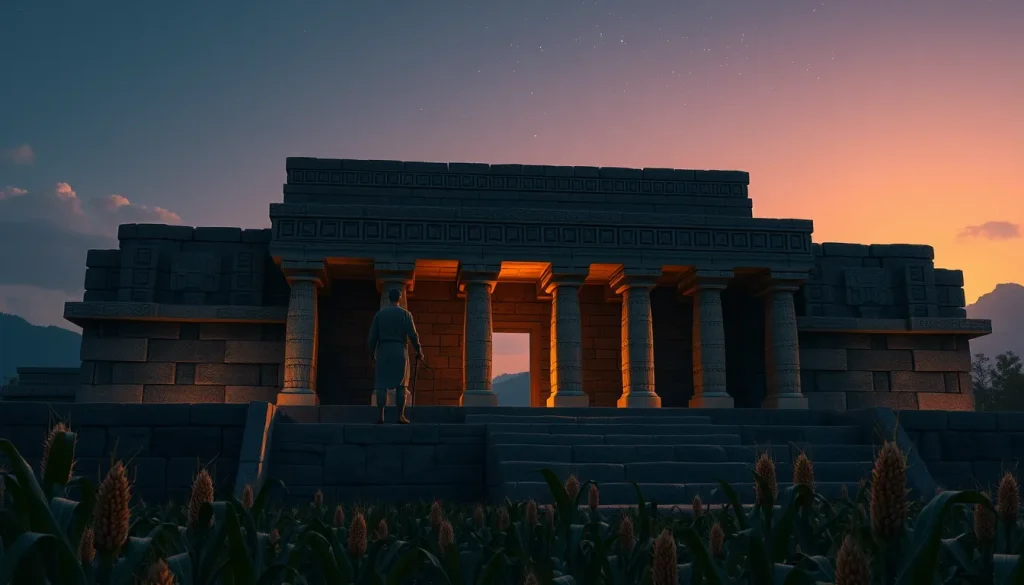
The primary astronomical event associated with the Pleiades is the heliacal rising. This occurs when the cluster becomes visible in the eastern sky just before dawn after a period of invisibility due to its conjunction with the sun. In the Maya lowlands, this event typically coincides with the onset of the rainy season, a critical period for maize cultivation. The appearance of the stars signaled to farmers that it was time to prepare the fields and sow seeds. This connection between stellar phenomena and agricultural productivity underscores the practical application of Maya astronomy. It was not abstract speculation but a vital technology for survival in a region dependent on seasonal rainfall.
Beyond agriculture, the Pleiades held ritual significance. The cluster’s position in the sky was often associated with deity impersonations and ceremonial alignments within architectural structures. The integration of stellar observation into the built environment suggests that knowledge of the Pleiades was restricted to elite astronomers and priests who managed the calendar and ritual schedule. These individuals interpreted the stars’ movements as messages from the gods, requiring specific offerings or ceremonies to ensure balance and prosperity. The weaving of these beliefs into daily life ensured that the cosmic order was maintained through human action, reinforcing the social hierarchy and the sacred nature of kingship.
Evidence & Sources
Archaeological and academic research provides substantial evidence for the importance of the Pleiades in Mesoamerican cultures, including the Maya. Recent studies published by the American Astronomical Society highlight the shared experience of the Pleiades across Indigenous worldviews in Polynesia, Mesoamerica, and the Andes. According to Hawkins (2021), the cluster is tied to Indigenous astronomy, calendaring, traditional weaving, weather prediction, and agriculture. The heliacal rising is noted as particularly significant across these regions, suggesting a pan-Mesoamerican recognition of the cluster’s utility as a seasonal marker.
Architectural evidence further supports these claims. Research into the orientations of structures at Chichén Itzá indicates that certain buildings were aligned to capture specific astronomical events. While solar observations are prominent, the architectural complexity suggests a broader interest in stellar phenomena. The alignment of windows, doorways, and shafts could have framed the rising or setting of specific star clusters, allowing priests to observe the Pleiades from within sacred spaces. This integration of astronomy into architecture demonstrates the institutional importance of celestial observation.
Furthermore, studies on agricultural rhythms in hinterland areas, such as Blue Creek in Northwestern Belize, reveal the depth of solar and stellar observation in daily life. Ancient Maya solar observation in these regions was not limited to major urban centers but permeated rural communities where agricultural decisions were made. The correlation between celestial events and agricultural rituals in these hinterlands supports the hypothesis that the Pleiades served as a widespread marker for farming cycles. Additionally, collaborative work on cultural astronomy in Mesoamerica, involving institutions like the Universidad del Valle de Guatemala and the Exploratorium, continues to document living Maya traditions that preserve ancient astronomical knowledge, providing ethnohistorical context to archaeological findings.
Deep Dive Analysis
Module C: Astronomy
Celestial Object: The Pleiades (Messier 45), an open star cluster in the constellation Taurus. In Maya context, often associated with a group of stars signaling seasonal change.
Observational Cycle: The cluster undergoes an annual cycle of visibility and invisibility. The key phase is the heliacal rising, occurring when the stars first appear in the east before sunrise after being obscured by the sun’s glare. This typically happens in late May or early June in the Maya region, coinciding with the start of the rainy season.
How Maya Observed It: Observation was conducted with the naked eye, often from elevated platforms or specific architectural vantage points. Priests and astronomers would track the cluster’s position relative to the horizon and other celestial markers. The lack of optical instruments required precise knowledge of the horizon line and atmospheric conditions.
Archaeological/Textual Evidence: While direct glyphic references to the Pleiades are debated, contextual evidence from codices and post-contact ethnohistory supports their significance. Architectural orientations at sites like Chichén Itzá suggest alignments with stellar events. Ethnohistorical records from highland Maya groups also reference the Pleiades in relation to the agricultural calendar.
Calendar Connection: The Pleiades’ heliacal rising served as a correction mechanism for the agricultural year, complementing the 365-day Haab’ calendar. Since the solar year is slightly longer than 365 days, stellar observations helped adjust planting schedules to match actual climatic conditions.
Architecture Connection: Structures may have been oriented to frame the heliacal rising. Windows or sightlines in temples could have been used to pinpoint the exact day of appearance, legitimizing the authority of the observer.
Cultural Meaning: The cluster symbolized renewal, rain, and fertility. Its appearance was a promise of sustenance, while its disappearance or obscured viewing could be interpreted as an omen of drought or hardship.
Uncertainty/Debate: Specific glyphic identification of the Pleiades in Classic Maya inscriptions remains a subject of scholarly debate. While ethnohistorical and archaeological evidence is strong, definitive epigraphic proof linking specific glyphs to the cluster in the Classic period is less concrete than for Venus or the Sun. Modern interpretations sometimes conflate later highland traditions with Classic lowland practices, requiring careful differentiation.
FAQ
Did the Maya use the Pleiades for planting crops?
Yes, the heliacal rising of the Pleiades was a significant marker for the onset of the rainy season, signaling the time to begin agricultural activities such as planting maize.
Is there architectural evidence of Pleiades observation?
Architectural orientations at sites like Chichén Itzá suggest that structures were aligned to observe specific astronomical events, potentially including the rising of star clusters like the Pleiades.
How does the Pleiades calendar differ from the Solar calendar?
While the Solar calendar (Haab’) tracks the sun’s journey, the Pleiades cycle provides a stellar check that helps adjust agricultural timing to actual weather patterns, compensating for minor calendar drifts.

Leave a Reply