

Short Answer
The ancient Maya civilization, flourishing from approximately 1200 B.C.E. to 1500 C.E., left behind a legacy of sophisticated astronomical observation embedded in their hieroglyphic texts and monumental architecture. While much scholarly attention has focused on the movements of Venus and the Sun, the Maya conception of constellations remains a complex subject of ongoing archaeological investigation. Understanding what the Maya saw in the stars requires distinguishing between verified epigraphic evidence, architectural alignments, and later colonial interpretations that may reflect syncretism rather than Pre-Columbian belief systems.
Modern research indicates that Maya astronomy was not merely a scientific endeavor but was deeply intertwined with their cosmology and ritual life. The identification of specific star groups, often referred to as constellations, relies heavily on iconographic analysis and the correlation of celestial events with calendrical cycles. Recent collaborations between Western scholars and Indigenous Maya descendants have further illuminated how these ancient knowledge systems survived into the Colonial era and persist in some forms today.
Main Explanation
The concept of Maya constellations differs significantly from the Western zodiac familiar to modern audiences. While Western astronomy divides the ecliptic into twelve equal signs, Maya astronomy appears to have utilized a more flexible system based on observable celestial phenomena and mythological associations. Scholars have long been fascinated by the astronomical knowledge of the ancient Maya since travelers and scholars first reported ruined cities in the Americas and Precolumbian manuscripts in European libraries. Beginning in the late nineteenth century, students of the Maya speculated on the astronomical identities of iconographic motifs and characters portrayed in the codices and on monumental sculptures.
In addition to identifying the signs for the Sun, Moon, and Venus, researchers have produced tentative reconstructions of the Maya zodiac and other constellations. However, alternate interpretations of the nature of Maya astronomy have appeared throughout this century. Based on recent advances in our understanding of the natural and astronomical foundations of Classic and Post-Classic Period Maya conceptions of Creation, we present another model of the so-called Maya zodiac. It is crucial to understand that these groupings were not static; they were dynamic elements of a living cosmos where celestial bodies interacted with earthly events.
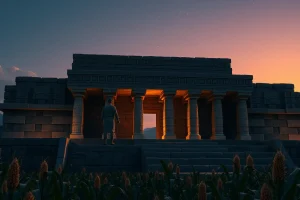
The builders of monuments like the eighth century C.E. Temple of the Great Jaguar in Tikal, Guatemala, carefully observed stars and planets. These structures were not merely tombs or temples but were often oriented to capture specific celestial alignments during solstices or equinoxes. The historic Maya oriented their lives by the heavens, integrating astronomical cycles into their agricultural, political, and religious calendars. This integration suggests that constellations served as markers for timekeeping and omens, guiding the timing of rituals and warfare.
Evidence & Sources
Archaeological evidence for Maya constellations is derived from three primary sources: codices, monumental architecture, and ethnohistorical texts. The Dresden Codex, in particular, contains the most detailed of such ancient Maya legacies. Pages 24 and 46 to 50 of said codex describe the calendar of Venus with the corresponding auguries. Researchers have noted that this is a Venus-Solar calendar, and work focuses on the possibility that it was made to work in conjunction with the appearance of certain constellations in the sky. It is through the analysis and description of the Venus pages that scholars propose specific identifications of Postclassic Maya constellations.
Architectural evidence also provides critical data. An 1875 photograph by Augustus Le Plongeon of the East Wing of the Monjas at Chichen Itza has prompted notes about the so-called zodiac appearing there. In 2009, while going through several boxes of Le Plongeon materials collected by Lawrence Desmond, researchers came across black-and-white prints of scenes from Chichen Itza. One shows the eastward-facing façade of the East Wing of the Monjas building. As such it may be the earliest extant photograph showing the details of that famous skyband with constellations. This visual record is invaluable for reconstructing damaged iconography that defines celestial groups.
Furthermore, the survival of these concepts into the Colonial era is documented in the Katun Prophecies of the Books of Chilam Balam. These texts name patrons for each incipient twenty-year period. Employing recently discovered evidence dating the prophecies, researchers demonstrate that these metaphorical references to deities and cosmological structures survived in Yucatán well into the Colonial era. Additionally, modern collaborations continue to yield insights. Today, descendants and Western scholars team up to understand their sophisticated astronomy. In Zunil, Guatemala, Indigenous Maya speakers still invoke days in the sacred calendar, linking ancient practices to living traditions.
Deep Dive Analysis
Definition
Maya constellations are defined as recognized groupings of stars or celestial features used by the ancient Maya for calendrical, agricultural, and cosmological purposes. Unlike the fixed Western constellations, Maya groupings often included dark clouds in the Milky Way, known as dark constellations, which were perceived as active celestial entities. These formations were not arbitrary but were linked to specific deities and earthly outcomes.
How It Works
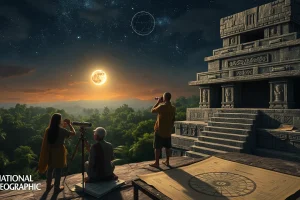
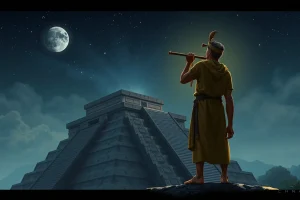
The system worked through the observation of heliacal risings and settings, where a constellation becomes visible just before sunrise or after sunset. These events were correlated with the 260-day sacred calendar and the 365-day solar year. Observations were conducted by priest-astronomers who recorded data in codices and encoded them into temple orientations. The alignment of structures like the Monjas at Chichen Itza suggests that architecture served as a fixed observational tool to track these celestial markers.
Key Components
Key components of Maya celestial mapping include specific star clusters, planetary paths, and the Milky Way. Iconographic motifs in the codices represent these components, often anthropomorphized as gods or animals. The Venus Pages of the Dresden Codex are a primary example, where planetary movements are tracked against background stars. The skyband reliefs at Chichen Itza provide another component, depicting a strip of sky containing various celestial symbols that likely represent constellations or significant stellar events.
Example
A prominent example is the identification of Postclassic Maya constellations from the Venus Pages of the Dresden Codex. Researchers Changbom Park and Heajoo Chung analyzed these pages to propose that the calendar was designed to work in conjunction with the appearance of certain constellations. Another example is the Skyband with Constellations revisited at the Monjas East Wing at Chichen Itza, where the façade depicts a celestial band containing symbolic representations of stars and planets.
Historical Evidence
Historical evidence spans from the Classic Period temples at Tikal to Postclassic codices and Colonial manuscripts. The Temple of the Great Jaguar in Tikal demonstrates early architectural alignment with heavenly bodies. The Dresden Codex provides textual and graphical evidence from the Postclassic period. The Books of Chilam Balam offer ethnohistorical evidence showing the continuity of cosmological concepts into the 16th century and beyond. Photographs from 1875 by Augustus Le Plongeon provide archival evidence of architectural details that have since degraded.
Common Misconceptions
A common misconception is that the Maya possessed a zodiac identical to the Babylonian or Western zodiac. While there are similarities, the Maya system was distinct and based on different cosmological foundations. Another misconception is that all astronomical knowledge was lost after the Spanish Conquest. Evidence demonstrates that Creation-based cosmology survived in Yucatán well into the Colonial era. Finally, it is often assumed that modern Indigenous practices are unchanged; however, while traditions persist, they have evolved over centuries of cultural interaction.
FAQ
Did the Maya have a zodiac like the Western one?
No, while they had constellations, their system was distinct from the Babylonian Western zodiac, focusing more on Venus cycles and dark cloud constellations within the Milky Way.
What is the Dresden Codex?
A Pre-Columbian Maya book containing detailed astronomical tables, including Venus cycles and eclipse predictions, used for ritual and calendrical purposes.
Do modern Maya people still use these calendars?
Yes, Indigenous Maya descendants in Guatemala, such as K'iche' speakers, still use the sacred calendar for ceremonies and community life.
How do we know about Maya constellations?
Knowledge comes from codices, architectural alignments at sites like Chichen Itza and Tikal, Colonial texts like the Chilam Balam, and modern ethnoastronomical collaboration.

Leave a Reply