
Short Answer
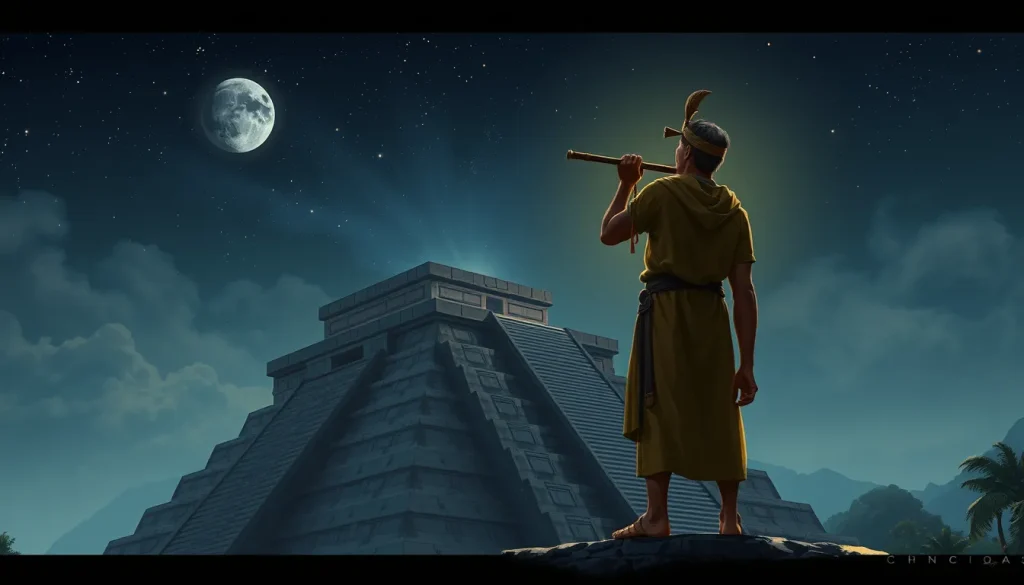
The ancient Maya civilization stands as a testament to human intellectual achievement, particularly in the realm of astronomy. Despite lacking optical instruments such as telescopes or lenses, and without metal tools for precision engineering, the Maya developed one of the most accurate pre-telescope astronomical systems in human history. Their ability to track celestial movements was not merely a scientific endeavor but a fundamental component of their cosmology, agriculture, and ritual life. By relying on naked-eye observation, sophisticated architectural alignments, and a robust mathematical framework, Maya priest-astronomers could predict eclipses, track the synodic period of Venus, and calculate the solar year with an accuracy that surpassed contemporary European standards upon the arrival of the Spanish.
Main Explanation
The core of Maya astronomical success lay in their methodology of long-term data accumulation and mathematical averaging. Unlike modern astronomy, which relies on instantaneous high-precision measurements, Maya astronomy was built upon generations of recorded observations. The Maya understood that while single observations might be subject to error due to atmospheric conditions or human limitation, averaging data over centuries could yield highly precise constants. This patience allowed them to refine their calculations over time, correcting discrepancies in their calendars and observational tables.
Their primary instruments were simple yet effective. The naked eye was the primary sensor, aided by crossed-stick sighting devices that functioned similarly to a sextant or theodolite, allowing observers to align their vision with specific points on the horizon. These devices enabled the measurement of angles between celestial bodies and terrestrial markers. Furthermore, the Maya utilized the architecture of their cities as fixed observational instruments. Temples, pyramids, and observatories were constructed with specific orientations that aligned with celestial events such as solstices, equinoxes, and the extreme rising and setting points of Venus. When the sun or a planet aligned with a specific doorway or tower, it marked a significant date in their ritual calendar.
Mathematics played a crucial role in processing this observational data. The Maya developed a fully indigenous positional numeral system, including the concept of zero, which allowed for complex calculations involving large numbers and long time spans. This mathematical sophistication enabled them to manage the disparate cycles of the sun, moon, and planets within their calendar systems. The integration of writing was also vital; observations were recorded in codices, such as the Dresden Codex, which contained tables for predicting eclipses and tracking Venus. This written record ensured that knowledge was not lost between generations but could be refined and corrected by subsequent astronomers.
Evidence & Sources
Archaeological and textual evidence supports the claim of high-precision naked-eye astronomy. The Dresden Codex, one of the few surviving pre-Columbian books, contains detailed Venus tables and eclipse tables. Analysis of these tables reveals that the Maya calculated the synodic period of Venus to be 583.92 days, which is only about 14 minutes off from the modern value of 583.93 days. Similarly, their calculation of the tropical solar year was 365.2420 days, differing from the modern value of 365.2422 days by only approximately 17 seconds. This level of accuracy was more precise than the Julian calendar used in Europe at the time of contact and even surpassed Ptolemy’s estimates for the synodic month.
Architectural evidence is equally compelling. The structure known as El Caracol at Chichén Itzá is widely recognized as a key observatory. Its windows and shafts are aligned to track the extreme northern and southern setting points of Venus, as well as solar solstices. Research by scholars such as Ivan Šprajc highlights how Mesoamerican peoples achieved advanced knowledge of the regularities of the apparent motion of the Sun, Moon, and various planets visible with the naked eye. These architectural features were not decorative but functional, serving as fixed sightlines that standardized observations across different observers and generations. The orientation of these structures provided a physical framework for the abstract mathematical data recorded in their codices.
Furthermore, comparative analysis with European astronomy underscores the Maya achievement. When the Spanish arrived, their civil year was based on the Julian calendar with 365.25 days, which was less accurate than the Maya solar year estimate. The Maya ability to orient themselves in space and time using these celestial regularities was particularly useful for agricultural scheduling and ritual timing. The combination of textual records like the Dresden Codex and physical structures like El Caracol provides a multi-faceted verification of their methods. These sources confirm that the Maya did not require telescopic enhancement to achieve scientific rigor; instead, they leveraged time, mathematics, and architecture to overcome the limitations of human vision.
Deep Dive Analysis
Definition
Maya Naked-Eye Astronomical Methodology refers to the systematic practice of observing celestial phenomena without optical aids, relying instead on architectural alignments, simple sighting tools, and mathematical correction over long periods. This concept encompasses the integration of observation, recording, and calculation into a cohesive scientific tradition indigenous to Mesoamerica.
How it works
The methodology functioned through a cycle of observation, recording, and correction. Priest-astronomers would observe celestial events from fixed locations, such as temple platforms. They used crossed sticks to create artificial horizons or sightlines. Data was recorded using their vigesimal (base-20) numeral system in codices. Over decades and centuries, discrepancies between predicted and actual events were noted. Mathematical corrections were applied to the constants used in their calendars, such as the length of the Venus cycle or the solar year, refining the accuracy over time.
Key components
The system relied on three main components: the human eye, architectural markers, and mathematical records. The human eye provided the raw data. Architectural markers, such as the windows of El Caracol or the corners of pyramids, provided fixed reference points to ensure consistency. Mathematical records, stored in codices, allowed for the manipulation of large numbers required to predict cycles over long durations, such as the 584-day Venus cycle or the 173-day eclipse season.
Example
A prime example is the tracking of Venus as Noh Ek, or the “Great Star.” The Maya tracked Venus’s appearance as the Morning Star and Evening Star. Using the Dresden Codex tables, they could predict its heliacal rising. Architectural alignments at Chichén Itzá allowed them to visually confirm these risings against specific horizon markers. This data was used to schedule wars and rituals, as Venus was associated with warfare and divinity.
Historical evidence
Historical evidence includes the surviving codices, primarily the Dresden Codex, which contains almanacs and tables for Mars, Venus, and eclipses. Archaeological evidence includes the orientation of temples at sites like Chichén Itzá, Uxmal, and Copán. Scholarly work, such as that published in the Journal of Physics: Conference Series by Ivan Šprajc, confirms that these orientations were intentional and statistically significant. The accuracy of their solar year calculation (365.2420 days) is documented in comparative studies of their calendar systems versus the Julian and Gregorian calendars.
Common misconceptions
A common misconception is that such precision implies the use of lost technology or extraterrestrial assistance. In reality, the precision was achieved through patience and multi-generational data averaging. Another misconception is that Maya astronomy was purely astrological or spiritual; while it had religious significance, the mathematical rigor demonstrates a scientific approach to empirical observation. Some also believe the Maya had telescopes; however, sources confirm they used naked-eye methods aided by architecture and simple sighting devices.
In conclusion, the Maya astronomical tradition represents a pinnacle of pre-telescopic science. By harmonizing architecture, mathematics, and persistent observation, they created a system that allowed them to understand and predict the cosmos with remarkable fidelity. Their legacy reminds us that technological complexity is not the sole path to scientific accuracy; deep observation and mathematical insight can yield profound understanding of the natural world.
FAQ
Did the Maya have telescopes?
No, the Maya did not have telescopes, lenses, or metal instruments. They achieved precision through naked-eye observation, architectural alignments, and mathematics.
How accurate was the Maya calendar compared to modern standards?
Their solar year calculation was 365.2420 days, which is only about 17 seconds off from the modern value of 365.2422 days, making it more accurate than the Julian calendar used in Europe at the time.
What building was used as an observatory?
El Caracol at Chichén Itzá is the most famous example, with windows and shafts aligned to track Venus and solar solstices.




Leave a Reply