Skip to content
Maya Skies | Maya Astronomy, Calendars & Archaeology
  • Home
  • Tools
    • Calendar Round Calculator
    • Chichen Itza Architecture Explorer
    • Long Count Calculator
    • Maya Calendar Converter
    • Maya Number Converter
    • Maya Numerals Chart
    • Maya Time Units Calculator
    • Venus Cycle Explorer
  • Topics
    • Archaeology
    • Calendar Systems
    • Chichén Itzá
    • Digital Heritage
    • Math & Writing
    • Maya Astronomy
    • Maya Cosmology
  • About Us
    • Project History
    • Research Standards
    • Editorial Policy
    • Corrections Policy
    • Image Credits

Recent Posts

  • The Maya Lunar Series: Tracking Moon Cycles in Long Count Inscriptions
  • Ancient Maya Trade Networks: Evidence from Obsidian, Jade, and Ceramics
  • Cardinal Directions and Colors in Maya Cosmology
  • How the GMT Correlation Aligns Maya and Gregorian Dates
  • Architectural Astronomy at Uxmal: The Governor’s Palace Alignments

Recent Comments

No comments to show.

Archives

  • October 2026
  • September 2026
  • August 2026

Categories

  • Archaeology
  • Calendar Systems
  • Chichén Itzá
  • Digital Heritage
  • Math & Writing
  • Maya Astronomy
  • Maya Cosmology

Calendar Systems

Explanations of the complex timekeeping cycles used for agriculture and rituals.

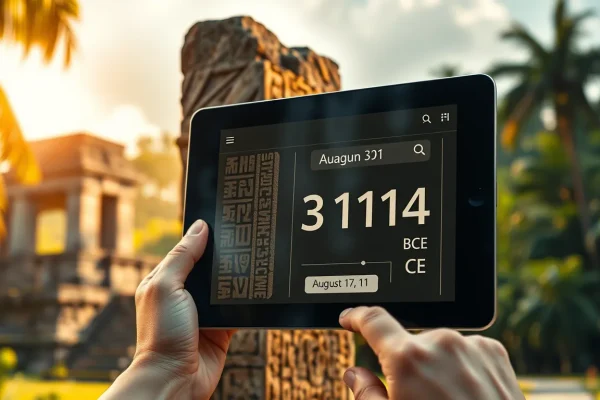
The 819-Day Count: Connecting Planetary Cycles to Maya Ritual Time

The 819-Day Count: Connecting Planetary Cycles to Maya Ritual Time

September 26, 2026 | Calendar Systems | Husai Anguiano Tamayo

The Maya 819-day count has long been considered one of the most enigmatic cycles in Mesoamerican calendrics. Recent breakthroughs in 2023 by anthropologists John Linden and Victoria Bricker have finally deciphered its astronomical significance, revealing a complex system linking ritual time to planetary synodic periods.

Read More →
How Does the Maya Calendar Round Combine the Haab and Tzolkin?

How Does the Maya Calendar Round Combine the Haab and Tzolkin?

September 21, 2026 | Calendar Systems | Husai Anguiano Tamayo

The Maya Calendar Round is a 52-year cycle formed by the interlocking of the 260-day Tzolk’in and the 365-day Haab calendars. This system allowed the Maya to track time for divination, agriculture, and historical recording without repetition for over half a century.

Read More →
The GMT Correlation: Bridging Maya and Western Time

The GMT Correlation: Bridging Maya and Western Time

September 17, 2026 | Calendar Systems | Husai Anguiano Tamayo

The Goodman-Martinez-Thompson (GMT) correlation is the standard method for converting Maya Long Count dates to the Gregorian calendar. This system aligns the mythical creation date of August 11, 3114 BCE with the start of the Maya era, supported by archaeological and astronomical evidence.

Read More →
Contemporary Continuity: Modern Maya Daykeepers and the Ancient Calendar Tradition

Contemporary Continuity: Modern Maya Daykeepers and the Ancient Calendar Tradition

September 17, 2026 | Calendar Systems | Husai Anguiano Tamayo

Modern Maya daykeepers, known as Ajq’ijab’, maintain the ancient Cholq’ij calendar through oral tradition and ritual practice despite historical persecution. This continuity represents a vital link between pre-Columbian astronomy and contemporary Indigenous spirituality in the Guatemalan Highlands.

Read More →
Why the Haab’ Had No Leap Year: Solar Drift and Maya Timekeeping

Why the Haab’ Had No Leap Year: Solar Drift and Maya Timekeeping

September 14, 2026 | Calendar Systems | Husai Anguiano Tamayo

The Haab’ calendar comprised 365 days without leap year correction, causing gradual solar drift. This design reflected Maya cosmological priorities over astronomical precision. Understanding this structure reveals how the Maya synchronized civil and sacred time through the Calendar Round.

Read More →
What Is the GMT Correlation? Understanding Maya Calendar Date Conversion

What Is the GMT Correlation? Understanding Maya Calendar Date Conversion

September 14, 2026 | Calendar Systems | Husai Anguiano Tamayo

The Goodman-Martínez-Thompson (GMT) correlation is the standard method used by scholars to convert Maya Long Count dates into the Gregorian calendar. This article explores the historical development, mathematical constants, and archaeological evidence supporting the GMT correlation, including the ongoing debate regarding the GMT+2 variant.

Read More →

Maya Astronomy: How the Maya Observed the Sun, Moon, Planets and Stars

September 5, 2026 | Archaeology, Calendar Systems, Maya Astronomy | Husai Anguiano Tamayo

An comprehensive examination of Maya astronomical practices, detailing their precise observations of celestial bodies, architectural alignments, and calendar systems used for agriculture and ritual.

Read More →
The Tzolk’in: The Sacred 260-Day Calendar of the Maya

The Tzolk’in: The Sacred 260-Day Calendar of the Maya

September 1, 2026 | Calendar Systems | Husai Anguiano Tamayo

The Tzolk’in is the foundational 260-day sacred calendar of the Maya civilization, combining 13 numbers and 20 day names to govern ritual life, divination, and personal identity. Still in use today, it represents a sophisticated interlocking timekeeping system distinct from the solar year.

Read More →
The 2012 Maya Calendar Phenomenon: Cycle Completion and Archaeological Reality

The 2012 Maya Calendar Phenomenon: Cycle Completion and Archaeological Reality

August 25, 2026 | Calendar Systems | Husai Anguiano Tamayo

December 21, 2012, marked the completion of a 5,125-year cycle in the Maya Long Count calendar, not the end of the world. Archaeological evidence from sites like Tortuguero and Quiriguá confirms the date signified a era reset rather than an apocalypse, debunking modern myths through rigorous epigraphic analysis.

Read More →
The Tzolk’in Calendar: Structure, History and Meaning

The Tzolk’in Calendar: Structure, History and Meaning

August 25, 2026 | Calendar Systems | Husai Anguiano Tamayo

The Tzolk’in is the 260-day sacred calendar of the Maya, governing ritual life and identity. This comprehensive guide explores its mathematical structure, archaeological origins, and enduring cultural significance in Mesoamerica.

Read More →

Posts pagination

← Previous 1 2 3 Next →

About This Site

Reading the Sky, Time, and Architecture of the Maya

Recent Articles

  • The Maya Lunar Series: Tracking Moon Cycles in Long Count Inscriptions
  • Ancient Maya Trade Networks: Evidence from Obsidian, Jade, and Ceramics
  • Cardinal Directions and Colors in Maya Cosmology
  • How the GMT Correlation Aligns Maya and Gregorian Dates
  • Architectural Astronomy at Uxmal: The Governor’s Palace Alignments
  • Home
  • Privacy Policy
  • About Us
  • Contact Us
  • Disclaimer
  • Terms of Service
© 2026 Maya Skies | Maya Astronomy, Calendars & Archaeology. All rights reserved. Powered by WordPress