
Short Answer
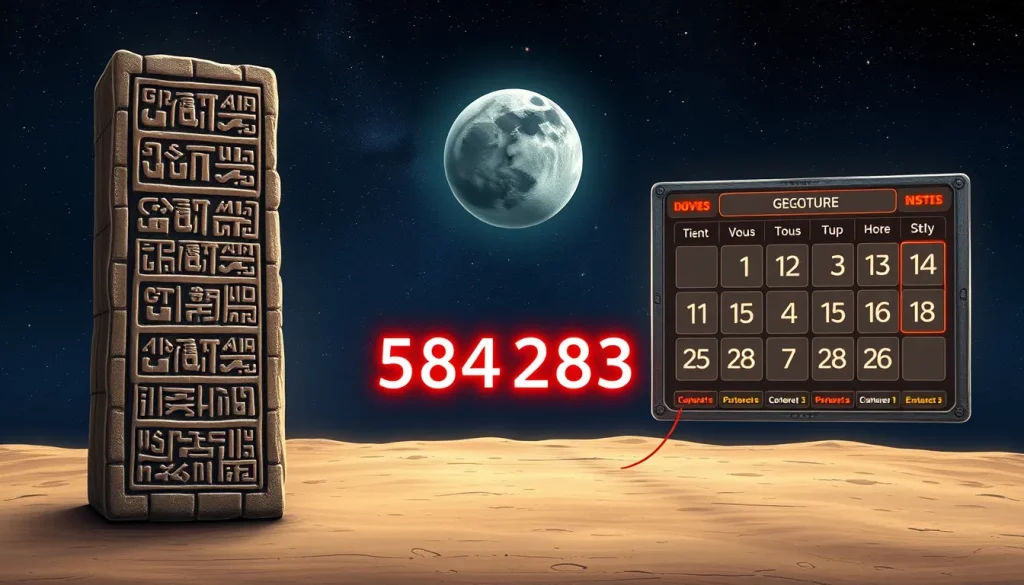
The Goodman-Martinez-Thompson (GMT) correlation constant represents one of the most critical breakthroughs in Mesoamerican archaeology and epigraphy. It serves as the mathematical bridge connecting the ancient Maya Long Count calendar system to the modern Western Gregorian and Julian calendars. Without this correlation constant, the intricate historical records carved onto stone monuments across the Maya region would remain floating in time, disconnected from the linear chronology used by modern historians and scientists. The standard value accepted by most contemporary scholars is 584,283, which corresponds to a Julian Day Number (JDN). This specific number allows researchers to translate a Maya date, such as the famous cycle end of 13.0.0.0.0, into a precise Western date, most notably December 21, 2012.
Main Explanation
The core of the correlation problem lies in the fact that the Maya Long Count is a linear count of days from a mythological starting point, whereas the Western calendar is based on the birth of Christ and solar years. To link them, scholars must identify a fixed point where both calendars align. The GMT correlation proposes that the Maya zero date, written as 0.0.0.0.0 in the Long Count system, corresponds to the Julian Day Number 584,283. In the proleptic Gregorian calendar, this date is calculated as August 11, 3114 BC. In the proleptic Julian calendar, it corresponds to September 6, 3114 BC. This alignment is not arbitrary; it is derived from a synthesis of colonial historical records, astronomical observations recorded in Maya codices, and archaeological cross-dating.
The constant is named after three researchers who contributed to its development: Joseph Goodman, Juan Martinez Hernandez, and J. Eric S. Thompson. While earlier variations existed, including a value of 584,285, the modified GMT value of 584,283 has become the modern standard, often referred to as the Lounsbury correlation. This specific value ensures that the Calendar Round dates (the combination of the 260-day Tzolkin and 365-day Haab cycles) align correctly with the Long Count positions found on monuments. For instance, the creation date 0.0.0.0.0 is universally recognized in Maya inscriptions as 4 Ahau 8 Kumku. The GMT constant ensures that when converted to a Julian Day Number, the resulting Western date falls on a day that matches this specific Tzolkin and Haab combination.
Evidence & Sources
The validation of the GMT constant relies on multiple lines of evidence, ranging from historical texts to modern nuclear physics. One of the primary sources of data comes from colonial-era documents where Maya scribes recorded dates in both the native system and the Spanish calendar. However, the most robust scientific verification comes from high-precision Accelerator Mass Spectrometry (AMS) radiocarbon dating. A landmark study published in Scientific Reports by Kennett et al. (2013) analyzed a wooden lintel from Tikal, providing a series of high-resolution carbon-14 dates. These dates were compared against the calendar conversion provided by the GMT constant. The study concluded that the historical events recorded on the lintel aligned statistically with the radiocarbon ages only when the GMT correlation was applied, effectively ruling out alternative constants that varied by hundreds of years.
Furthermore, astronomical data recorded in the Dresden Codex supports the correlation. The Maya tracked the cycles of Venus with remarkable accuracy. When astronomers calculate the position of Venus using the GMT constant for the dates recorded in the codex, the planetary positions match the observed sky conditions of the time. If a different constant were used, the Venus tables would describe planetary positions that never occurred. Additionally, the use of Julian Day Numbers provides a universal arithmetic method for conversion. As noted in archaeological methodologies, the Julian Day system starts at noon on January 1st, 4713 BC, allowing astronomers and archaeologists to number all days elapsed since that fundamental epoch without the complications of leap years or month lengths inherent in civil calendars.
Deep Dive Analysis
Calendar Systems and Calculation Mechanics
To fully understand the GMT correlation, one must examine the mechanics of the Maya timekeeping units and how they interact with Western chronology. The Long Count is a vigesimal (base-20) system, with specific names for each place value. The units include the Kin (1 day), Winal (20 days), Tun (360 days), Katun (7,200 days), and Baktun (144,000 days). It is crucial to note that the Winal place only runs from 0 to 17, because 18 Winal complete one Tun. This exception to the base-20 rule was designed to approximate the solar year. When converting these dates, archaeologists first calculate the total number of days elapsed since the zero date. This total is then added to the base Julian Day Number of 584,283.
Calculation and Example Date
The conversion process involves summing the Long Count units to find the total days elapsed. For example, a date of 9.10.0.0.0 would be calculated as (9 × 144,000) + (10 × 7,200) + (0 × 360) + (0 × 20) + (0 × 1). This sum is added to the correlation constant of 584,283 to yield the Julian Day Number for that specific event. From there, algorithms convert the JDN into the Gregorian year, month, and day. Using the standard GMT constant, the Maya creation date of 0.0.0.0.0 converts to August 11, 3114 BC in the Gregorian calendar. This specific date is widely cited in digital heritage tools and calculators used by researchers worldwide. It is important to distinguish between the proleptic Gregorian date and the Julian date, as the discrepancy between the two calendars grows the further back in time one goes.
Relationship to Other Calendars
The GMT constant does not just link the Long Count to the Gregorian calendar; it also synchronizes the cyclical calendars used by the Maya. The 260-day Tzolkin and the 365-day Haab calendars operate independently of the Long Count but are inscribed alongside it. The correlation ensures that if a monument records a Long Count of 9.15.0.0.0, the accompanying Tzolkin and Haab dates match the mathematical expectation derived from the constant. This relationship is vital for understanding Maya cosmology, where linear time (Long Count) and cyclical time (Calendar Round) were seen as interwoven forces. The Aztecs used a similar 260-day count called the Tonalpouhalli, demonstrating the regional importance of these cyclical systems, though the Long Count was primarily a Classic Maya innovation.
Historical Use and Current Traditions
Historically, the Long Count was used primarily during the Classic Period (c. 250–900 AD) to legitimize royal power and record historical events such as accessions, wars, and rituals. After the collapse of many Classic cities, the use of the Long Count diminished, though some Postclassic sites continued to employ it. In modern times, the correlation constant has taken on new significance among indigenous Maya communities. While many contemporary Maya groups maintain the 260-day count through oral tradition and daily practice without needing the Long Count, the GMT constant allows them to reconnect with the historical chronology of their ancestors. Digital heritage projects now use this constant to create interactive timelines that empower local communities to visualize their history alongside Western historical events.
Misconceptions and Controversies
Despite its widespread acceptance, the GMT constant has faced scrutiny. Some alternative correlations have been proposed over the years, varying by up to 1000 years, which would drastically alter the timeline of Maya civilization. However, the radiocarbon evidence from Kennett et al. strongly disfavors these alternatives. A common misconception surrounds the end of the 13th Baktun on December 21, 2012. Popular culture interpreted this as a prediction of the end of the world. In archaeological reality, it simply marked the completion of a major cycle, similar to an odometer rolling over from 99,999 to 100,000. The GMT constant confirms that the calendar continues indefinitely beyond this date. Another misconception is that the correlation is exact to the hour; while the JDN is precise, the exact time of day for the start of the Maya day (often sunrise or noon) is still debated among specialists, though the date remains stable.
FAQ
Why is the GMT constant 584,283 and not another number?
The value 584,283 is derived from correlating colonial historical records with Maya inscriptions and has been validated by high-precision radiocarbon dating of wooden lintels, which aligns historical events with physical evidence only when this constant is used.
Does the GMT constant prove the world ended in 2012?
No. The GMT constant confirms that December 21, 2012, marked the end of a 13-Baktun cycle, similar to a millennium change, but the Long Count calendar continues indefinitely beyond that date.
What is the difference between the Gregorian and Julian dates for the Maya zero date?
Using the GMT constant, the Maya zero date corresponds to August 11, 3114 BC in the proleptic Gregorian calendar and September 6, 3114 BC in the proleptic Julian calendar due to differences in leap year rules.



Leave a Reply