
Short Answer
The Haab’ stands as one of the most sophisticated timekeeping systems developed in the ancient Americas. Functioning as a 365-day solar calendar, it was utilized by the Maya and many other pre-Columbian cultures of Mesoamerica to track seasonal cycles, agricultural activities, and ceremonial events. Unlike the sacred 260-day Tzolk’in, which governed spiritual and ritualistic timelines, the Haab’ was closely aligned with the solar year, approximating the Earth’s orbit around the sun. This calendar system did not operate in isolation; it interlocked with the Tzolk’in to form the Calendar Round, a 52-year cycle that was fundamental to Maya cosmology and historical record-keeping. Understanding the Haab’ provides critical insight into how ancient civilizations perceived time, organized society, and interacted with the celestial mechanics governing their world.
Main Explanation
The structure of the Haab’ is mathematically precise, reflecting the Maya’s advanced knowledge of astronomy and mathematics. The calendar comprises eighteen months, each consisting of twenty days. This accounts for 360 days of the solar year. To complete the 365-day cycle, the Maya added a final, short period of five days known as Wayeb’ (or Uayeb in 16th-century orthography). These five days were often considered unlucky or nameless, marking a dangerous transition period between the old year and the new. The days within the eighteen regular months were numbered from 0 to 19, a usage that highlights the Maya concept of zero, which was rare among ancient civilizations. For example, a date would not begin at 1 Pop but rather at 0 Pop, referred to as the seating of Pop.
Each month in the Haab’ had a specific name, often associated with natural phenomena, agricultural cycles, or ritual significance. According to epigraphic evidence, the month names include Pop, Wo, Sip, Sotz’, Sek, Xul, Yaxk’in, Mol, Ch’en, Yax, Sak, Kej, Mak, K’ank’in, Muwan, Pax, K’ayab’, and K’umk’u. The glyph meanings associated with these months reveal deep cultural connections; for instance, Pop translates to mat, suggesting a sense of gathering or seating, while K’ank’in means yellow sun, indicating a specific solar position or season. The final month, Wayeb’, literally translates to five unlucky days, underscoring the cosmological anxiety surrounding the completion of the solar cycle. This structure allowed the Maya to predict seasonal changes with considerable accuracy, facilitating agricultural planning in the diverse ecosystems of the Maya region.
Evidence & Sources
Archaeological and textual evidence supporting the existence and function of the Haab’ is abundant across the Maya region. Inscriptions on stone stelae, altars, and architectural lintels frequently record dates using the Haab’ in conjunction with the Tzolk’in and the Long Count calendar. The Dresden Codex, one of the few surviving Maya books, contains tables and almanacs that rely heavily on Haab’ dates to predict astronomical events, such as eclipses and the movements of Venus. Colonial-era documents, such as those analyzed by researcher Bricker (1982), provide further correlation, estimating that the Haab’ was first used around 500 BCE with a starting point near the winter solstice. These records help modern archaeologists correlate Maya dates with the Gregorian calendar.
Modern digital heritage projects and institutional resources continue to validate these historical records. The National Museum of the American Indian notes that the Maya calendar system has roots in older indigenous civilizations, particularly the Olmec, indicating a long lineage of calendric development in Mesoamerica. Contemporary representations, such as those found in digital archives, often visualize the Haab’ as an outer ring interlocking with the inner Tzolk’in wheel, demonstrating the mechanical relationship between the two cycles. Furthermore, current date conversions, such as the correlation for August 29, 2026, which aligns with 12 Mol in the Haab’, show the continuity of this system in modern academic and cultural contexts. These sources collectively confirm that the Haab’ was not merely a theoretical construct but a lived reality that governed daily life, agriculture, and ritual for centuries.
Deep Dive Analysis
Module D: Calendar System Analysis
Units: The fundamental unit of the Haab’ is the day, known as kin. Twenty kin make up one uinal (month). Eighteen uinals make up one tun (year), totaling 360 days. The remaining five days form the Wayeb’ period. This vigesimal (base-20) system is consistent with broader Maya mathematics.
Calculation: To calculate a Haab’ date, one counts the days within the current month from 0 to 19. Once day 19 is reached, the count resets to 0 of the next month in the sequence. For example, following 19 Pop comes 0 Wo. This sequence continues through all eighteen months until 19 K’umk’u, after which the count enters Wayeb’ (0 Wayeb’ to 4 Wayeb’). Upon completion of 4 Wayeb’, the cycle resets to 0 Pop of the new year.
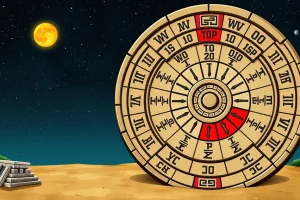
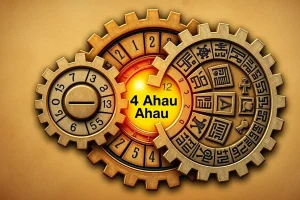
Diagram Description: Visually, the Haab’ is often represented as a large wheel with 18 segments, each representing a month. In contrast to the Tzolk’in’s 260-day cycle, the Haab’ wheel rotates slightly slower relative to the solar year. When depicted alongside the Tzolk’in, the two wheels mesh like gears. The Haab’ gear has 365 teeth, and the Tzolk’in gear has 260. They only return to their starting alignment every 52 years.
Example Date: Using modern correlation data, the Gregorian date of Saturday, August 29, 2026, corresponds to 12 Mol in the Haab’ calendar. This specific date falls within the tenth month of the Haab’ year. In a full Calendar Round notation, this would be paired with a Tzolk’in day, such as 11 Cauac, to create a unique identifier within the 52-year cycle.
Relationship to Other Calendars: The Haab’ rarely functioned alone. It was primarily used in conjunction with the Tzolk’in (260-day sacred calendar). Together, they formed the Calendar Round. Because 365 and 260 share a least common multiple of 18,980 days, any specific combination of Haab’ and Tzolk’in dates repeats only once every 52 years. For longer chronological tracking, the Maya used the Long Count calendar, which counted days linearly from a mythical creation date, allowing them to date events beyond the 52-year limit.
Historical Use: Historically, the Haab’ was essential for agriculture. The names of the months often reflected seasonal activities, such as planting or harvesting. For instance, the month Pax is associated with planting time. Ceremonially, the end of the Haab’ year and the Wayeb’ period were times of significant ritual activity to ensure the sun would rise again and the new year would be prosperous. The system had roots in older Mesoamerican civilizations, particularly the Olmec, suggesting a shared regional understanding of time.
Current Traditions: While the classical Maya civilization declined, knowledge of the calendar persisted among indigenous communities in Guatemala and Mexico. Contemporary Maya daykeepers still utilize variations of these calendar systems for ceremonial purposes, maintaining a living link to ancient practices. Digital resources now help bridge these traditions with modern education, allowing for accurate date conversions and cultural preservation.
Misconceptions: A common misconception is that the Haab’ or the Maya calendar predicted the end of the world in 2012. This confusion stemmed from the completion of a major cycle in the Long Count calendar, not the Haab’. The Haab’ is a cyclical solar calendar that simply resets every year, much like the modern Gregorian calendar. Another misconception is that the Haab’ was perfectly accurate to the solar year. At 365 days, it lacks the quarter-day adjustment of the Gregorian leap year, meaning it drifts relative to the seasons over long periods, though some evidence suggests the Maya were aware of this discrepancy.
FAQ
How many days are in the Haab' calendar?
The Haab' consists of 365 days, divided into 18 months of 20 days each, plus a final period of 5 days called Wayeb'.
What is the significance of the Wayeb' period?
Wayeb' is a five-day period at the end of the Haab' year often considered unlucky or nameless, marking a dangerous transition between years.
Did the Haab' calendar predict the end of the world?
No, the Haab' is a cyclical solar calendar that resets annually. Misconceptions about 2012 were related to the Long Count calendar, not the Haab'.
How does the Haab' relate to the Tzolk'in?
The Haab' and Tzolk'in interlock to form the Calendar Round, a 52-year cycle where specific date combinations repeat only once.

Leave a Reply