
Short Answer
The study of Maya civilization represents one of the most dynamic and evolving fields within Mesoamerican archaeology. Moving beyond the early fascination with monumental architecture and elite rulers, modern archaeological inquiry focuses on reconstructing the lives of all people within ancient Maya society. This shift reflects a broader trend in the social sciences toward achieving a greater understanding of people, their roles, and their relations in the past. By bridging the divide between the humanities and sciences, Mayanists utilize new and existing scientific methods to answer questions about ancient people previously considered beyond the realm of archaeological knowledge.
Introduction to Maya Archaeological Methodology
Contemporary Maya archaeology is defined by its interdisciplinary nature. Questions about time, space, and people form the core of the social sciences, and given the material and spatial nature of archaeological data, the field relies heavily on rigorous scientific methodology. The primary goal is no longer simply to catalog artifacts or map ruins but to understand the social evolution and daily realities of the civilization. This approach isolates important trends such as the increased use of the conjunctive approach, which emphasizes context and provenience, and an effort to use the Lowland Maya as a case study in social evolution. The waning use of the label “unique” to describe the Maya allows researchers to compare their development with other complex societies globally.
The Evolution of Archaeological Inquiry in the Maya Region
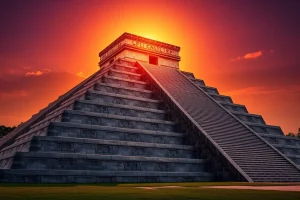
The history of Maya archaeology is marked by distinct phases of discovery and interpretation. In the 1830s and 1840s, British-American explorers combing through the Yucatán Peninsula had no idea who built the mysterious sites they encountered. Most of the civilization was covered in vines and vegetation, reclaimed by the jungle. Discarded and abandoned, the function of these sites and artifacts—temples, pyramids, remnants of art and even writing—was mostly unknown. Nonetheless, writers like John Lloyd Stephens noted in 1841 that these structures seemed to be the work of the same group of people. Early exploration focused heavily on the visible monumental core, often overlooking the vast residential areas that supported the urban centers. Today, evidence of Mayan civilization is found everywhere: beneath Spanish convents, underneath streets, and deep within forested regions, indicating a much denser and more complex occupation than previously imagined.
Settlement Pattern Analysis and Demographic Reconstruction
One of the most significant breakthroughs in recent decades is the discovery of the “99%” through the study of settlement patterns. For much of the history of archaeology, focus remained on the elite 1% represented by grand temples and palaces. However, systematic survey methods have revealed the vast networks of commoner households that sustained the civilization. Jeremy A. Sabloff and colleagues have highlighted how Maya archaeologists discovered the 99% through the study of settlement patterns. This shift allows for a more accurate demographic reconstruction, moving away from estimates based solely on ceremonial centers to those based on comprehensive regional surveys. By mapping the distribution of residential structures, archaeologists can estimate population density, social stratification, and resource distribution across the landscape.
Regional Survey Techniques
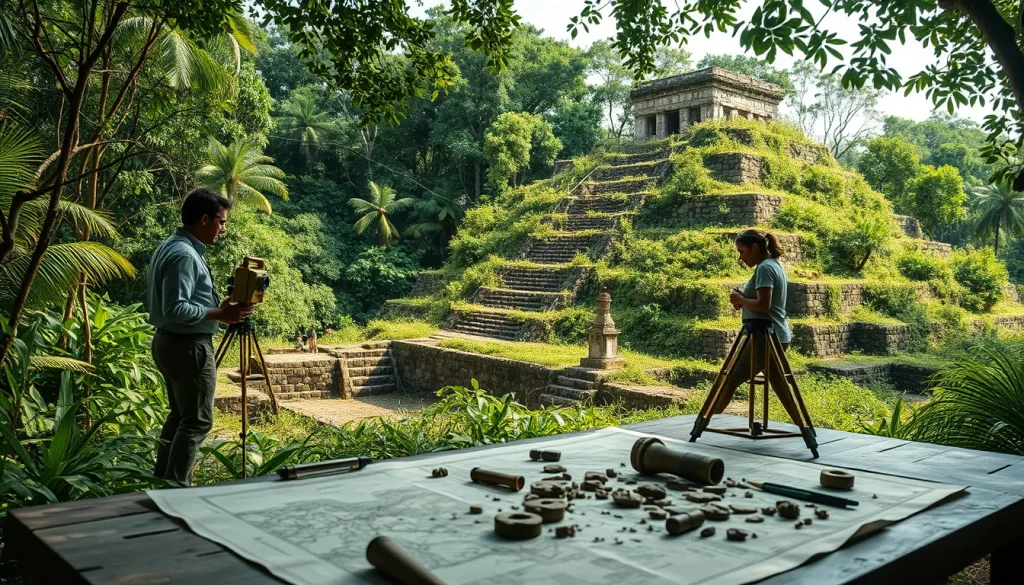
Regional surveys involve walking transects across defined areas to record surface artifacts and architectural features. This data is crucial for understanding how the Maya interacted with their environment. The conjunctive approach, with renewed appreciation of context and provenience, ensures that every artifact found during these surveys is recorded with precise spatial data. This allows researchers to analyze patterns of trade, agriculture, and community organization that were invisible when only major sites were excavated.
Excavation Techniques and Contextual Provenience
Excavation in the Maya region requires meticulous attention to stratigraphy and context. The increased use of the conjunctive approach ensures that artifacts are not removed from their context without detailed recording. Provenience—the precise location where an object is found—is critical for interpreting its function and age. Without context, an artifact is merely an object; with context, it becomes data point in a larger social narrative. Excavations often target specific features such as middens (trash heaps), floors, and burial caches to reconstruct daily activities. The volume of literature on Maya archaeology has grown exponentially, requiring researchers to deliberate on data so newly produced while respecting the work of predecessors.
Epigraphy and Decoding Maya Writing Systems
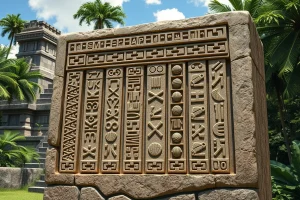
The Maya possessed the most sophisticated writing system in the pre-Columbian Americas. Decoding these glyphs has revolutionized the understanding of Maya history, transforming it from a mystery into a recorded chronicle. Epigraphy allows archaeologists to identify specific rulers, dates of events, and political alliances. This ties directly into the categories of Math & Writing and Maya Astronomy, as the script often records calendrical information and astronomical observations. The ability to read history from the stones complements the material evidence found during excavation. For example, inscriptions at sites like Palenque provide details about rulers such as K’inich Janab Pakal, whose mausoleum was found within the Temple of the Inscriptions.
“The new direction in Maya archaeology is toward achieving a greater understanding of people and their roles and their relations in the past. To answer emerging humanistic questions about ancient people’s lives Mayanists are increasingly making use of new and existing scientific methods from archaeology and other disciplines.” – Cynthia Robin, Department of Anthropology, Northwestern University
Scientific Dating and Chronological Frameworks
Establishing a reliable chronology is fundamental to archaeological study. Maya archaeologists utilize a combination of relative and absolute dating methods. Relative dating relies on stratigraphy and seriation (the ordering of artifacts based on style changes over time). Absolute dating often involves radiocarbon dating of organic materials found in association with architectural phases or burials. The Maya Long Count calendar also provides a unique absolute dating mechanism inscribed directly onto monuments. Correlating the Maya calendar with the Gregorian calendar allows researchers to assign specific Western dates to historical events recorded in glyphs. This precision is rare in ancient history and provides a robust framework for analyzing political and social changes over centuries.
Digital Heritage and Remote Sensing Technologies
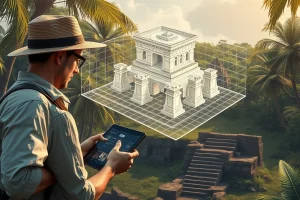
The integration of digital heritage technologies has transformed how archaeologists study the Maya landscape. LiDAR (Light Detection and Ranging) technology allows researchers to penetrate the dense jungle canopy and map the ground surface below. This has revealed vast urban sprawls, causeways, and defensive structures that were invisible from the ground. 3D modeling and photogrammetry are used to document sites and artifacts with high precision, creating digital archives that preserve heritage data against erosion or looting. These tools support the effort to use the Lowland Maya as a case study in social evolution by providing large-scale data sets that can be analyzed computationally. Digital heritage ensures that the records of these sites are preserved for future generations, even as physical conditions change.
LiDAR and Landscape Archaeology
LiDAR surveys have fundamentally altered population estimates. By revealing the true extent of residential terracing and housing groups, these scans support the settlement pattern analyses that discovered the 99%. The data generated allows for the creation of digital elevation models (DEMs) that help hydrologists and archaeologists understand water management systems, which were critical for survival in the seasonal tropics.
Bioarchaeology and Understanding Ancient People
Bioarchaeology focuses on the study of human remains to understand health, diet, migration, and kinship. This aligns with the goal of bridging the divide between the humanities and sciences to answer questions about ancient people. Isotopic analysis of teeth and bones can reveal where an individual was born and what they ate, providing evidence of trade networks and social mobility. Pathologies on bones indicate labor patterns and disease prevalence. This scientific method moves beyond the “great man” theory of history to include the experiences of women, children, and commoners. Today, descendants keep Maya history alive, and bioarchaeological findings often resonate with oral histories and cultural memories preserved by modern Maya communities.
Environmental Archaeology and Climate Interactions
The decline of the Classic Maya civilization is often linked to environmental factors. Archaeologists study pollen cores, sediment layers, and speleothems (cave formations) to reconstruct past climate conditions. Evidence suggests that prolonged droughts may have stressed agricultural systems, contributing to political instability and abandonment of cities. However, the narrative is complex; the civilization did not vanish entirely but transformed. National Geographic notes that today, descendants keep Maya history alive—a sign of resilience. Understanding the interaction between the Maya and their environment is crucial for modeling how complex societies respond to climate change. This research isolates trends in Lowland Maya archaeology regarding ancient environmental studies, highlighting the importance of sustainability in ancient urban planning.
Future Directions in Lowland Maya Research
Looking forward, Lowland Maya archaeology is headed toward further integration of scientific methods. The task of reviewing data presents numerous problems, not the least of which is the fact that one has little time to deliberate on data so newly produced. Researchers must avoid running the risk of extolling current research at the expense of that done by predecessors. Future work will likely focus on big data analytics, combining LiDAR data with excavation results and epigraphic records. There is also a continued effort to engage with descendant communities, ensuring that archaeological practice benefits living Maya people. The volume of literature on Maya archaeology continues to grow, requiring new syntheses that incorporate these diverse lines of evidence into a cohesive understanding of one of the world’s most fascinating civilizations.
| Method | Primary Data Source | Key Insight Provided | Technological Requirement |
|---|---|---|---|
| Settlement Survey | Surface Artifacts & Structures | Population Density & Social Stratification | GPS & GIS Mapping |
| Excavation | Stratigraphy & Artifacts | Chronology & Daily Activity | Trowels, Screens, Total Station |
| Epigraphy | Monument Inscriptions | Political History & Calendar Dates | High-Resolution Photography |
| LiDAR | Laser Scans | Hidden Infrastructure & Land Use | Aircraft & Laser Sensors |
| Bioarchaeology | Human Remains | Diet, Health, & Migration | Isotope Analysis & Microscopy |
In summary, the study of the Maya civilization is a multifaceted endeavor that combines traditional excavation with cutting-edge technology. From the early days of Stephens exploring the Yucatán to modern LiDAR scans revealing the “99%” of the population, the field has matured into a rigorous science. By maintaining strict scientific accuracy and avoiding pseudoscience, archaeologists continue to decode the secrets of the pyramid-building Maya who reigned over much of Central America. The resilience of the Maya people is evident not only in the ruins they left behind but in the living cultures that preserve their heritage today.
- 1830s-1840s: Early exploration by Stephens and Catherwood documents major sites.
- 1960s-1970s: Breakthroughs in epigraphy allow reading of historical texts.
- 1980s-1990s: Shift toward settlement patterns and social archaeology.
- 2000s-Present: Integration of LiDAR, isotopes, and digital heritage tools.
- 2019: Major reviews highlight the discovery of the common people through settlement studies.
- 2025: Continued focus on environmental interactions and descendant community engagement.
FAQ
How do archaeologists see through the jungle to find Maya sites?
Archaeologists use LiDAR (Light Detection and Ranging) technology, which employs laser scans from aircraft to penetrate the dense canopy and map the ground surface below, revealing hidden structures.
Did the Maya civilization disappear completely?
No, the civilization transformed. While many Classic period cities were abandoned, Maya people survived. Today, millions of descendants keep Maya history and culture alive.
What is the '99%' referred to in Maya archaeology?
It refers to the common people of Maya society. Recent settlement pattern studies have shifted focus from the elite 1% (rulers and monuments) to the vast majority of the population who lived in surrounding residential areas.
Leave a Reply