
Short Answer
Introduction to the Sacred Count
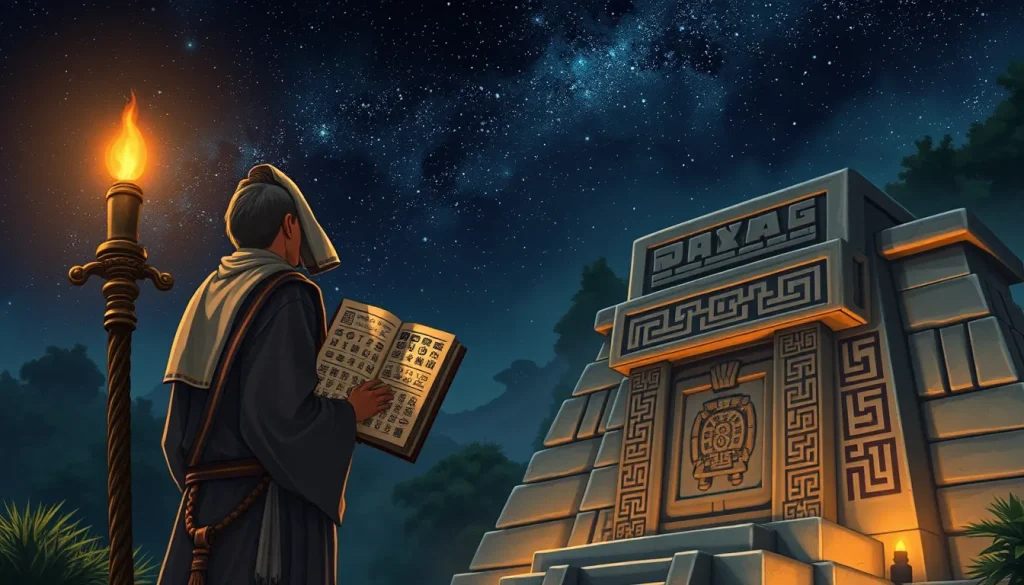
The Tzolkʼin (Mayan pronunciation: [t͡sol ˈkʼin]), formerly and commonly spelled tzolkin, stands as the foundational cycle of the Maya calendar system. It is a 260-day Mesoamerican calendar used by the Maya civilization of pre-Columbian Mesoamerica. Unlike solar calendars designed primarily for agricultural tracking, the Tzolkʼin served as the spiritual heart of Maya timekeeping, governing ritual life, divination, and personal identity. The term itself is a western coinage in Yucatec Maya, meaning “division of days.” Contemporary Maya groups who have maintained an unbroken count for over 500 years use other terms in their languages, such as the Kʼicheʼ term Aj Ilabal Qʼij (‘the sense of the day’) or the Kaqchikel term Chol Qʼij (‘the organization of time’) [1].
This sacred count remains a preeminent component in the society and rituals of both the ancient and the modern Maya. While its use has been spreading in the Guatemalan highlands, this practice is notably opposed by Evangelical Christian converts in some Maya communities, highlighting the complex interplay between indigenous tradition and modern religious shifts [1]. The Tzolkʼin was not used in isolation; it was paired with the Haab, a 365-day solar calendar, to form the Calendar Round, a cycle of approximately 52 years. This article examines the archaeological evidence, mathematical precision, and cosmological depth of the Tzolkʼin, integrating digital heritage perspectives to understand how this ancient system continues to resonate in the modern world.
Mathematical Structure of the Tzolk’in
The elegance of the Tzolkʼin lies in its modular arithmetic, which generates a unique sequence of 260 days without repetition. The structure is defined by the interlocking of two smaller cycles: a sequence of 20 day names and a sequence of 13 numbers. This combination creates 260 unique day positions (20 × 13 = 260) [2]. Each day is identified by a combination of a number (tone) and a name (veintena). For example, a day might be designated as 4 Ajaw or 8 Kumku. Once the number 13 is reached, the count resets to 1, while the day names continue sequentially. Similarly, once the 20th day name is reached, it resets to the first name, while the numbers continue.
This mechanism ensures that a specific combination, such as 1 Imix, will not recur until 260 days have passed. The mathematical sophistication required to maintain this count over centuries demonstrates the advanced numerical literacy of Maya scribes and priests. The system is not merely a count of days but a framework for understanding the quality of time. In Maya cosmology, each day carries a specific burden or energy, influenced by the deity associated with the day name and the magnitude of the number. The precision of this system allowed the Maya to schedule ceremonies, predict auspicious times for warfare, and determine the fate of individuals born under specific signs [2].
The Interlocking Gear Mechanism
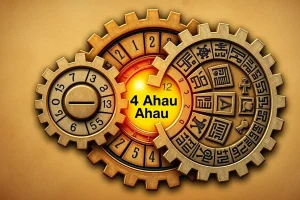
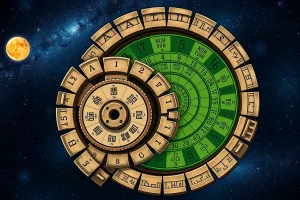
Scholars often visualize the Tzolkʼin as two interlocking gears. One gear has 13 teeth (representing the numbers), and the other has 20 teeth (representing the day names). As the gears turn, each tooth on the 13-gear meshes with each tooth on the 20-gear exactly once before the cycle returns to its starting position. This mechanical analogy helps explain why the least common multiple of 13 and 20 is 260. There is no common divisor between 13 (a prime number) and 20, which guarantees the full cycle length before repetition. This structural integrity is why the Tzolkʼin has survived as a living tradition in some communities despite centuries of colonization and religious suppression.
The Twenty Day Names (Veintena)
The core of the Tzolkʼin cycle is the sequence of 20 day names, known as the veintena. These names are deeply rooted in the natural world, mythology, and cosmology of the Maya. While the specific glyphs and pronunciations vary slightly between Maya languages (such as Yucatec, Kʼicheʼ, and Kaqchikel), the sequence remains consistent across the Maya region. Each name is associated with a specific glyph, a patron deity, and a set of omens. The day names are not arbitrary; they reflect the Maya observation of time as a living entity.
The sequence typically begins with Imix (often associated with water, earth, or the crocodile) and proceeds through names representing wind, night, seed, serpent, death, deer, rabbit, water, dog, monkey, road, reed, jaguar, eagle, vulture, motion, flint, rain, and flower. The final day is Ajaw (Lord or King), which holds significant political and spiritual weight. In the Classic Period, kings often took the name of the day they were born or ascended to the throne. The day Ajaw was frequently used to mark period endings in the Long Count calendar, signifying completion and renewal [3].
The Thirteen Tone Numbers (Trecena)
Superimposed upon the 20 day names is the cycle of 13 numbers, known as the trecena. In Maya numerology, numbers were not merely quantitative but qualitative. The number 13 holds particular significance in Mesoamerican cosmology, often associated with the 13 levels of the heavens or the upper world. The numbers run from 1 to 13. When the count reaches 13, the next day returns to 1. This cycle is shorter than the 20-day name cycle, which creates the asymmetry necessary for the 260-day unique combination.
The interaction between the tone and the day name creates a specific “day lord” or energy profile. For instance, a day like 7 Manik would have different ritual implications than 1 Manik. Diviners, known as daykeepers, would interpret these combinations to advise on marriage, agriculture, travel, and warfare. The persistence of the number 13 in the calendar may also relate to lunar observations, as there are approximately 13 lunations in a solar year, though the 260-day cycle does not perfectly align with the solar or lunar year, reinforcing its sacred rather than astronomical solar nature [2].
Historical Origins and Archaeological Evidence
The origins of the 260-day count are ancient, predating the Classic Maya civilization. The earliest direct evidence for the Tzolkʼin dates to approximately the 3rd century BC, though scholars suspect it may be earlier. This timeline places the development of the calendar in the Preclassic period, a time of significant cultural formation in Mesoamerica. The calendar was not exclusive to the Maya; it was used across the region by the Aztec (who called it tonalpohualli in Nahuatl), Zapotec, and Mixtec civilizations, indicating a shared Mesoamerican cultural horizon [2].
Archaeological evidence for the Tzolkʼin is found in numerous inscriptions engraved in stone on temples, steles, and other buildings from the pre-Columbian era. These inscriptions often record dates using the Tzolkʼin in conjunction with the Long Count, allowing archaeologists to correlate Maya dates with the Gregorian calendar. The Carnegie Institution of Washington’s early 20th-century work, such as John E. Teeple’s Maya Astronomy (1931), laid the groundwork for deciphering these glyphs, identifying the Tzolkʼin as distinct from the “Vague Year” (Haab) and the Supplementary Series [4].
Epigraphic Records
Stelae at sites like Tikal, Copan, and Quirigua frequently display Tzolkʼin dates alongside Long Count dates. These records were often erected to commemorate the accession of rulers, military victories, or ritual ceremonies. The durability of stone ensured that these calendar counts survived the collapse of the Classic Maya cities. In the Postclassic period, codices (folded books made of bark paper) such as the Dresden Codex preserved detailed tables based on the Tzolkʼin cycle, used for predicting eclipses and tracking the movements of Venus. These documents confirm that the calendar was integral to both statecraft and astronomy [3].
The Calendar Round: Interlocking Cycles
The Tzolkʼin was rarely used alone in civic contexts. It was paired with the Haab, a 365-day solar calendar consisting of 18 months of 20 days plus a short month of 5 “nameless” days. The combination of the 260-day Tzolkʼin and the 365-day Haab leads to a cycle of 52 vague years or 73 ceremonial cycles, known as the Calendar Round. This period totals 18,980 days. A day is defined in this cycle by its position simultaneously in the Haab and the Tzolkʼin [3].
Because 260 and 365 share a common factor of 5, the specific combination of a Tzolkʼin date and a Haab date (e.g., 4 Ajaw 8 Kumku) will only repeat once every 52 years. This 52-year cycle was of immense importance in Mesoamerican culture. For the Aztecs, it marked the “New Fire” ceremony, where all fires were extinguished and relit to ensure the sun would rise again. For the Maya, it marked a significant period of renewal and potential danger. The Calendar Round provided a framework for historical recording that was precise enough for most civic purposes without requiring the immense spans of the Long Count.
| Feature | Tzolk’in (Sacred) | Haab (Solar) | Calendar Round |
|---|---|---|---|
| Duration | 260 Days | 365 Days | 18,980 Days (~52 Years) |
| Structure | 20 Names × 13 Numbers | 18 Months × 20 Days + 5 | LCM of Tzolk’in & Haab |
| Primary Use | Ritual, Divination, Identity | Agriculture, Civic Seasons | Historical Dating, Cycles |
| Cultural Scope | Maya, Aztec, Zapotec | Maya, Aztec | Pan-Mesoamerican |
| Modern Usage | Active in Guatemala Highlands | Largely Historical | Ceremonial Contexts |
Cosmological Significance and Ritual Function
The Tzolkʼin governed the spiritual rhythm of Maya life. It was used for naming ceremonies, where a child’s destiny was interpreted based on the day of their birth. Marriage decisions were often contingent upon the compatibility of the couples’ birth dates within the Tzolkʼin cycle. Warfare timing was also dictated by the calendar; certain days were considered auspicious for launching attacks, while others were reserved for defense or peace negotiations [2].
In Maya cosmology, time was cyclical rather than linear. The Tzolkʼin embodied this belief, representing the eternal return of energies. The “burden” of the day was carried by specific deities, and rituals were performed to appease or honor these gods. The daykeepers (shamans) acted as intermediaries, interpreting the calendar to guide the community. This function was so critical that the calendar survived the Spanish Conquest in secret. While the Long Count fell out of use, the 260-day count remained vital for personal and community spirituality.
“A calendar can measure more than seasons. It can measure destiny.” This insight underscores the Tzolk’in’s role not just as a timekeeping device, but as a map of human fate and cosmic order within Maya society [2].
The Tzolk’in in Contemporary Maya Society
Today, the Tzolkʼin is still used by several Maya communities in the Guatemalan highlands. Contemporary Maya groups who have maintained an unbroken count for over 500 years continue to rely on the calendar for agricultural planning, healing rituals, and community governance. However, the practice is not universal; it is opposed by Evangelical Christian converts in some Maya communities, reflecting ongoing religious tensions [1].
Despite these challenges, there has been a resurgence of interest in the Tzolkʼin as a symbol of indigenous identity and resistance. Maya activists and cultural organizations promote the calendar as evidence of the sophistication of pre-Columbian science and philosophy. The survival of the count is a testament to the resilience of Maya culture. In some regions, the practice is spreading, with younger generations reclaiming the knowledge of their ancestors. The terms Aj Ilabal Qʼij and Chol Qʼij are increasingly used in academic and cultural discourse to honor the indigenous terminology over the westernized “Tzolkʼin” [1].
Digital Heritage and Modern Documentation
In the realm of digital heritage, the Tzolkʼin presents unique opportunities for preservation and education. Modern technologies such as LiDAR scans and 3D modeling are being used to document the archaeological sites where calendar inscriptions are found. These digital tools allow researchers to analyze glyph placements and astronomical alignments without physically disturbing the fragile structures. For example, 3D modeling of stelae can reveal wear patterns on glyphs that indicate which dates were most frequently referenced or venerated.
Furthermore, digital archives are crucial for preserving the knowledge of contemporary daykeepers. As elders pass away, there is a risk that oral traditions regarding the interpretation of specific day combinations may be lost. Projects aimed at recording these interpretations in multimedia formats ensure that the intangible heritage of the Tzolkʼin is safeguarded alongside the tangible stone monuments. This integration of archaeology and digital technology provides a holistic view of the calendar’s history and its living legacy [3].
Technological Applications
Software applications and online converters now allow users to calculate Tzolkʼin dates corresponding to Gregorian dates. While these tools make the calendar accessible, scholars caution against decontextualizing the dates from their ritual framework. Digital heritage initiatives strive to balance accessibility with accuracy, ensuring that the spiritual significance of the count is not reduced to mere data. The Carnegie Institution’s early work on Maya astronomy established the correlation constants used in these digital tools, linking ancient counts to modern dates with high precision [4].
Conclusion: Legacy of Maya Timekeeping
The Tzolkʼin calendar remains one of the most enduring legacies of the Maya civilization. Its 260-day cycle, structured upon the interlocking of 20 day names and 13 numbers, demonstrates a profound understanding of mathematics and cosmology. From its origins in the Preclassic period to its continued use in the Guatemalan highlands, the Tzolkʼin has served as a bridge between the human and the divine. It is a system that measures not only the passage of days but the quality of time itself.
Archaeological evidence, from stone stelae to ancient codices, confirms the centrality of the Tzolkʼin in Mesoamerican life. When combined with the Haab to form the 52-year Calendar Round, it provided a robust framework for history and ritual. Today, as digital heritage projects document and preserve this knowledge, the Tzolkʼin continues to inspire awe and respect. It stands as a reminder that time, in the Maya view, is sacred, cyclical, and deeply interconnected with the fate of humanity and the cosmos [3].
FAQ
What is the difference between the Tzolk'in and the Haab?
The Tzolk'in is a 260-day sacred calendar used for ritual and divination, while the Haab is a 365-day solar calendar used for agriculture and civic purposes. Together they form the 52-year Calendar Round.
Is the Tzolk'in calendar still used today?
Yes, the Tzolk'in is still in active use by several Maya communities in the Guatemalan highlands, although its practice is sometimes opposed by Evangelical Christian converts in those regions.
How is the 260-day cycle calculated?
The cycle is generated by interlocking two counts: 20 day names and 13 numbers. Each day combines one name and one number, creating 260 unique combinations before the cycle repeats.
Leave a Reply