
Short Answer
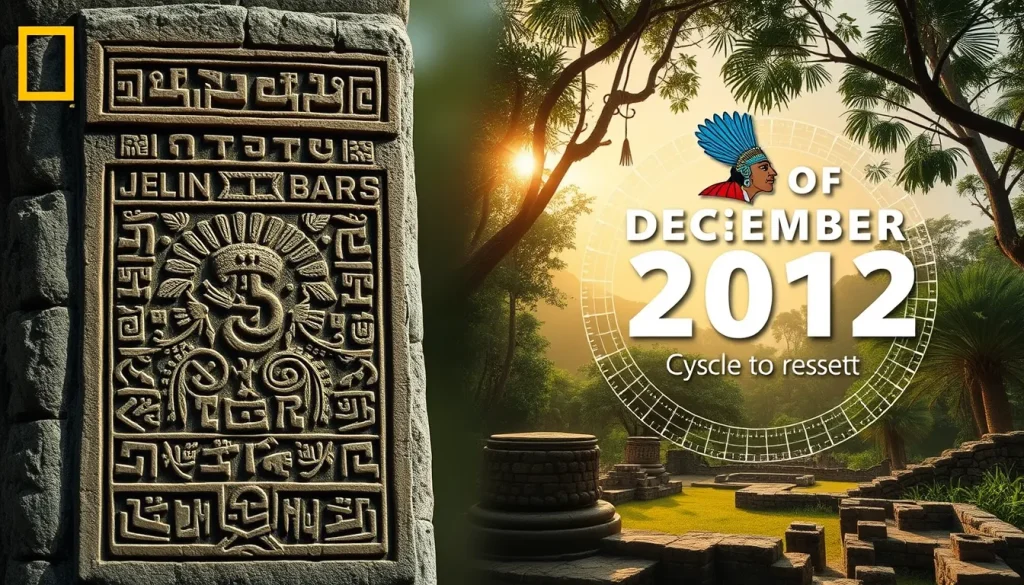
December 21, 2012, stands as a significant date in modern cultural history, often mischaracterized as the predicted end of the world according to ancient Maya prophecy. In reality, this date marked the completion of a major cycle within the Maya Long Count calendar system, specifically the end of the 13th baktun. This event concluded a period spanning approximately 5,125 solar years, beginning on August 11, 3114 BCE. While popular culture and conspiracy theories propagated narratives of global catastrophe, archaeological and epigraphic evidence demonstrates that the Maya viewed this transition as a moment of renewal and continuity rather than destruction. The phenomenon serves as a critical case study in the intersection of ancient mathematics, cosmology, and modern media interpretation.
Main Explanation
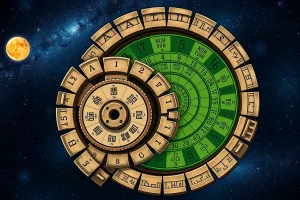
The core of the 2012 phenomenon lies in the structure of the Maya Long Count calendar, a linear timekeeping system used to track long periods of history distinct from their cyclical calendars like the Tzolkin and Haab. The Long Count measures time in nested units based on a vigesimal (base-20) system, with the exception of the uinal. A single day is known as a kin. Twenty kin make a uinal (20 days). Eighteen uinals make a tun (360 days). Twenty tuns make a katun (7,200 days). Finally, twenty katuns make a baktun, which consists of 144,000 days. The cycle that concluded in 2012 was composed of 13 baktuns, totaling 1,872,000 days or roughly 5,125.366 solar years.
This specific 13-baktun cycle began on the Long Count date 13.0.0.0.0 4 Ajaw 8 Kumk’u, which correlates to August 11, 3114 BCE in the Gregorian calendar. This starting point is considered by the Maya to be the creation date of the current era, often referred to as the 4th era in Maya cosmology. The completion of this cycle occurred on the Long Count date 13.0.0.0.0 4 Ajaw 3 Kank’in, corresponding to December 21, 2012. In Maya cosmology, the completion of such a grand cycle was akin to an odometer rolling over; it signified the end of one era and the beginning of another, not the termination of time itself. The calendar system was designed to continue indefinitely, capable of recording dates for millions of years into the future. The misconception of an apocalypse arose from a modern misinterpretation of this cycle completion, conflating the end of a counting period with the end of physical existence.
Evidence & Sources
Archaeological evidence firmly supports the interpretation of the 2012 date as a cycle reset rather than a doomsday prediction. The primary textual evidence comes from Monument 6 at the archaeological site of Tortuguero in Tabasco, México. This inscription is the only known Maya record that explicitly references the end date of the 13-baktun cycle. Contrary to apocalyptic claims, the text on Monument 6 primarily details the life and battles of a ruler named B’alam Ajaw. The reference to the 2012 date appears in a context suggesting a ceremonial observation or the dedication of a structure by a future ruler, implying that life and political structures would continue beyond the date. Scholars note that the monument does not predict catastrophe but rather records a historical narrative that spans across the cycle boundary.
Further evidence is found at the site of Quiriguá in Guatemala, specifically on Stela C. This monument records the creation date of the current era (August 11, 3114 BCE) and provides the cosmological framework for the Long Count. It establishes the precedent for the 13-baktun cycle without associating its conclusion with destruction. Additionally, findings at the Maya site of Xultún include wall paintings depicting a Maya king and astronomical calculations that extend far beyond 2012. These paintings demonstrate that Maya scribes were calculating lunar and planetary cycles thousands of years into the future, proving they did not anticipate the end of time in 2012. Institutional analyses from the Smithsonian Institution’s National Museum of the American Indian and National Geographic confirm that credible scientists eschew predictions of world-ending events based on the calendar. The consensus among epigraphers and archaeologists is that the anxiety surrounding 2012 was a modern construct, fueled by pop culture phenomena such as the 2009 film “2012,” rather than ancient prophecy.
Deep Dive Analysis
Module E: Myth vs Fact Analysis
Claim: The ancient Maya predicted the end of the world would occur on December 21, 2012, due to the end of their calendar.
Verdict: False. The date marked the end of a calendar cycle, not the end of the world.
Origin of Claim: The myth originated from a combination of New Age speculation, misinterpretation of the Long Count’s cycle completion, and commercialization through media. The idea bubbled up on conspiracy-minded corners of the Internet and caught on in pop culture. The alignment of the winter solstice with the galactic equator was also mystically interpreted as a cosmic event leading to destruction.
Evidence: Epigraphic evidence from Tortuguero Monument 6 shows the date referenced in the context of a ruler’s life, not destruction. Archaeological evidence from Xultún shows calculations extending well past 2012. The Long Count calendar is mathematically capable of continuing for millions of years. The Smithsonian and AAAS confirm the date corresponds to a cycle reset similar to a millennium change.
Scholar Consensus: Scholars agree that the Maya were brilliant mathematicians and record keepers who developed many different kinds of calendars, including a cyclical solar calendar and a sacred almanac. They did not predict an apocalypse. The ancient Maya said humanity would be around another 7,000 years or so. The event was viewed as a time of renewal and transition.
Remaining Uncertainties: While the apocalypse myth is debunked, the specific ceremonial activities that took place on December 21, 2012, among contemporary Maya communities vary. Some modern Maya groups view the date as a time for spiritual reflection and renewal of cultural identity, distinct from the ancient inscriptions but rooted in the continuity of their heritage. The exact nuance of how the ancient Maya intended to celebrate the 14th baktun remains partially interpretive due to the gap in continuous historical records from the Classic period to the present.
FAQ
Did the Maya predict the end of the world in 2012?
No. The ancient Maya never predicted an apocalypse. The date marked the end of a 13-baktun cycle in their Long Count calendar, similar to a calendar year ending.
What calendar was used to determine the 2012 date?
The Maya Long Count calendar was used. It is a linear system that counts days from a creation date in 3114 BCE.
What happened on December 21, 2012?
The 13th baktun cycle completed. The calendar reset to begin the 14th baktun. No physical catastrophe occurred.
Leave a Reply