
Skip to content
Maya Skies | Maya Astronomy, Calendars & Archaeology
  • Home
  • Tools
    • Calendar Round Calculator
    • Chichen Itza Architecture Explorer
    • Long Count Calculator
    • Maya Calendar Converter
    • Maya Number Converter
    • Maya Numerals Chart
    • Maya Time Units Calculator
    • Venus Cycle Explorer
  • Topics
    • Archaeology
    • Calendar Systems
    • Chichén Itzá
    • Digital Heritage
    • Math & Writing
    • Maya Astronomy
    • Maya Cosmology
  • About Us
    • Project History
    • Research Standards
    • Editorial Policy
    • Corrections Policy
    • Image Credits

Recent Posts

  • Decoding Stone: The Archaeological Interpretation of Maya Stelae Inscriptions
  • Verifying Ancient Maya Astronomical Alignments Using Digital Survey Data
  • The Nine Lords of the Night: Maya Calendrical Deities and Timekeeping
  • The Caracol Observatory at Chichén Itzá: Alignments and Function
  • Ixchel: Maya Goddess of Midwifery, Medicine, and Lunar Cosmology

Recent Comments

  1. pornip on Digital Visualizations of the Maya Underworld: Modeling Xibalba

Archives

  • October 2026
  • September 2026
  • August 2026

Categories

  • Archaeology
  • Calendar Systems
  • Chichén Itzá
  • Digital Heritage
  • Math & Writing
  • Maya Astronomy
  • Maya Cosmology

Husai Anguiano Tamayo

The Wacah Chan: Axis Mundi of the Maya Universe

The Wacah Chan: Axis Mundi of the Maya Universe

October 20, 2026 | Maya Cosmology | Husai Anguiano Tamayo

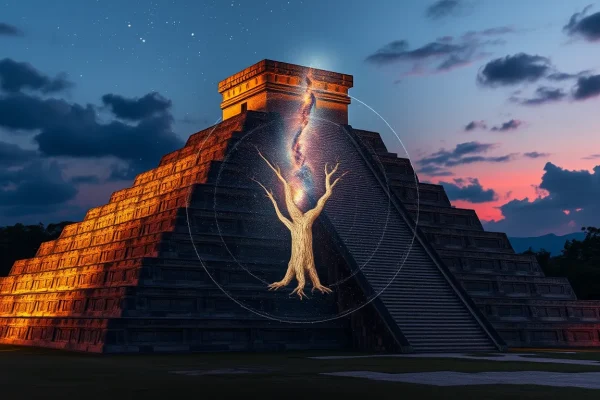
The Wacah Chan, or World Tree, served as the central pillar of Maya cosmology, connecting the underworld, earth, and heavens. This sacred axis, often envisioned as a Ceiba tree, facilitated the movement of souls and divine energy across cosmic realms.
Read More →
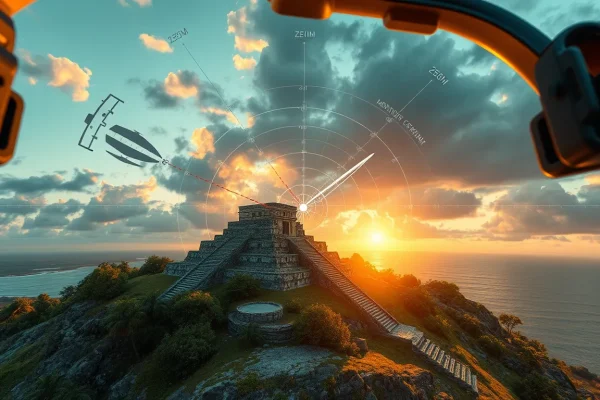
Simulating the Ancient Sky: Digital Tools for Maya Archaeoastronomy

Simulating the Ancient Sky: Digital Tools for Maya Archaeoastronomy

October 18, 2026 | Digital Heritage | Husai Anguiano Tamayo

Digital simulation tools like Stellarium allow researchers to reconstruct ancient skies with high precision, enabling the analysis of Maya architectural alignments and calendar events. These technologies bridge archaeology and astronomy, providing visual evidence for solstices, Venus cycles, and creation myths without relying on pseudoscience.

Read More →
Non-Invasive Dating Methods for Maya Architectural Structures

Non-Invasive Dating Methods for Maya Architectural Structures

October 18, 2026 | Archaeology | Husai Anguiano Tamayo

Archaeologists now utilize advanced technologies like LiDAR and mortar analysis to date Maya structures without destructive excavation. These methods preserve site integrity while providing precise chronological data.

Read More →
The Wacah Chan: How Did the World Tree Connect Maya Cosmology?

The Wacah Chan: How Did the World Tree Connect Maya Cosmology?

October 18, 2026 | Maya Cosmology | Husai Anguiano Tamayo

The Wacah Chan, or World Tree, served as the central axis mundi in Maya cosmology, connecting the underworld, earth, and heavens. This comprehensive analysis explores its botanical models, astronomical associations, and archaeological evidence.

Read More →
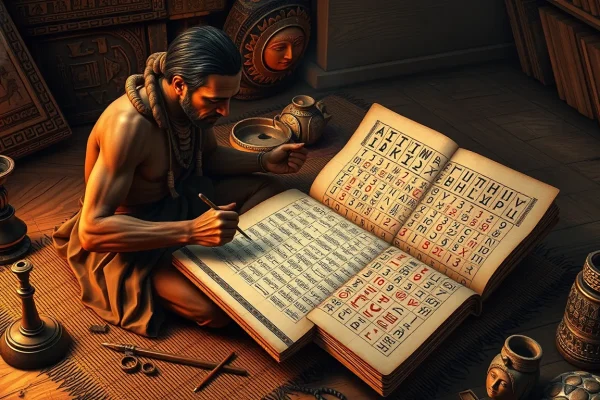
Recording the Morning Star: Venus Calculations in the Dresden Codex

Recording the Morning Star: Venus Calculations in the Dresden Codex

October 18, 2026 | Math & Writing | Husai Anguiano Tamayo

The Dresden Codex contains the renowned Venus Table, a sophisticated astronomical record used by Maya scribes to track the cycles of the Morning Star. Recent research by Gerardo Aldana suggests these calculations were more than astrology, serving as precise mathematical tools for ceremonial and political timing.

Read More →
Virtual Reality and Ancient Maya Astronomy: Enhancing Archaeological Understanding

Virtual Reality and Ancient Maya Astronomy: Enhancing Archaeological Understanding

October 18, 2026 | Digital Heritage | Husai Anguiano Tamayo

Virtual Reality (VR) technologies are transforming how archaeologists and the public understand ancient Maya astronomical systems. By reconstructing sites like Cerros and Vista Alegre, researchers visualize privileged knowledge and cosmological landscapes.

Read More →
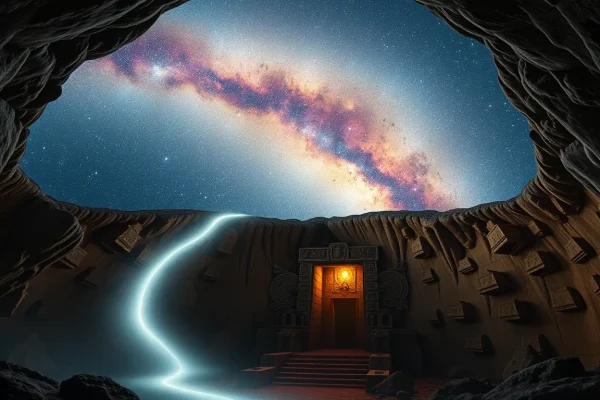
Xibalba and the Celestial Mirror: The Role of the Underworld in Maya Astronomical Mythology

Xibalba and the Celestial Mirror: The Role of the Underworld in Maya Astronomical Mythology

October 18, 2026 | Maya Cosmology | Husai Anguiano Tamayo

Xibalba, the ‘place of fright,’ served as the subterranean counterpart to the Maya celestial realm, acting as a destination for the dead and a mirror to the stars. In Maya cosmology, the road to Xibalba was frequently identified with the Milky Way, linking terrestrial geography to astronomical cycles.

Read More →
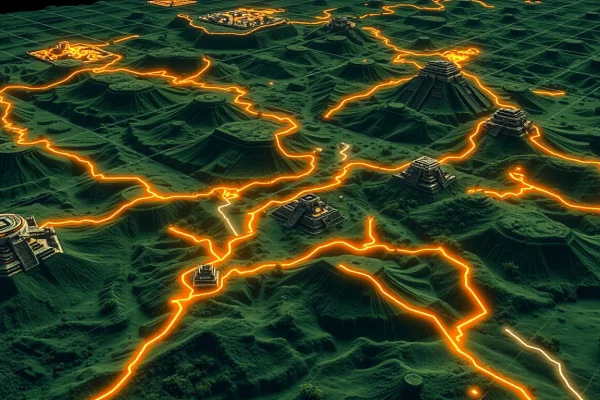
The Role of GIS in Analyzing Maya Trade Routes and Geography

The Role of GIS in Analyzing Maya Trade Routes and Geography

October 18, 2026 | Archaeology | Husai Anguiano Tamayo

Geographic Information Systems (GIS) have transformed the study of ancient Maya economics by modeling least-cost routes and analyzing spatial organization. Recent studies utilize GIS algorithms to map trade pathways in the Kaqchikel highlands and Lowlands, revealing complex networks of interaction during the Classic period.

Read More →
The Maya Vigesimal Number System: Structure, Symbols, and Historical Significance

The Maya Vigesimal Number System: Structure, Symbols, and Historical Significance

October 17, 2026 | Math & Writing | Husai Anguiano Tamayo

The Maya civilization utilized a sophisticated vigesimal (base-20) positional numeral system featuring three distinct symbols: the dot, the bar, and the shell for zero. This mathematical framework allowed for complex astronomical calculations and calendar tracking throughout the Pre-Classic and Classic periods.

Read More →
The Maya Lunar Series: Tracking Moon Cycles in Long Count Inscriptions

The Maya Lunar Series: Tracking Moon Cycles in Long Count Inscriptions

October 16, 2026 | Calendar Systems | Husai Anguiano Tamayo

The Maya Lunar Series is a complex calendrical subsystem attached to the Long Count, used to record the age and phase of the moon on Classic period monuments. This system utilized specific glyphs and mathematical formulas to track lunar cycles with high precision across sites like Tikal and Palenque.

Read More →

Posts pagination

← Previous 1 2 3 4 5 6 … 20 Next →

About This Site

Reading the Sky, Time, and Architecture of the Maya

Recent Articles

  • Decoding Stone: The Archaeological Interpretation of Maya Stelae Inscriptions
  • Verifying Ancient Maya Astronomical Alignments Using Digital Survey Data
  • The Nine Lords of the Night: Maya Calendrical Deities and Timekeeping
  • The Caracol Observatory at Chichén Itzá: Alignments and Function
  • Ixchel: Maya Goddess of Midwifery, Medicine, and Lunar Cosmology
  • Home
  • Privacy Policy
  • About Us
  • Contact Us
  • Disclaimer
  • Terms of Service
© 2026 Maya Skies | Maya Astronomy, Calendars & Archaeology. All rights reserved. Powered by WordPress