
Short Answer
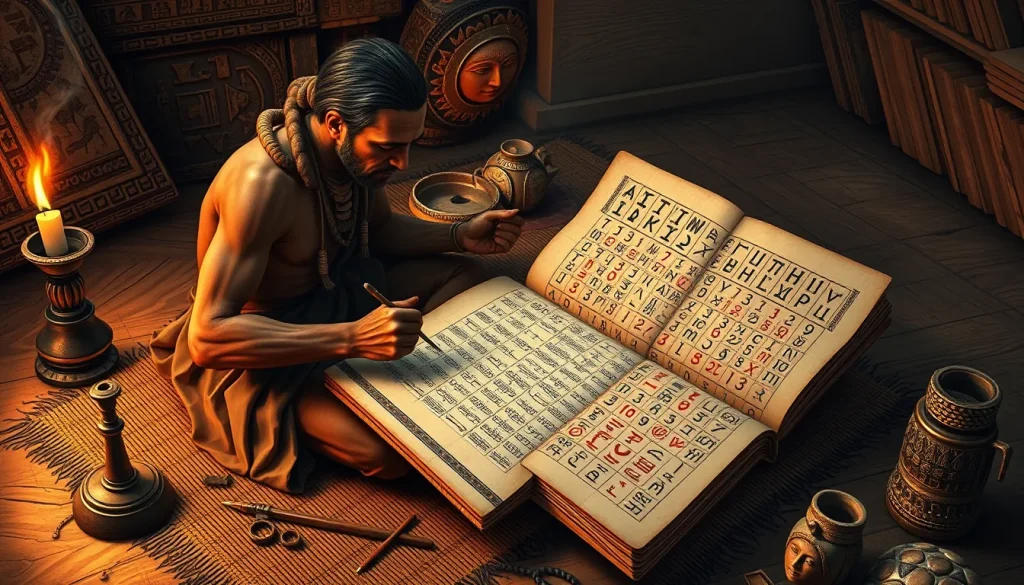
For over a millennium, the ancient Maya civilization maintained one of the most sophisticated astronomical traditions in the pre-Columbian world. Central to this legacy is the Dresden Codex, a screen-fold book that has survived the ravages of time and the Spanish conquest. Within its painted pages lies the Venus Table, a complex series of hieroglyphic texts and numerical calculations that track the movements of the planet Venus. For more than 120 years, scholars have scrutinized this table, initially viewing it as an impressive curiosity used primarily for astrology. However, modern interdisciplinary research blending epigraphy, archaeology, and astronomy has revolutionized our understanding of how Maya scribes recorded these celestial calculations.
The recording of Venus calculations was not merely an observational log but a functional tool embedded within the Maya ritual calendar. To the ancient Maya, the brilliant light of Venus was not just a point of light; it was an omen of war that guided ritual activity, prompted great battles, and was even used as shorthand for total destruction. The scribes who compiled the Dresden Codex utilized a vigesimal (base-20) number system and a complex understanding of cyclic time to predict the planet’s appearances and disappearances with remarkable accuracy. This article explores the mechanisms behind these records, the visual language employed by the scribes, and the groundbreaking reinterpretations that suggest the Maya made major discoveries in mathematics and astronomy comparable to later European advancements.
Main Explanation
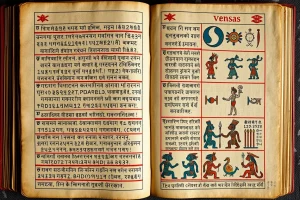
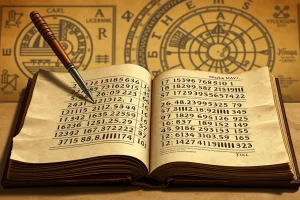
The Dresden Codex is one of only four known surviving Maya books, written on bark paper coated with lime. The Venus Table occupies several pages within this codex and is structured as a series of columns containing hieroglyphs and bar-and-dot numerals. The primary function of this table was to track the synodic cycle of Venus, which is the time it takes for the planet to return to the same position relative to the Sun as seen from Earth. This cycle averages 584 days, though it varies slightly due to orbital ellipticity.
Maya scribes recorded these calculations using a system of corrections to account for the discrepancy between the 584-day Venus cycle and the 365-day solar year (Haab’). Over time, these discrepancies accumulate, much like the leap year in the modern Gregorian calendar. The scribes embedded correction mechanisms within the table to ensure long-term accuracy. This required a deep understanding of arithmetic and the ability to project celestial movements far into the future. The text is not static; it represents a dynamic computational device. The scribes used specific glyphs to denote the phases of Venus, such as its first appearance as the Morning Star, its superior conjunction, and its appearance as the Evening Star. Each phase was associated with specific deities and ritual outcomes, necessitating precise recording to align ceremonial activities with celestial omens.
Recent analysis suggests that the traditional interpretation of these tables may have been limited. For decades, the accuracy of the observations was deemed an impressive curiosity. However, new readings of the text, combined with tricky mathematical equations and field observations, indicate that the Maya understanding of how they tracked Venus for their celestial calendars may have been underestimated. The scribes were not just recording data; they were actively correcting it to maintain synchronization between the sky and the ritual calendar, demonstrating a level of scientific rigor that challenges older colonial and early academic narratives.
Evidence & Sources
The primary evidence for these calculations comes directly from the Dresden Codex itself, specifically the pages dedicated to the Venus Table. Archaeological and textual evidence has been supplemented by modern digital and semiotic analysis. In 2016, Gerardo Aldana, a professor at the University of California, Santa Barbara, published a study blending the study of Maya hieroglyphics, archaeology, and astronomy to present a new interpretation of the Venus Table. Aldana’s work suggests that the table reveals a major discovery in math and astronomy, moving beyond the idea that it was solely for astrology.
Furthermore, visual semiotics approaches have been applied to elucidate the visual language of the paintings within the codex. A 2020 study published in Estudios de Cultura Maya proposed a method of analysis based on semiotics to compare the visual response of six paintings in the Dresden Codex. The researchers noted that the visual language of the paintings has undergone a theoretical and pragmatic process different from textual linguistics. The Venus table was chosen for this analysis because it presents a calendrical-astronomical message through a visual language that makes its interpretation complex. This multidisciplinary approach confirms that the glyphs and accompanying imagery work in tandem to convey astronomical data.
Historical astronomical studies also provide context. Research from as early as 1991 compared the movements of the planet Venus in the 10th century A.D. with the record of the Maya scribes in the Dresden Codex. These studies examined the manner in which the Venus table may have been used by the Maya in detail, relating orbital patterns of Venus to Maya glyphic representations. A correlation constant of 660208 was proposed in earlier scholarship to align the Maya Long Count with the Julian calendar, a foundational element for interpreting the dates within the Venus Table. Together, these sources validate the codex as a scientific document rather than a purely mystical one.
Deep Dive Analysis
Celestial Object
The central subject of the Dresden Codex calculations is the planet Venus. To the modern stargazer, Venus is just another point of light in the night sky, often referred to as the Morning Star or Evening Star depending on its position relative to the Sun. For the ancient Maya, however, it was a powerful celestial entity. The brilliance of Venus was interpreted as an omen of war and destruction. The scribes tracked its movements meticulously because its cycles were believed to influence the outcome of human endeavors, particularly warfare and kingly succession.
Observational Cycle
The Maya focused on the synodic cycle of Venus, which is approximately 584 days. This cycle includes the planet’s appearance as the Morning Star, its disappearance during superior conjunction (behind the Sun), its reappearance as the Evening Star, and its disappearance during inferior conjunction (between Earth and the Sun). The Dresden Codex records these phases in a structured table that allows for the prediction of future appearances. The scribes understood that five Venus cycles roughly equal eight solar years (5 x 584 = 2920 days; 8 x 365 = 2920 days), a relationship known as the Venus Round, which is embedded in the structure of the table.
How Maya Observed It
Maya observation was conducted with the naked eye, relying on skilled astronomers and scribes who monitored the horizon at dawn and dusk. The accuracy of their observations, especially the calculation of a kind of ‘leap year’ in the Mayan Calendar, was deemed an impressive curiosity by early scholars. However, the new interpretation suggests these were active calculations. The scribes likely used sighting tubes or architectural alignments, such as those found at Chichén Itzá’s El Caracol, to pinpoint the extreme northerly and southerly positions of Venus. The data gathered from these observations was then transcribed into the codex using the standard Maya numeral system.
Archaeological/Textual Evidence
The textual evidence is preserved in the hieroglyphic inscriptions of the Dresden Codex. The table includes seated gods that represent different aspects of the planet Venus, linking the astronomical data to mythological narratives. Archaeological evidence supports the importance of Venus in Maya cosmology, with numerous temples and stelae oriented to Venus risings and settings. The correlation issue is discussed in brief in astronomical literature, with constants proposed to align the codex dates with the modern calendar. The physical survival of the codex itself is a testament to the durability of the materials and the care taken by later custodians to hide it from destruction.
Calendar Connection
The Venus Table is inextricably linked to the Maya ceremonial calendars. The calculations were used to plan ritual activity and prompt great battles. The synchronization of the Venus cycle with the 260-day sacred calendar (Tzolk’in) and the 365-day solar calendar (Haab’) created a complex web of timekeeping. The scribes used the table to determine auspicious dates for war, ensuring that military campaigns commenced under the favor of the Morning Star. This connection highlights the integration of science and statecraft in Maya society, where astronomical knowledge was a source of political power.
Architecture Connection
While the Dresden Codex is a portable book, the astronomy it contains is reflected in monumental architecture. Structures like the Caracol at Chichén Itzá are believed to function as observatories aligned with Venus. The architectural interpretation suggests that the calculations in the codex were not abstract but were grounded in physical observation points. The alignment of windows and doorways in these structures corresponds to the azimuths of Venus at key points in its cycle, providing a physical framework for the data recorded by the scribes.
Cultural Meaning
Culturally, Venus was shorthand for total destruction. Its appearance was feared and revered. The glyphs in the codex often depict Venus as a deity launching spears or influencing the fate of kings. This cultural meaning drove the necessity for accurate recording; a miscalculation could lead to ritual failure or military defeat. The visual language of the paintings reinforces this, using specific iconography to denote the malefic or benefic nature of the planet at different phases. The codex served as a manual for navigating these cosmic dangers.
Uncertainty/Debate
Despite the clarity of the table, there is ongoing debate regarding its precise usage and the correlation constants used to translate its dates. For more than 120 years, the Venus Table has been of great interest to scholars, yet interpretations have shifted. Gerardo Aldana believes the Venus Table has been misunderstood and vastly underappreciated, arguing that it represents a major discovery in math and astronomy rather than simple astrology. Additionally, the visual semiotics of the codex present interpretation challenges, as the visual response of the paintings differs from textual linguistics. Scholars continue to refine the correlation constant, with proposals like 660208 offering different alignments for the historical record.
FAQ
What is the Venus Table in the Dresden Codex?
It is a series of pages in the ancient Maya Dresden Codex that contains calculations and glyphs tracking the cycles of the planet Venus, used for ritual and war timing.
Did the Maya use telescopes to record Venus?
No, the Maya conducted all astronomical observations with the naked eye, often using architectural alignments to track horizon positions.
Why was Venus important to the Maya?
Venus was viewed as an omen of war and destruction. Its cycles dictated the timing of battles and ceremonial activities.
Who is Gerardo Aldana in relation to the Codex?
Gerardo Aldana is a researcher from UC Santa Barbara who proposed a new interpretation in 2016, suggesting the Venus Table shows major mathematical and astronomical discoveries.


Leave a Reply