The 13th Baktun Completion: Debunking the 2012 Maya Apocalypse Myth

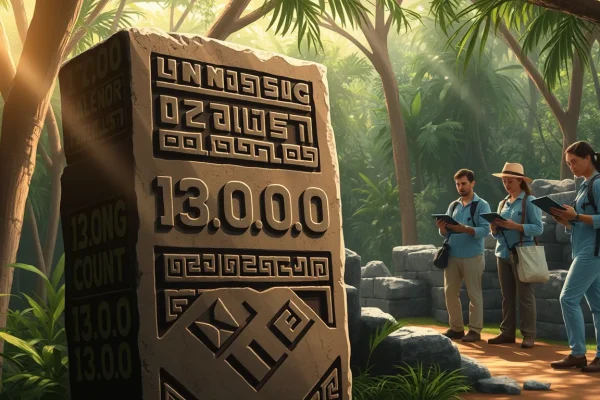
The completion of the 13th Baktun on December 21, 2012, marked the end of a major cycle in the Maya Long Count calendar, not the end of the world. Archaeological evidence from sites like Tortuguero and Quiriguá confirms this event was viewed as a renewal rather than a catastrophe. This article examines the scientific consensus and historical records that debunk modern doomsday interpretations.

Read More →

The Spiral Staircase of El Caracol: Symbolism in Maya Cosmology

The spiral staircase of El Caracol at Chichén Itzá is a rare architectural feature symbolizing the Maya concept of layered cosmos and celestial ascent. Constructed between 830 and 1000 CE, this structure facilitated astronomical observations of Venus and solstices, integrating scientific precision with sacred space. While often called ‘The Snail,’ its design reflects a sophisticated synthesis of religious authority and cosmological order.

Read More →

Virtual Reality in Maya History Education: Enhancing Classroom Engagement Through Digital Heritage

Virtual Reality (VR) technology is transforming Maya history education by providing immersive reconstructions of archaeological sites like Cerro Maya and Chichén Itzá. Studies indicate VR increases student engagement, comprehension, and retention of complex anthropological concepts regarding social hierarchy and ritual practice. This digital heritage approach bridges the gap between abstract theory and tangible ancient environments.

Read More →

Did the Maya Track Mars and Jupiter? Evidence from Codices and Inscriptions

Archaeological evidence confirms the Ancient Maya meticulously tracked the movements of Mars, documented extensively in the Dresden Codex. While Jupiter tracking is less explicitly detailed in surviving texts, planetary station data suggests broad celestial monitoring. This article examines the astronomical tables, inscriptions, and scholarly consensus regarding Maya planetary astronomy.

Read More →

The Ethics of Digital Repatriation for Maya Cultural Heritage Data

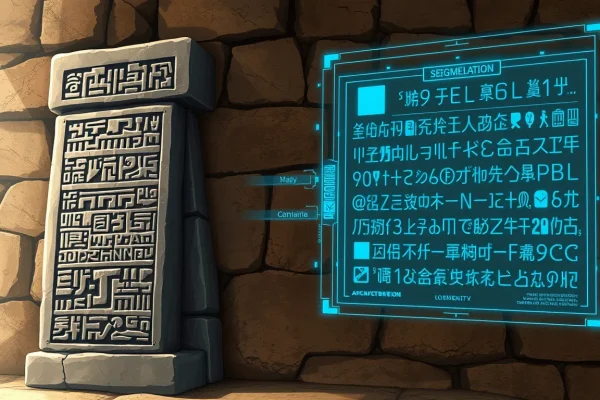
Digital repatriation offers a method to return cultural heritage to Maya communities through surrogates, yet it raises complex ethical questions regarding ownership, control, and relational engagement. Recent scholarship critiques practices that prioritize access over community-led meaning-making and highlights risks associated with open data technologies like LiDAR.

Read More →