
Short Answer
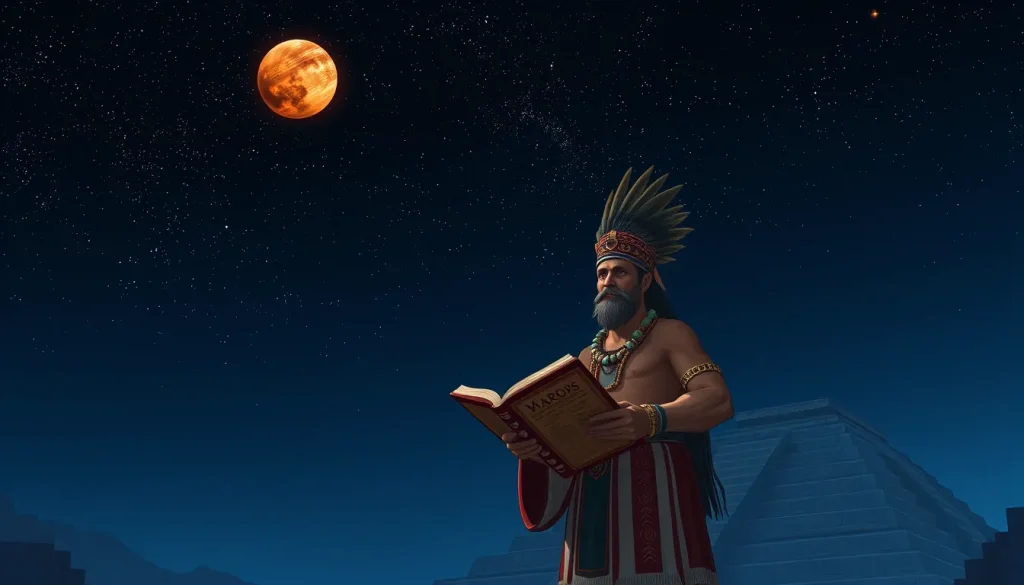
When discussing Ancient Maya astronomy, the Venus Table of the Dresden Codex often dominates the scholarly narrative. This intricate record of the Morning and Evening Star’s cycles demonstrates a sophistication that has captivated researchers for over a century. However, limiting the scope of Maya celestial observation to Venus alone understates the breadth of their astronomical knowledge. Recent archaeological and epigraphic analyses confirm that the Maya also tracked the movements of Mars and Jupiter, integrating these outer planets into their complex calendrical systems and cosmological frameworks.
The question of whether the Maya tracked planets beyond Venus is no longer a matter of speculation but of documented evidence. Peer-reviewed research published in the Proceedings of the National Academy of Sciences highlights specific sections of the Dresden Codex dedicated to the synodic cycle of Mars. Furthermore, correlations between Long Count dates and planetary conjunctions suggest a systematic observation of Jupiter and Saturn. This article explores the archaeological evidence, the specific codical tables involved, and the cultural significance of tracking the red planet and the giant king of planets.
Main Explanation
Maya astronomy was not merely a scientific endeavor but a deeply cosmological one, intertwining celestial movements with earthly events, agriculture, and warfare. While Venus was paramount due to its brightness and association with warfare and fertility, the slower-moving outer planets held significant weight in the Maya understanding of time. The tracking of Mars and Jupiter required different observational techniques compared to Venus. Venus has a synodic period of approximately 584 days, whereas Mars completes a synodic cycle roughly every 780 days. Jupiter’s cycle is even longer, taking about 399 days to return to the same position relative to the Sun.
The Maya mathematicians and astronomers accounted for these irregularities through their vigesimal (base-20) number system and the Long Count calendar. By recording specific dates of planetary phenomena over centuries, they could identify commensurate relationships between celestial cycles and cultural cycles. This allowed them to predict future events based on past occurrences. The integration of Mars and Jupiter into this system suggests that the Maya skywatchers were monitoring the entire visible cosmos, not just the most prominent objects. The complexity of these tables indicates a high level of precision, where even slight deviations in planetary motion were noted and corrected within the codices.
Understanding these movements was crucial for timing rituals and determining auspicious moments for kingly actions. Just as Venus heliacal risings were associated with warfare, the movements of Mars—often reddish and distinct—and Jupiter—bright and steady—likely influenced decision-making at the highest levels of Maya society. The evidence suggests that these planets were not background fixtures but active participants in the Maya celestial drama, recorded with the same diligence afforded to the Moon and Venus.
Evidence & Sources
The primary textual evidence for Maya Mars astronomy comes from the Dresden Codex, one of the few surviving pre-Columbian Maya books. According to research by Anthony F. Aveni and Victoria R. Bricker, published in 2001, pages 43b–45b of the Codex are explicitly concerned with the synodic cycle of Mars. This groundbreaking work shifted the consensus from a Venus-centric view to a multi-planetary understanding of Maya astronomy. The researchers identified that these pages contain a complex table designed to track the movements of the red planet over extended periods.
Further evidence is found on pages 69–74 of the same Codex. This section reveals a concern with commensurate relationships among celestial cycles and their relationship to other nonastronomical cycles of cultural interest. The table here is intricate, suggesting that the Maya were calculating intersections between Martian cycles and other temporal markers. This aligns with the broader Maya practice of seeking harmony between different cycles, such as the Tzolk’in and the Haab’, but applied to planetary mechanics.
In addition to codical evidence, inscriptions on stelae provide concrete data points. Records indicate specific Long Count dates correlated with planetary conjunctions. For instance, data suggests a conjunction of Jupiter, Saturn, and Mars occurred around AD 153, recorded as 8.16.4.8.0. Another significant observation notes a Jupiter-Saturn-Mars configuration on March 5, AD 572, corresponding to the Long Count date 9.17.9.0.13. These dates are not random; they represent moments of astronomical significance that were deemed worthy of monumental recording. The correlation of these dates with the Gregorian calendar allows modern archaeologists to verify the accuracy of Maya observations, confirming that their records match actual celestial events.
Scholarly debate continues regarding the interpretation of some tables. For example, academic discussions persist over the specific function of certain Dresden Codex pages, with titles like “A Dresden Codex Mars Table?” highlighting the ongoing analysis required to fully decode these ancient documents. However, the consensus remains that the Maya possessed the capability and the intent to track these outer planets systematically.
Deep Dive Analysis
Celestial Object
The focus of this analysis centers on Mars (often associated with the color red in Mesoamerican cosmology) and Jupiter. Mars is the fourth planet from the Sun, known for its retrograde motion which would have been highly visible to naked-eye observers. Jupiter is the largest planet in the solar system and appears as a bright, steady star in the night sky, distinct from the twinkling of fixed stars.
Observational Cycle
The Maya tracked the synodic cycles of these planets. For Mars, the synodic period is approximately 780 days, which is the time it takes for the planet to return to the same position relative to the Sun as seen from Earth. This cycle includes periods of retrograde motion where the planet appears to move backward in the sky. Jupiter’s synodic period is roughly 399 days. The Maya tables were designed to anticipate these cycles, allowing priests to prepare for significant astronomical events years in advance.
How Maya Observed It
Observation was conducted with the naked eye, often from specialized architectural structures or designated observation points. While structures like El Caracol at Chichén Itzá are famously aligned with Venus, other structures and perhaps temporary observation platforms were likely used for outer planets. The data was then recorded by scribes into codices using bark paper and amate, utilizing a complex system of glyphs and numbers to denote dates and planetary positions.
Archaeological/Textual Evidence
The Dresden Codex remains the cornerstone of textual evidence. Pages 43b–45b specifically address the Mars cycle. Additionally, epigraphic evidence from stelae across the Maya region supports the codical data. Specific Long Count dates, such as 9.17.19.13.16, have been correlated with Jupiter-Sun conjunctions. The consistency between the codex tables and the monumental inscriptions validates the archaeological record.
Calendar Connection
The tracking of Mars and Jupiter was inextricably linked to the Calendar System. The Long Count provided a linear framework to record these events over centuries. By correlating planetary cycles with the 260-day Tzolk’in and the 365-day Haab’, the Maya could identify rare conjunctions and auspicious dates. For example, the conjunction of Jupiter and Saturn was noted in relation to specific calendar rounds, indicating a sophisticated understanding of multi-planetary dynamics.
Architecture Connection
While less explicitly defined than Venus alignments, the architecture of Maya cities likely facilitated these observations. E-Groups, which are ceremonial complexes found across the Maya lowlands, served as observational temples. While primarily aligned to solstices and equinoxes, the sightlines from these structures could also track planetary risings and settings. The codices themselves serve as a form of “portable architecture,” preserving the knowledge generated within these physical spaces.
Cultural Meaning
In Maya cosmology, celestial bodies were often deified or associated with specific gods and earthly outcomes. Mars, with its red hue, is frequently associated with conflict, blood, and war in Mesoamerican cultures. Tracking its movement would be essential for timing military campaigns. Jupiter, often associated with kingship due to its brightness and stature, likely influenced royal succession and coronation events. The integration of these planets into the cosmological framework reinforced the divine authority of the ruler, who acted as the intermediary between the celestial and earthly realms.
Uncertainty/Debate
Despite the strong evidence, uncertainties remain. The interpretation of specific glyphs related to outer planets is sometimes contested. The title of academic works such as “A Dresden Codex Mars Table?” reflects this scholarly caution. Additionally, the survival rate of codices is low, with only four known to exist, meaning much of the data may be lost. Modern interpretations must rely on fragmentary evidence, requiring careful cross-referencing between archaeology, astronomy, and epigraphy to avoid overstatement. However, the work of researchers like Aveni and Bricker provides a robust foundation for accepting that Mars and Jupiter were indeed part of the Maya astronomical canon.
FAQ
Did the Maya track planets other than Venus?
Yes, archaeological evidence from the Dresden Codex and stelae inscriptions confirms they tracked Mars and Jupiter.
Which pages of the Dresden Codex concern Mars?
Pages 43b–45b are concerned with the synodic cycle of Mars, along with a complex table on pages 69–74.
How accurate were Maya planetary records?
Modern correlations of Long Count dates with Gregorian calendars show their records match actual celestial conjunctions closely.
Why was Mars important to the Maya?
Mars was likely associated with conflict and war due to its red color, influencing the timing of military campaigns.





Leave a Reply