
Short Answer
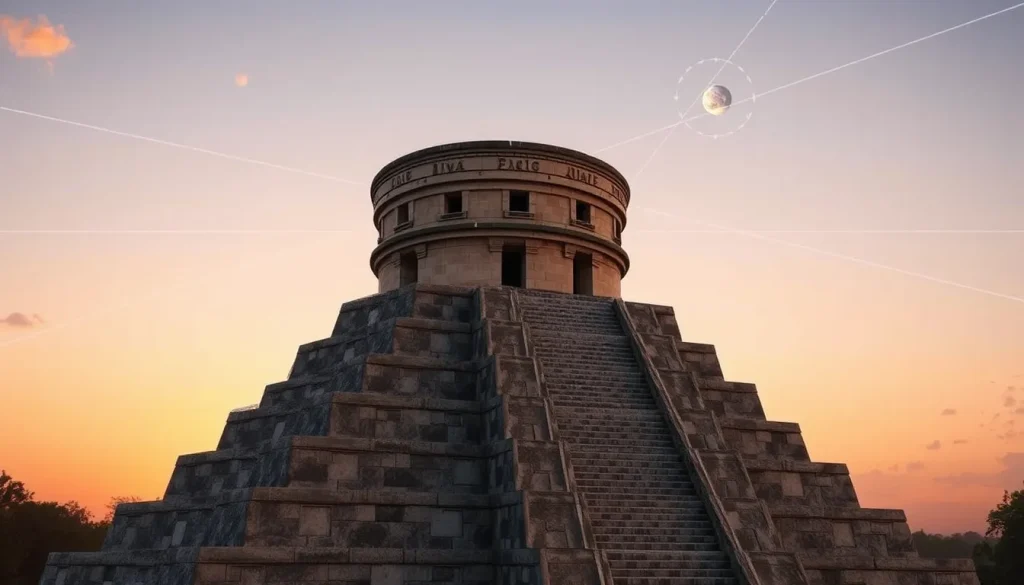
El Caracol, located within the ancient Maya city of Chichén Itzá in the Yucatán Peninsula, stands as one of the most sophisticated examples of pre-Columbian architectural astronomy. The structure, widely recognized as an observatory, contains specific viewing shafts and windows that align with significant celestial events. These alignments were not merely decorative but served a functional purpose for Maya astronomers tracking the movements of celestial bodies, particularly Venus and the Sun. Understanding what celestial events align with the Caracol Observatory windows provides insight into the complex relationship between Maya cosmology, timekeeping, and architectural design.
The upper tower of El Caracol retains three surviving openings that function as viewing shafts. These narrow, irregularly placed openings were strategically positioned to allow observers to track the rising and setting points of specific celestial bodies on the horizon. Through these windows, ancient astronomers could monitor Venus as it reached its northern and southern extremes, as well as the position of the Sun during the equinox sunset. These observations were critical for maintaining the accuracy of the Maya calendar and scheduling ritual events tied to planetary cycles.
Main Explanation
The primary celestial events aligned with the Caracol Observatory windows involve the planet Venus and the Sun. Maya astronomers understood that Venus appeared on the western horizon and disappeared on the eastern horizon at different times throughout the year. They calculated that Venus took approximately 584 days to complete one full cycle. Furthermore, they recognized a harmonic relationship where five of these Venus cycles equaled eight solar years. This mathematical precision required consistent observation over generations.
The windows in the half-ruined higher tower of El Caracol seem to align with various celestial events on the horizon. Looking through these windows a thousand years ago, observers could have watched for Venus rising at its northern and southern extremes. Additionally, one of the key alignments corresponds to the equinox sunset. The structure’s design allowed observers to view the sky above the vegetation on the Yucatán Peninsula without any obstruction, leveraging the flattened landscape which lacked natural markers for this function around Chichén Itzá. This artificial elevation provided a clear vantage point necessary for precise positional astronomy.
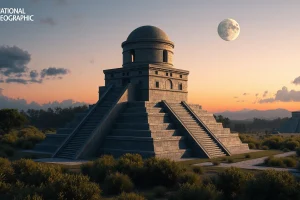
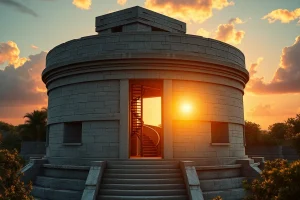
The name El Caracol, meaning ‘snail’ in Spanish, is derived from the spiral staircase inside the tower. To gain access to the uppermost tower, observers had to walk through a narrow winding staircase. This architectural feature not only gave the structure its name but also controlled access to the viewing platforms, likely restricting astronomical observation to a specialized class of priest-astronomers. The tower itself was originally in the form of one smaller cylinder stacked on a larger one, resembling a double-decker wedding cake, though it is now rounded by decay.
Evidence & Sources
Archaeological and interdisciplinary studies have provided substantial evidence regarding the astronomical orientation of El Caracol. A seminal study published in Science in 1975 by Anthony F. Aveni, Sharon L. Gibbs, and Horst Hartung initiated a systematic investigation into the possible astronomical orientation of the structure. Their work involved careful measurement of the building’s alignments compared against significant astronomical events. The study revealed a number of significant astronomical events coinciding with many of the measured alignments, supporting the theory that the building was designed for observational purposes.
Dating of the structure is supported by a stele on the Upper Platform, which suggests El Caracol was constructed around AD 906, placing it in the Post Classic period of Mesoamerican chronology. This dating aligns with the height of Chichén Itzá’s influence and its known focus on astronomical knowledge. Modern technology has further aided this understanding; laser scans of El Caracol have helped researchers analyze the structure’s geometry and alignment without invasive procedures. These digital heritage tools allow for the preservation of data regarding the building’s current state while reconstructing its original astronomical capabilities.
However, the evidence also suggests nuance. The 1975 investigation noted that not every alignment appears to have an astronomical match which researchers can recognize. It may be that only some of the sighting possibilities discussed were actually functional. The search for significant astronomical events included those of obvious functional importance, such as the sun, moon, and planetary extremes, as well as the setting positions of the brightest stars. This indicates that while the building was an observatory, not every window necessarily corresponds to a major event known to modern archaeoastronomy.
Deep Dive Analysis
Location
El Caracol is situated at the pre-Columbian Maya civilization site of Chichén Itzá in Yucatan, Mexico. The location was chosen partly due to the flattened landscape of the Yucatán, which provided no natural markers for astronomical function around the site. The observatory provided a way for the Maya people to observe changes in the sky above the vegetation without obstruction.
Construction and History
The structure is dated to around AD 906 based on epigraphic evidence from the Upper Platform. It belongs to the Post Classic period. The building appears to be a monument related to Quetzalcoatl, reflecting the cultural shifts of the era. The tower originally consisted of two cylindrical sections stacked vertically, though decay has rounded the upper sections over time.
Architecture
The defining architectural feature is the internal spiral staircase, which earns the structure its name, El Caracol (snail). Access to the uppermost tower requires navigating this narrow winding staircase. The upper tower contains three surviving openings that are small, narrow, and irregularly placed. These are interpreted as viewing shafts rather than standard windows for light or ventilation.
Astronomical Interpretation
The windows align with important astronomical sightlines. Specifically, they facilitated the observation of Venus rising at its northern and southern extremes. Additionally, alignments for the equinox sunset have been identified. The Maya knew that five Venus cycles equaled eight solar years, a correlation likely tracked using this facility. The building allowed for naked-eye observations of Venus appearing on the western and disappearing on the eastern horizons.
Archaeological Evidence
Evidence includes the physical alignment of the window shafts themselves and the stele on the Upper Platform. Interdisciplinary approaches involving careful measurement have tested the architecture for astronomical orientation. Laser scans have provided digital records of the structure’s geometry. The survival of three openings in the higher tower provides physical proof of the viewing mechanisms.
Alternative Interpretations
While many alignments match celestial events, not every alignment appears to have a recognized astronomical match. It is possible that hitherto unrecognized constellations were sighted in the windows. Fainter stars, the heliacal rising and setting times of which could have served to mark important dates in the calendar, may also have been targets. Some alignments may not have been functional for observation but served symbolic purposes.
Scholar Consensus
Scholars agree that the building was an ancient Mayan observatory building. While no grand cosmic scheme for the astronomical design is universally proposed, it is inferred that the building was used for positional astronomy. The emphasis is placed on celestial bodies documented in literature as having been of importance, such as the sun, moon, and Venus. The consensus supports the functional use of at least some of the window shafts for tracking planetary extremes.
Visitor Misconception
A common misconception is that the Caracol functioned like a modern observatory with lenses or telescopes. In reality, Maya astronomers relied on naked-eye observations. Another misconception is that every window aligns with a major event; research indicates that only some sighting possibilities were actually functional. Visitors often assume the structure was purely scientific, ignoring its role as a monument related to Quetzalcoatl and its ritual significance within the cosmology of the time.
FAQ
What is the primary purpose of the windows in El Caracol?
The windows function as viewing shafts aligned with specific celestial events, primarily the extremes of Venus and the equinox sunset, allowing for naked-eye astronomical observation.
How did the Maya track Venus using El Caracol?
Maya astronomers observed Venus rising at its northern and southern extremes through the windows, noting that five Venus cycles of 584 days equaled eight solar years.
Is El Caracol considered a true observatory?
Yes, archaeological evidence and alignment studies support its function as an observatory, though not every window alignment matches a known astronomical event.
Leave a Reply