

Short Answer
The night sky was not merely a backdrop for the ancient Maya; it was a functional calendar, a divine map, and a practical tool for survival. Among the various celestial formations observed by pre-Columbian cultures, the Pleiades star cluster held profound significance. Known as Motz within the Maya astronomical corpus, this tight grouping of stars functioned as a critical marker for agricultural cycles, ritual timing, and calendrical calibration. The influence of the Pleiades extended beyond simple observation, embedding itself into the fabric of religious practice, political authority, and subsistence strategy across Mesoamerica. Understanding this relationship requires an interdisciplinary approach, combining archaeological data with ethnoastronomical records and contemporary Traditional Ecological Knowledge (TEK).
Main Explanation
The primary influence of the Pleiades on Maya society was its role in synchronizing human activity with environmental rhythms. In the tropical latitudes of Mesoamerica, the distinction between wet and dry seasons dictated the success of maize cultivation, the staple crop of the civilization. The heliacal rising and setting of the Pleiades provided a reliable, annual signal that transcended the variations of local weather patterns. When the cluster first appeared on the eastern horizon just before sunrise (heliacal rising), it often signaled the approaching rainy season, prompting preparations for planting. Conversely, its setting marked the transition toward the dry season and harvest time.
This astronomical observation was not isolated to the Maya but was part of a broader Mesoamerican experience. Research indicates that the Pleiades were meticulously tracked by the Aztec, Maya, Zapotec, and numerous other peoples, embedding the cluster into the very fabric of religious practice and subsistence strategy. For the Maya, this celestial timing was intertwined with cosmology. The stars were not distant suns but powerful entities whose movements reflected the will of the gods. Rituals associated with the Pleiades often involved offerings to ensure rain and agricultural fertility. These rituals were not merely symbolic; they were community-binding events that reinforced social hierarchies and coordinated labor across hinterland regions. The integration of these celestial events into the calendar system allowed for long-term planning, essential for sustaining large populations in urban centers and rural hinterlands alike.
Furthermore, the significance of the Pleiades persists in modern Maya communities. Contemporary studies on Mayan Traditional Knowledge regarding weather forecasting highlight how indigenous peoples continue to use celestial markers to cope with climate change. Despite international commitments to integrate Indigenous peoples and their TEK in actions combating climate change, their inclusion remains limited. However, the continuity of observing the Pleiades demonstrates the resilience and accuracy of this ancient knowledge system. The cluster serves as a bridge between the ancient past and the present, offering insights into how sustainable agricultural practices were maintained for millennia through careful observation of the cosmos.
Evidence & Sources
Archaeological and textual evidence supports the central role of the Pleiades in Maya life. Academic research published by the American Astronomical Society confirms that the Pleiades star cluster, observable from every continent, was a focal point for sky watchers over millennia. In the context of Mesoamerica, specific nomenclature and functional roles have been identified. For instance, the cluster was known as Tianquiztli in Nahuatl among the Aztec, meaning “marketplace,” reflecting its appearance as a gathering place. In the Maya astronomical corpus, it is identified as Motz. This linguistic evidence underscores the cultural importance assigned to the cluster across different linguistic groups.
Archaeological sites provide physical testimony to these observations. Investigations in Hinterland Blue Creek, Northwestern Belize, have uncovered evidence of ancient Maya solar and stellar observation linked to agricultural rhythms and rituals. These findings suggest that observation platforms or specific architectural alignments may have been used to track celestial events that dictated the agricultural calendar. The presence of such structures in hinterland areas indicates that astronomical knowledge was not confined to major urban centers like Tikal or Calakmul but was vital for rural subsistence farmers as well.
Moreover, ethnohistorical data reinforces these archaeological findings. The heliacal rising and setting were meticulously tracked, embedding the Pleiades into cosmological narratives. Modern research into Traditional Ecological Knowledge (TEK) further validates these ancient practices. Studies published in Frontiers in Sustainable Food Systems discuss how Mayan Traditional Knowledge on weather forecasting contributes to coping with climate change. This continuity suggests that the ancient methods of using the Pleiades for weather prediction were empirically sound, allowing communities to adapt to environmental shifts over centuries. The convergence of archaeological data, historical records, and modern TEK creates a robust framework for understanding the Pleiades’ influence.
Deep Dive Analysis
Module C: Astronomy
Celestial Object: The Pleiades (Messier 45), an open star cluster located in the constellation of Taurus. In Maya astronomy, this cluster is referred to as Motz. It consists of hot B-type stars that are visibly distinct to the naked eye, often appearing as a small dipper-like shape.
Observational Cycle: The key astronomical phenomenon utilized by the Maya was the heliacal rising and setting. The heliacal rising occurs when the cluster first becomes visible on the eastern horizon just before sunrise after a period of invisibility due to solar conjunction. The heliacal setting occurs when it is last visible on the western horizon just after sunset. These events occur annually and provided a consistent temporal marker.
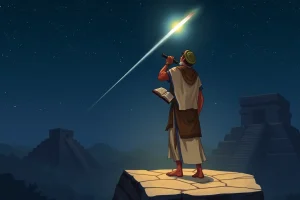
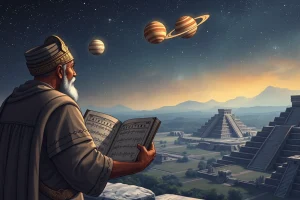
How Maya Observed It: Maya astronomers, often priests or elite scribes, observed the horizon from elevated structures or specialized observation points. In hinterland areas like Blue Creek, Belize, architectural alignments may have facilitated these observations. The clarity of the tropical night sky allowed for precise tracking of the cluster’s position relative to the horizon and other celestial bodies. Observation was likely a communal activity during significant ritual periods.
Archaeological/Textual Evidence: While the Maya codices contain extensive astronomical data, specific references to the Pleiades are sometimes subtle compared to Venus. However, colonial-era documents and ethnographic records preserve the name Motz and its association with agricultural timing. Archaeological evidence from sites in Northwestern Belize links solar and stellar observation to agricultural rhythms and rituals. The consistency of these findings across different regions supports the idea of a shared astronomical tradition.
Calendar Connection: The Pleiades cycle was integrated into the Haab’, the 365-day solar calendar. The heliacal rising often coincided with specific Haab’ months associated with planting. This integration allowed the Maya to calibrate their calendar against the sidereal year, ensuring that ritual dates remained synchronized with the agricultural seasons. This calibration was crucial for preventing calendar drift over long periods.
Architecture Connection: Certain structures in Maya cities may have been aligned to mark the rising or setting of the Pleiades. While El Caracol at Chichén Itzá is famously associated with Venus, other structures in the hinterlands and smaller centers likely served similar functions for different celestial bodies. The orientation of temples and plazas often reflects cosmological principles where the sky is mirrored on the earth.
Cultural Meaning: The Pleiades were far more than a decorative feature of the night sky. They functioned as critical markers for agricultural cycles, ritual timing, and cosmological narrative. In some Mesoamerican traditions, the cluster was associated with rain deities or ancestral spirits. Their appearance was seen as a blessing or a warning, dictating the timing of ceremonies intended to secure food security for the community.
Uncertainty/Debate: While the general importance of the Pleiades is well-established, specific architectural alignments dedicated solely to the cluster are sometimes debated among archaeoastronomers. Distinguishing between alignments for the Pleiades versus other stars or solar positions requires precise survey data. Additionally, the extent to which common farmers versus elite astronomers controlled this knowledge remains a topic of discussion, though TEK suggests widespread community involvement in observation.
FAQ
What did the Maya call the Pleiades?
In the Maya astronomical corpus, the Pleiades were known as Motz. In contrast, the Aztec called them Tianquiztli, meaning marketplace.
How did the Pleiades influence Maya agriculture?
The heliacal rising and setting of the Pleiades served as critical markers for agricultural cycles, signaling the timing for planting and harvesting maize.
Is this knowledge still used today?
Yes, Modern Mayan Traditional Knowledge on weather forecasting still incorporates celestial observations to cope with climate change, though integration with scientific knowledge remains limited.



Leave a Reply