
Short Answer
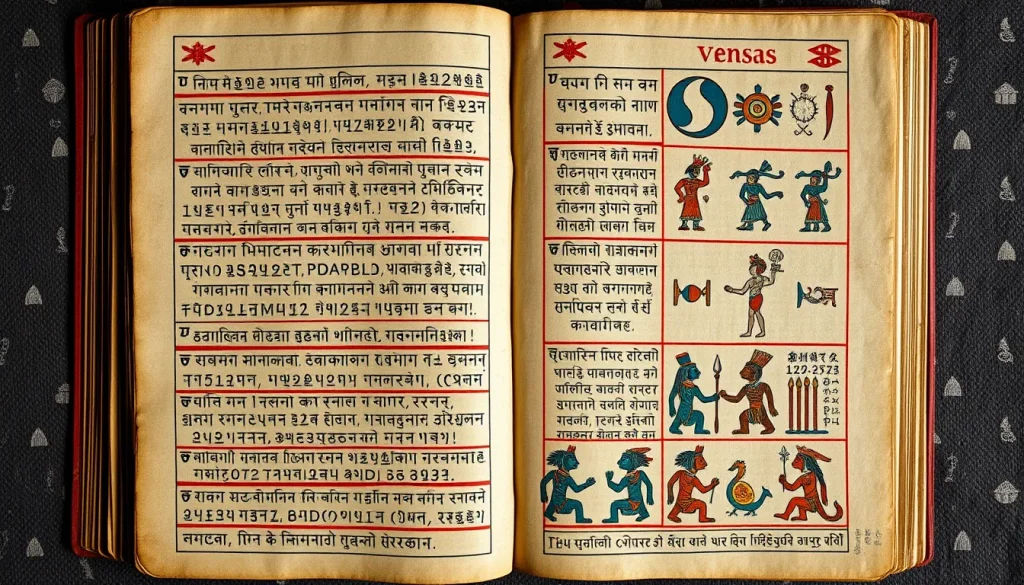
The Dresden Codex stands as one of the most significant surviving artifacts of the ancient Maya civilization, offering a unique window into their sophisticated understanding of astronomy, mathematics, and timekeeping. Housed primarily at the Saxon State and University Library Dresden (SLUB), this pre-Columbian manuscript is not merely a religious text but a complex scientific document used by Maya priests to navigate the cosmos. The codex essentially consists of almanacs in the form of tables based on a 260-day ritual calendar, known as the Tzolk’in, and astronomical tables with absolute time indications according to the Long Count calendar, which began in 3114 BC in the Gregorian calendar system [1]. Through these intricate records, Maya specialists prophesied the fate for individual days, determining whether specific dates were favourable or unfavourable for critical activities such as sowing, harvesting, trade, hunting, warfare, marriage, and health rituals [1].
Decoding the Dresden Codex requires an interdisciplinary approach combining archaeology, epigraphy, and archaeoastronomy. The manuscript is divided into 13 different chapters, often extending over several pages, with most pages divided into sections by red-brown lines designated by lower case letters in research [1]. These sections contain short hieroglyphic texts, columns of numbers, and vivid illustrations of deities. The mathematical precision found within these tables demonstrates a civilization that independently developed complex astronomical models comparable to those of the Old World. The calculations of planetary orbits and eclipses recorded on the astronomical tables were eventually used for astrological purposes, guiding the timing of rites and sacrifices offered to the gods who ruled the days of the Tzolk’in [1].
Main Explanation
The core functionality of the Dresden Codex lies in its dual structure of divinatory almanacs and predictive astronomical tables. The almanacs served as a farmer’s almanac, where agriculture provided the foundation for civilization, and the skies served as a timetable for when to plant and when to harvest [3]. The 260-day ritual calendar was ruled alternately by 20 deities, and the codex allowed priests to interpret the influence of these gods on daily life. Beyond the ritual cycle, the codex contains absolute time indications linked to the Long Count, providing a historical framework for astronomical events. This integration of ritual and absolute time allowed the Maya to synchronize their religious obligations with celestial phenomena.
The mathematical underpinnings of the codex are particularly remarkable. The Maya utilized a vigesimal (base-20) number system and understood the concept of zero, which facilitated the complex calculations required for long-term astronomical predictions. The astronomical tables are not static; they were designed to be used over centuries. For instance, the eclipse table spans 405 months, a period designed to predict lunar and solar eclipses with high accuracy over long durations. Recent research suggests that the table’s length was originally implemented in a general lunar calendar table of 405 successive months, within which intervals among observed eclipses stimulated an approximation to the series of lunar intervals later compiled as stations of an eclipse table [2]. This indicates a dynamic scientific process where observation led to refinement of the tables over generations.
Evidence & Sources
The primary evidence for Maya astronomical knowledge comes from the codices themselves, indigenous hieroglyphic books written before the Spanish Conquest. The Dresden Codex is the best-preserved of these few surviving books. Digital heritage initiatives, such as those by the SLUB Dresden, have made high-resolution images of the codex available, allowing for detailed analysis of the hieroglyphic texts and mathematical columns [1]. Academic studies continue to revise interpretations of these tables. For example, a paper published in 2026 explores how ancient Maya calendar specialists designed the predictive eclipse table, revising a century of interpretation regarding the 405-month cycle [2]. This study identifies optimal procedures for the amounts of overlap in successive tables that would maintain prediction correctness, showing that these procedures could anticipate every solar eclipse observable in the Mayan territory for at least 700 years [2].
Furthermore, archaeological context supports the textual evidence. A new reading of Dresden Codex Page 24, the preface to the Venus Table, demonstrates improved coherence in the hieroglyphic text and mathematical intervals [4]. This reading specifically identifies the Mayan Long Count dates of the Venus Table’s historical correction. The resulting Long Count placement suggests that the manuscript’s Venus Table was an indigenous astronomical discovery made at Chichén Itzá, possibly under the patronage of K’ak’ U Pakal K’awiil, a prominent historical figure during the city’s epigraphic florescence [4]. This connects the abstract mathematics of the codex to specific historical polities and rulers, grounding the astronomical data in political and social reality. The convergence of textual analysis, mathematical reconstruction, and historical epigraphy provides a robust framework for understanding the codex not as a mystical artifact, but as a product of rigorous scientific observation.
Deep Dive Analysis
Module C: Astronomy
Celestial Object: The Dresden Codex focuses primarily on two celestial phenomena: the planet Venus and the Moon (specifically regarding eclipses). The Venus Table is one of the most famous sections, tracking the synodic cycle of the Morning Star. The Eclipse Table tracks the nodes of the Moon’s orbit where eclipses can occur.
Observational Cycle: The Maya observed the synodic period of Venus, which is approximately 584 days. The codex records a correction factor to adjust for the discrepancy between the actual orbital period and the calendar round. For eclipses, the table covers a cycle of 405 lunations (months), which is approximately 33 years. This period was chosen because it aligns closely with the eclipse year, allowing predictions to remain accurate over centuries [2].
How Maya Observed It: Observations were conducted with the naked eye, likely from specialized architectural structures such as observatories (e.g., El Caracol at Chichén Itzá). The data was recorded by calendar specialists who maintained oral and written traditions. The precision required to maintain the 405-month table suggests generations of recorded data were aggregated to refine the predictions [2].
Archaeological/Textual Evidence: The primary evidence is the Dresden Codex itself, specifically Pages 24 (Venus Table preface) and 51-58 (Eclipse Table). Source [4] highlights that the Venus Table’s historical correction dates can be placed within the Long Count, linking the manuscript to Chichén Itzá. Source [2] confirms the design logic of the eclipse table, showing how overlapping tables maintained predictive correctness for 700 years.
Calendar Connection: The astronomical data is inextricably linked to the Tzolk’in (260-day ritual calendar) and the Haab’ (365-day solar calendar). The almanacs prophesied the fate for individual days of the Tzolk’in, which were ruled by 20 deities [1]. The astronomical tables provided the absolute timing (Long Count) to anchor these ritual cycles to celestial events, ensuring that rites were performed at astrologically significant moments.
Architecture Connection: While the codex is a manuscript, the astronomy within it correlates with architectural alignments found at sites like Chichén Itzá. The revised reading of the Venus Table suggests it was an indigenous discovery made at Chichén Itzá, implying that the city’s architecture may have been designed to facilitate the observations recorded in the codex [4]. The skies served as a timetable for rituals that likely took place in these ceremonial centers [3].
Cultural Meaning: Astronomy was not purely scientific but deeply ritualistic. The calculations were used for astrological purposes to determine favourable days for warfare, marriage, and agriculture [1]. Agriculture provided the foundation for their civilization, and the skies served as a kind of farmer’s almanac [3]. The gods were called upon based on these predictions, and sacrifices were offered to maintain cosmic order.
Uncertainty/Debate: There is ongoing debate regarding the accuracy and origin of the tables. A revised reading of the Venus Table suggests a slightly less-accurate approximation to Venus’s synodic period than traditional interpretations allow, but introduces a justification for the graphical layout that is more straightforward [4]. Additionally, the exact mechanism of how the 405-month eclipse table was initially derived from observed intervals remains a subject of reconstructible history, with scholars identifying optimal procedures for overlap to maintain correctness [2].
FAQ
What is the primary purpose of the Dresden Codex?
The Dresden Codex primarily consists of almanacs and astronomical tables used by Maya priests to prophesy favourable or unfavourable days for activities like sowing, harvesting, warfare, and marriage based on the Tzolk'in calendar and celestial events.
How accurate were the Maya eclipse predictions?
The Maya designed a predictive eclipse table spanning 405 months that could anticipate every solar eclipse observable in the Mayan territory for at least 700 years by using overlapping tables to maintain correctness.
Where was the Venus Table in the Dresden Codex created?
Recent analysis suggests the Venus Table was an indigenous astronomical discovery made at Chichén Itzá, possibly under the patronage of the historical figure K'ak' U Pakal K'awiil.



Leave a Reply