
Short Answer
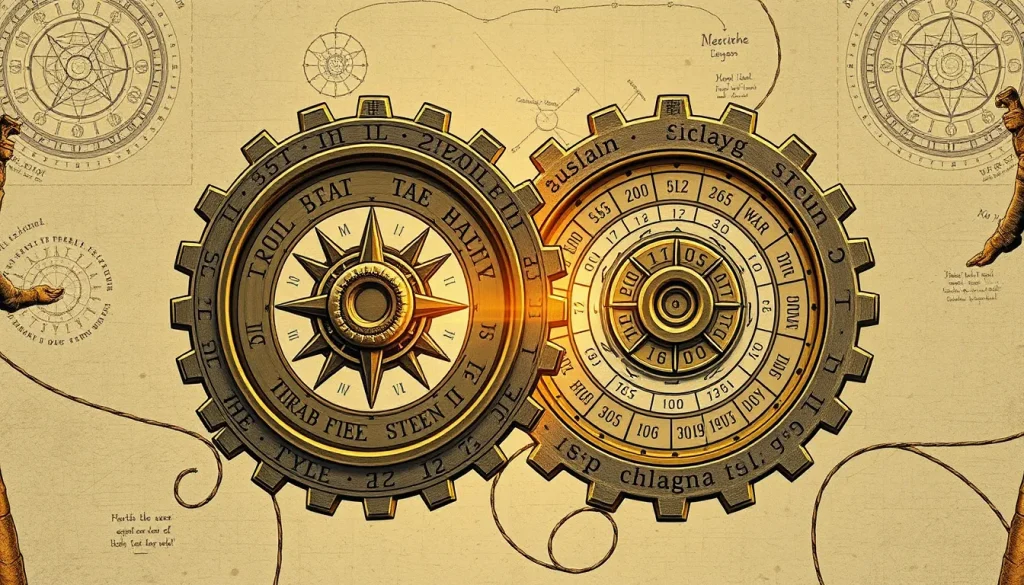
The conception of time in pre-Columbian Mesoamerica was far more complex than the linear progression used in the modern Gregorian calendar. For the ancient Maya, time was cyclical, sacred, and mathematically precise. The core of this system lies in the interaction between two primary calendars: the Tzolk’in and the Haab. These were not used in isolation but ran simultaneously, like interlocking gears, to create a larger cycle known as the Calendar Round. This 52-year period was crucial for scheduling ceremonies, agricultural activities, and recording the reigns of rulers. Understanding how these two distinct counts mesh provides insight into the Maya worldview, where astronomical observation and ritual practice were inseparable.
Main Explanation
The genius of the Maya timekeeping system is that it is not one calendar, but a stack of interlocking calendars solving different problems. The Tzolk’in is a 260-day count often associated with sacred time, divination, and personal identity. It consists of 13 numbers combined with 20 day names, creating a unique sequence that does not repeat for 260 days. Concurrently, the Haab is a 365-day count approximating the solar year, used for civic life and agriculture. The Haab comprises 18 months of 20 days each, plus a short month of 5 days known as Wayeb’, which was considered unlucky. When these two cycles run together, a specific combination of Tzolk’in and Haab dates, such as 4 Ahau 8 Kumk’u, will only repeat once every 52 years. This synchronization creates the Calendar Round, a period of 18,980 days. This interlocking mechanism allowed the Maya to track time with remarkable accuracy over generations, serving both practical needs like planting seasons and sacred needs like determining auspicious days for warfare or coronation.
Evidence & Sources
Archaeological and epigraphic evidence overwhelmingly supports the simultaneous use of the Tzolk’in and Haab. Stone monuments, known as stelae, across Maya sites frequently record dates using both counts. According to Dr. Diane Davies, a Maya archaeologist, these calendars were used for astronomical calculations, divination, and recording important events such as the reigns of rulers and their conquests. The Foundation for the Advancement of Mesoamerican Studies (FAMSI) provides detailed listings of the 20 day names of the Tzolk’in (such as Imix, Ik’, Ak’bal) and the 19 month names of the Haab (such as Pop, Wo, Sip), confirming the structural consistency across the region. Furthermore, modern Maya communities continue to use the 260-day Tzolk’in for ritual purposes, demonstrating the cultural resilience of this system. Digital heritage projects and academic guides, such as those from Mayan.org, clarify that while the Long Count provided absolute dating, the Calendar Round remained the primary method for scheduling recurring civic and religious events within a human lifetime. The consistency of these records across centuries validates the mathematical rigor of the system.
Deep Dive Analysis
Module D: Calendar System Analysis
Units: The system relies on two primary units. The Tzolk’in uses a cycle of 260 days formed by 13 numbers and 20 day signs. The Haab uses a cycle of 365 days formed by 18 months of 20 days plus 5 Wayeb’ days. The mathematical base is vigesimal (base-20), which underpins the structure of the day signs and months.
Calculation: The Calendar Round is derived from the Least Common Multiple (LCM) of the two cycles. Since 260 and 365 share a common factor of 5, the calculation is (260 × 365) / 5, resulting in 18,980 days. This equals exactly 52 Haab years or 73 Tzolk’in cycles. This means that for any given day, the specific combination of Tzolk’in and Haab dates will not repeat for 52 years.
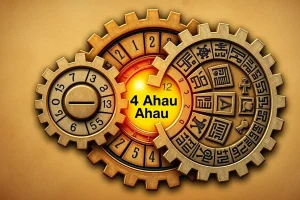
Diagram Description: Imagine two interlocking gears. The smaller gear represents the Tzolk’in with 260 teeth, and the larger gear represents the Haab with 365 teeth. As they turn, specific teeth align only once per full rotation of the combined system. This visual metaphor is often used to explain the mechanics to students of archaeology.
Example Date: A foundational date in Maya cosmology is 4 Ahau 8 Kumk’u. This date marks the creation point in the Long Count but is also expressible within the Calendar Round. Because the Calendar Round repeats, this specific date occurs every 52 years, requiring the Long Count to distinguish which 52-year cycle is being referenced.
Relationship to Other Calendars: The Calendar Round is limited because it cannot distinguish cycles beyond 52 years. To solve this, the Maya developed the Long Count, which provides absolute chronological dating from a fixed creation point. The Long Count tracks the number of days since the creation date, allowing for historical records that span centuries without ambiguity.
Historical Use: All Mesoamerican civilizations, including the Maya, Aztec, and Zapotec, utilized variations of this 52-year cycle. For the Maya, it was essential for tracking the movements of the sun, moon, stars, and planets. It dictated the timing of agricultural cycles and the scheduling of royal ceremonies. The 52-year mark was often seen as a time of renewal and potential danger, requiring specific rituals to ensure the continuation of the cosmic order.
Current Traditions: While the Long Count was discontinued after the Classic period, the Tzolk’in is still used by contemporary Maya peoples in the highlands of Guatemala and parts of Mexico. This continuity highlights the enduring spiritual and cultural significance of the 260-day count, separate from the solar Haab which aligns more closely with the modern Gregorian year.
Misconceptions: A common modern misconception, particularly around 2012, was that the end of a cycle meant the end of the world. In reality, the completion of a cycle, whether the 52-year Calendar Round or a Baktun in the Long Count, signifies renewal and continuation. The Maya viewed time as regenerative; the end of one period simply marked the beginning of the next, much like the turning of the interlocking gears continues indefinitely.
FAQ
Why do the Tzolk’in and Haab have different lengths?
The Tzolk’in (260 days) is based on sacred numerology and human gestation cycles, while the Haab (365 days) approximates the solar year for agricultural purposes.
Did the Maya calendar end in 2012?
No. 2012 marked the end of a specific Long Count cycle (a Baktun), similar to an odometer rolling over. It signified renewal, not destruction.
Is the Maya calendar still used today?
Yes, the 260-day Tzolk’in is still used by contemporary Maya communities for ritual and divination, though the Long Count is largely historical.
Leave a Reply