
Short Answer
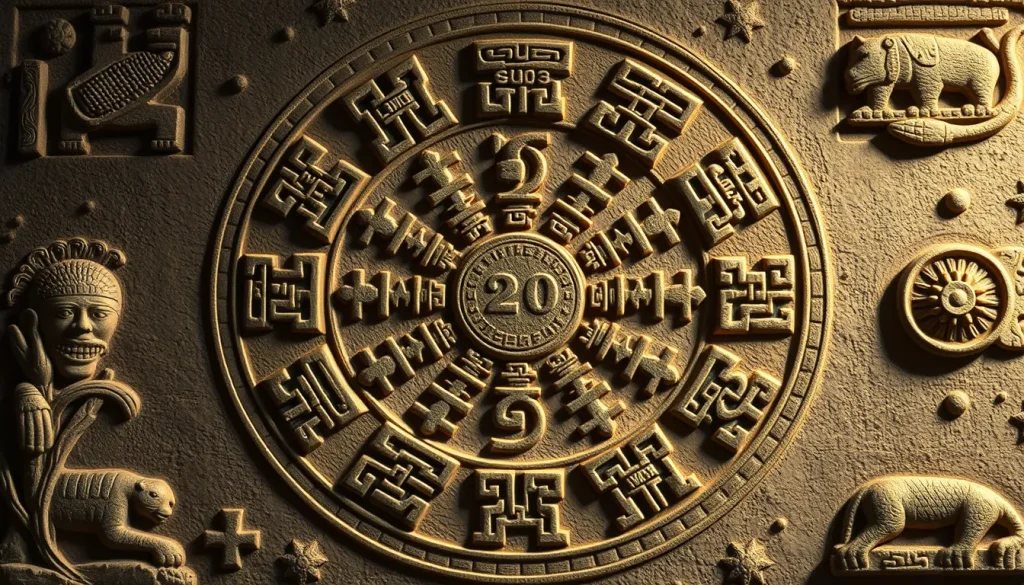
The twenty Maya day signs, known as nawales in K’iche’ Maya or simply day names in Yucatec Maya, constitute the fundamental building blocks of the Tzolk’in, the sacred 260-day calendar. Unlike the solar Haab calendar used for agricultural cycles, the Tzolk’in governed ritual life, divination, naming ceremonies, and the timing of warfare. Each of the twenty signs carries a unique archetype, often associated with natural phenomena, deities, or human activities. Understanding these signs requires navigating the intersection of Classic Period epigraphy, Post-Codicological records, and living Maya traditions in the Guatemalan highlands.
Main Explanation
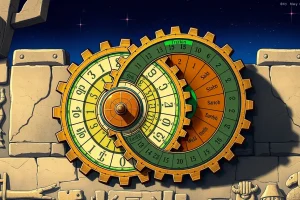
The Tzolk’in operates through the interlocking of two cycles: a sequence of 20 day names and a sequence of 13 numbers. This creates 260 unique day positions (20 × 13). The 20 day signs cycle continuously, independent of the solar year. In archaeological contexts, these signs are represented by distinct glyphs found on stelae, altars, and within the codices. Each sign is believed to imbue the day with specific spiritual qualities or energies. For example, the day sign B’atz’ (Monkey/Thread) is associated with continuity and the initiation of daykeepers, while E’ (Path/Tooth) relates to travel and destiny.
Modern interpretations often assign elemental associations (Fire, Water, Earth, Air) and cardinal directions to these signs. While some directional associations have archaeological backing in Maya cosmology, the rigid elemental system is largely a feature of contemporary revivalism rather than Classic Period dogma. The meanings vary slightly between Maya linguistic groups; the K’iche’ names preserved in the highlands differ phonetically from the Yucatec names found in the Dresden Codex, though the underlying glyphs and concepts remain cognate.
Evidence & Sources
Archaeological evidence for the 20 day signs is extensive. The earliest direct evidence of the Tzolk’in dates to approximately the 3rd century BC, with possible earlier origins. The signs appear prominently in the three surviving Maya codices (Dresden, Madrid, and Paris), where they are used to schedule rituals and track planetary movements, particularly Venus. Epigraphic analysis of Classic Period monuments reveals that rulers often timed accession ceremonies to coincide with auspicious day signs, such as Ajaw (Sun/Lord), signifying leadership and completion.
Ethnohistoric sources, such as the Popol Vuh and colonial-era documents like the Chilam Balam, provide narrative context for the signs. Furthermore, living traditions among the K’iche’ Maya in Guatemala maintain an unbroken lineage of calendar usage. According to the National Museum of the American Indian, modern Ajq’ijab (daykeepers) still initiate new members on specific days like B’atz’, celebrating the continuity of the 260-day cycle. This continuity provides a unique window into how ancient meanings may have been practiced, though scholars caution against projecting modern beliefs directly onto ancient ruins without epigraphic verification.
Deep Dive Analysis
To understand the meanings of the 20 Maya day signs rigorously, we apply a definitional framework that separates glyphic identification from cultural interpretation. This analysis follows the structure of conceptual definition, operational mechanics, and evidentiary support.
Definition and Etymology
A day sign is a glyphic symbol representing one of twenty fixed names in the sacred count. The etymology of these names often reveals their primary association. For instance, the K’iche’ name B’atz’ derives from the word for “thread,” symbolizing the thread of time and human destiny. The Yucatec equivalent is Chuwen. Similarly, Aj B’en (Yucatec: Ben) relates to “cane plantation” or “milpa,” representing corn and divine power. These etymologies are not merely labels but indicate the spiritual function of the day.
Key Components of the Signs
Each sign functions within a broader cosmological framework involving directions and natural forces. While modern astrological profiles often assign fixed elements, archaeological data suggests a more fluid relationship based on the specific ritual context. The twenty signs generally include:
- Imix (Crocodile): Associated with water and the earth’s surface.
- Ik (Wind): Linked to air, breath, and life force.
- Akbal (Night): Represents the earth, darkness, and the underworld.
- Kan (Seed): Connected to fire, maize, and sustenance.
- Chicchan (Serpent): Symbolizes instinct and cosmic energy.
- Cimi (Transformation): Associated with death and ancestors.
- Manik (Deer): Linked to the hunt and provision.
- Lamat (Rabbit/Star): Often connected to Venus and fertility.
- Muluc (Water): Represents rain and communal effort.
- Oc (Dog): Guides to the underworld.
- Chuen (Monkey): Associated with arts and craftsmanship.
- Eb (Road): Symbolizes the path and destiny.
- Ben (Reed): Represents growth and stability.
- Ix (Jaguar): Linked to the earth and shamanic power.
- Men (Eagle): Represents vision and the heavens.
- Cib (Owl/Vulture): Associated with wisdom and writing.
- Caban (Earth): Represents movement and change.
- Etznab (Flint): Linked to sacrifice and tools.
- Cauac (Storm): Represents rain and turbulence.
- Ahaw (Sun): The final sign, representing leadership and completion.
Historical Evidence and Usage
The usage of these signs is documented in the Calendar Round, which combines the 260-day Tzolk’in with the 365-day Haab. This combined cycle repeats every 52 years. In the Classic Period, dates were recorded using the Long Count alongside the Tzolk’in position. For example, a ruler’s birth date would be recorded with a specific day sign to indicate their inherent nature. The Dresden Codex contains tables specifically designed to predict eclipses and Venus cycles based on these day signs, demonstrating their critical role in astronomy and statecraft.
Common Misconceptions
A prevalent misconception is treating the 20 day signs as a “Zodiac” analogous to the Western 12-sign system. While both systems are used for personality profiling, the Maya system is a calendar count, not a constellation-based path. Additionally, the assignment of fixed elements (e.g., “Fire” for Kan) is more characteristic of modern New Age syncretism than verified Classic Period theology. Archaeological evidence supports directional associations (East, West, North, South) more strongly than elemental ones. Finally, while modern daykeepers initiate members on days like B’atz’, there is no direct epigraphic evidence confirming identical initiation rites in the Classic Period, though the reverence for the day sign is consistent.
FAQ
What is the difference between the Tzolk'in and the Haab?
The Tzolk'in is a 260-day sacred calendar used for ritual and divination, while the Haab is a 365-day solar calendar used for civic and agricultural purposes. Together they form the Calendar Round.
Are the 20 day signs still used today?
Yes, the Tzolk'in is still in active use among Maya communities in the Guatemalan highlands, where daykeepers (Ajq'ijab) use it for ceremonies and initiations.
Do the day signs correspond to Western Zodiac signs?
No. While both are used for astrology, the Maya day signs are part of a 260-day calendar count based on ritual cycles, not constellations or the solar year like the Western Zodiac.
Leave a Reply