
Short Answer
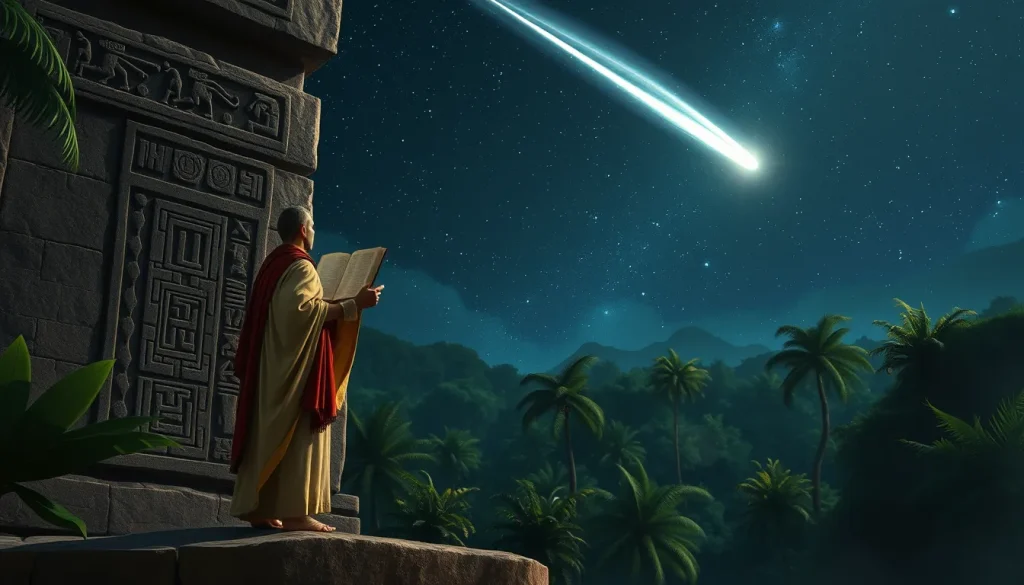
For decades, the astronomical prowess of the ancient Maya civilization was primarily associated with their precise tracking of the Sun, Moon, and visible planets, particularly Venus. While their calendars and eclipse predictions are well-documented in the hieroglyphic corpus, the recording of transient celestial phenomena such as comets and meteors remained a subject of debate. Historically, evidence for Maya observations of these events was largely confined to ethnographical and folklore sources from the colonial or modern periods. However, contemporary interdisciplinary research combining archaeology, epigraphy, and orbital mechanics has begun to shift this consensus. New analyses of Classic Period hieroglyphic texts and codices suggest that the Maya not only observed these phenomena but integrated them into their historical and cosmological records.
The significance of these findings lies in the correlation between specific Maya dates and independent astronomical records from East Asia, as well as the numerical integration of meteoroid streams. These discoveries indicate that transient sky events were not merely seen as omens but were recorded with the same rigor applied to planetary cycles. This article examines the current state of evidence regarding Maya records of comets and meteors, focusing on hieroglyphic inscriptions, codical evidence, and the methodological breakthroughs that have made these decipherments possible.
Main Explanation
The study of Maya astronomy has traditionally focused on periodic phenomena because their calendars were designed to track cyclical time. Comets and meteors, being irregular or periodic over long timescales, presented a challenge for recognition in the archaeological record. Prior to the 21st century, no firm evidence existed that the ancient Maya recorded specific occurrences of meteor showers or outbursts in their hieroglyphic inscriptions. In fact, there was no evidence of any pre-Hispanic civilization in the Western Hemisphere recording observations of meteor showers on specific dates. This gap in knowledge was partly due to difficulties in deciphering the hieroglyphic script and challenges in accurately correlating the ancient Maya calendar to the European Julian or Gregorian calendars.
Recent examinations have proposed that written accounts of meteor showers are embedded in the hieroglyphic corpus, especially within the codices, which were screen-fold books used by astronomer-priests. Researchers have suggested alternative decipherments of certain astronomical signs that may represent meteors or comets rather than stars or planets. Furthermore, the application of modern orbital integrations to meteoroid-sized particles released by Comet Halley has provided a scientific backbone to these epigraphic claims. By numerically integrating these particles, scholars have identified potential Eta Aquariid outbursts that align with dates found in Classic Maya inscriptions. This convergence of digital astronomy and archaeology suggests that the Maya sky-watchers were attentive to both the predictable and the unpredictable elements of the cosmos.

The cultural context of these records is also vital. In Maya cosmology, celestial events were often intertwined with terrestrial affairs, particularly the legitimacy and accession of rulers. A comet appearing near the time of a king’s ascent to the throne could be interpreted as a divine sign or a cosmic endorsement. Therefore, recording these events was not merely scientific but deeply political and religious. The shift from viewing these records as mythological to recognizing them as observational data marks a significant evolution in Mesoamerican archaeology.
Evidence & Sources
The evidentiary basis for Maya comet and meteor records comes from three primary sources: hieroglyphic stelae, codical illustrations, and cross-cultural astronomical records. One of the most compelling pieces of evidence involves Stela 20 at the Classic Maya site of Cobá. This inscription records the accession of a ruler on January 15, 773, in the Julian calendar. Independent Chinese histories report a “long star” in or beneath Shen, the seven principal stars of Orion, on January 17, 773. This object is now designated as comet X/773 B1. A Japanese source further records its visibility on January 20, 773. The proximity of the Maya royal accession to the comet’s appearance suggests a deliberate association recorded in stone.
Another significant correlation is documented at Ek’ Balam, located about 60 km northwest of Cobá. Here, the ruler Ukit Kan Le’k Tok’ acceded on May 26, 770. This date corresponds exactly to when Chinese histories record comet C/770. These parallels between Maya epigraphy and East Asian astronomical records provide a robust external validation for the interpretation of these hieroglyphs as records of cometary events. Prior to these findings, data concerning the Mayan approach to comets and meteors were available mostly from ethnographical and folklore sources which dealt, as a rule, with various beliefs and tokens. The studies of hieroglyphic texts of the Classic Period (AD 600–900) have now proved that comets and meteors were undoubtedly known in this culture through astronomical observations and their periodicity.
Regarding meteor showers, research published in 2017 utilized orbital integrations to investigate evidence of Eta Aquariid outbursts recorded in the Classic Maya hieroglyphic script. The authors numerically integrated meteoroid-sized particles released by Comet Halley to determine past Earth encounters. This method allowed them to propose that specific inscriptions correspond to heightened meteor activity associated with Halley’s Comet. Additionally, earlier work in 2013 suggested that it may be possible to recognize written accounts of meteor showers embedded in the hieroglyphic corpus, especially the codices. By proposing an alternative decipherment of an astronomical sign and using the accompanying hieroglyphic texts and illustrations with appropriate dates, researchers believe it is possible to identify these events within the screen-fold books that were the tools of the astronomer-priests of that day.
Deep Dive Analysis
Celestial Object
The primary celestial objects under discussion are comets, often described in historical records as “long stars,” and meteor showers, specifically those associated with Comet Halley such as the Eta Aquariids. Comets are icy bodies that release gas and dust, creating a visible atmosphere and sometimes a tail when near the Sun. Meteor showers occur when Earth passes through debris trails left by comets.
Observational Cycle
Unlike Venus or the Moon, comets do not have short, predictable cycles visible within a human lifetime, though Comet Halley returns approximately every 76 years. Meteor showers occur annually but vary in intensity. The Maya observed these irregularities and sought to record them when they appeared significant, particularly during outbursts.
How Maya Observed It
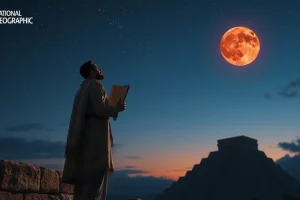
Maya astronomers observed the night sky with the naked eye, often from elevated structures or temples designed for sightlines. They recorded their observations using the hieroglyphic script on stone stelae and in bark-paper codices. The precision of their calendar system allowed them to pin these transient events to specific Long Count dates.
Archaeological/Textual Evidence
Key evidence includes Stela 20 at Cobá and inscriptions at Ek’ Balam. The Cobá inscription dates to 773 CE and correlates with Comet X/773 B1. The Ek’ Balam inscription dates to 770 CE and correlates with Comet C/770. Additionally, codical evidence suggests alternative decipherments of signs representing meteor showers, supported by orbital integration studies of Halley’s debris.
Calendar Connection
The Maya used the Long Count calendar to record absolute dates. The correlation of these dates with Julian calendar dates (e.g., January 15, 773) allows for cross-referencing with Chinese and Japanese historical astronomical records. This synchronization validates the accuracy of the Maya chronological record.
Architecture Connection
While specific observatories like El Caracol are associated with planetary tracking, stelae such as Stela 20 at Cobá served as public records of celestial events tied to royal history. The placement of these stelae in ceremonial centers ensured the cosmic significance of the events was visible to the populace.
Cultural Meaning
Comets and meteors were likely viewed as potent omens. The coincidence of a comet’s appearance with a ruler’s accession, as seen at Cobá and Ek’ Balam, suggests these events were used to legitimize political power. They were integrated into the narrative of divine kingship.
Uncertainty/Debate
Despite these findings, uncertainties remain. Decipherment of specific glyph variants related to meteors is still debated. The correlation of the Maya calendar to the European calendar, while improved, still faces minor discrepancies. Furthermore, distinguishing between poetic metaphor and literal astronomical observation in the codices requires ongoing analysis.
FAQ
Did the Maya record meteor showers in their writing?
Yes, recent research suggests that specific occurrences of meteor showers, particularly Eta Aquariid outbursts, were recorded in Classic Maya hieroglyphic inscriptions and codices.
How do we know the Maya saw the same comets as Chinese astronomers?
Dates of Maya royal accessions recorded on stelae at Cobá and Ek’ Balam correlate precisely with dates of comet sightings recorded in Chinese and Japanese histories from the 8th century.
What method was used to verify Maya meteor records?
Scholars used numerical orbital integrations of meteoroid-sized particles released by Comet Halley to match past Earth encounters with dates found in Maya inscriptions.
Are comet records common in Maya archaeology?
No, they are rare. Prior to recent studies, there was no firm evidence of pre-Hispanic civilizations in the Western Hemisphere recording meteor showers on specific dates.

Leave a Reply