
Short Answer
The GMT correlation stands as the foundational chronological framework used by archaeologists and historians to link the ancient Maya Long Count calendar to the modern Gregorian calendar. Without this correlation constant, the intricate stone monuments and codices of the Maya civilization would remain isolated in time, unable to be compared with European historical records or climate data. The acronym GMT refers to the surnames of the three early scholars who compiled the evidence correlating the Julian calendar, which was in use during the initial European contact, with the Maya calendar system. While the majority of scholars currently adhere to this standard, the determination of this correlation is a complex intersection of archaeology, astronomy, and radiocarbon dating that continues to be refined.
Main Explanation
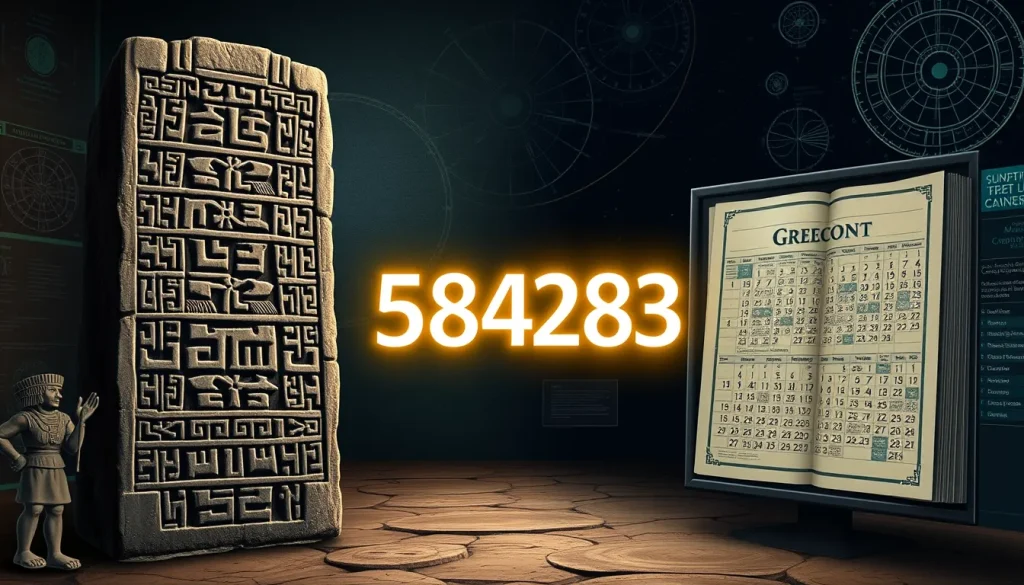
The GMT correlation is essentially a mathematical constant that serves as a bridge between two distinct timekeeping systems. The Maya Long Count is a linear count of days since a mythological creation date, whereas the Gregorian calendar is a solar-based system used globally today. The correlation constant most widely accepted is 584,283 days. This number represents the difference in days between the start of the Maya creation era and the start of the Gregorian epoch. By adding this constant to a Long Count date, researchers can derive the corresponding Julian Day Number, which is then converted to a Gregorian date.
The development of this correlation was not the work of a single individual but a cumulative effort spanning decades. Joseph Goodman first proposed a correlation in the early 20th century based on colonial historical records. Later, Juan Martínez Hernández refined these calculations using additional textual evidence from the Postclassic period. Finally, J. Eric S. Thompson synthesized this work in the 1930s, solidifying the 584,283 constant as the standard for Maya archaeology. This collaboration of scholarship is why the system bears the initials GMT. It allows for the precise dating of events such as the rise and fall of specific polities, the dedication of monuments, and the reigns of known kings.
Despite its widespread acceptance, the GMT correlation is not without controversy. Some researchers argue for alternative constants, such as GMT+2, which shifts all dates by two days. This alternative gained popularity because certain carved monuments with astronomical data, such as the solar eclipse recorded on a stela from Poco Uinic in Chiapas, correlate better with two days after the original GMT. However, out of respect for living tradition, the modern Maya of Guatemala who still keep the calendar follow the GMT, and many academic institutions maintain the original standard to ensure consistency in historical literature.
Evidence & Sources
The determination of the GMT correlation relies on a triangulation of evidence types, including historical texts, astronomical observations, and scientific dating methods. Historical evidence comes primarily from colonial-era documents where Maya dates were recorded alongside Spanish dates. These documents provide direct links between the Long Count and the European calendar, though transcription errors and calendar reforms complicate their use. Archaeological evidence includes inscribed monuments that record astronomical events, such as eclipses or planetary positions, which can be calculated backward to verify the correlation constant.
In recent years, scientific methods have provided independent verification. High-precision AMS 14C dating has been used to correlate ancient Maya and modern European calendars. A significant study published in Scientific Reports reported a series of high-resolution AMS 14C dates on a wooden lintel collected from the Classic period. These radiocarbon dates help anchor the calendar correlation to absolute time, reducing reliance on solely historical or astronomical assumptions. The study noted that correlation constants can vary up to 1000 years in incorrect theories, highlighting the importance of precise scientific dating to resolve controversies.
Conversely, astronomical analysis has also been used to challenge the standard. Research published in Astronomische Nachrichten suggests that astronomy helps to answer why the most popular correlation (GMT) might be wrong in specific contexts. By analyzing the alignment of celestial cycles recorded in Maya inscriptions against modern astronomical software, some astronomers argue for slight adjustments. This tension between radiocarbon dating, which generally supports the GMT, and specific astronomical alignments, which sometimes favor GMT+2, defines the current state of research. The DisamKB database further codifies the GMT correlation as a canonical entity in digital heritage systems, resolving homonymy between the calendar correlation and other uses of the acronym GMT, such as Greenwich Mean Time or General Motors platforms.
Deep Dive Analysis
To fully understand the GMT correlation, one must examine it through the structure of a calendar system analysis, focusing on its units, calculations, and relationships to other timekeeping methods.
Units and Calculation
The Maya Long Count uses a modified vigesimal (base-20) system to count days. The units include the kin (1 day), uinal (20 days), tun (360 days), k’atun (7,200 days), and b’ak’tun (144,000 days). The GMT correlation operates by assigning a specific Julian Day Number to the Maya creation date, traditionally calculated as August 11, 3114 BCE in the Gregorian calendar. The calculation involves adding the correlation constant (584,283) to the total number of days represented by the Long Count date. For example, a Long Count date of 9.10.10.0.0 represents a specific number of days since creation. When the constant is applied, this converts to a specific date in the 8th century CE, allowing archaeologists to place the monument within the Late Classic period.
Relationship to Other Calendars
The GMT correlation does not exist in a vacuum; it relates the Maya Long Count to the Julian and Gregorian calendars. The Julian calendar was in use during the initial European contact, and the GMT correlation was originally calibrated against it before adjusting for the Gregorian reform. This relationship is crucial because colonial documents often use Julian dates. Furthermore, the correlation links the Long Count to the Haab’ (solar year) and Tzolk’in (sacred round) cycles. While the Long Count is linear, the Haab’ and Tzolk’in are cyclical. The GMT constant ensures that the cyclical dates align correctly with the linear count when converted to Western dates, maintaining the integrity of the Maya timekeeping system in modern analysis.
Historical Use and Current Traditions
Historically, the GMT correlation was developed to make sense of the ruins being uncovered in Central America during the early 20th century. Before this standardization, dates were relative and difficult to compare across different sites. Today, the correlation is used in every major archaeological publication involving Maya chronology. Beyond academia, the correlation has cultural significance. The modern Maya of Guatemala who still keep the calendar follow the GMT correlation. This continuity demonstrates that the calendar is not merely an artifact of the past but a living tradition. Out of respect for this living tradition, many digital heritage projects and educational resources present dates following the original GMT rather than alternative theories like GMT+2.
Example Date Conversion
Consider the famous Stela C from Tres Zapotes, which bears the Long Count date 7.16.3.13.6. Using the GMT correlation constant of 584,283, this date converts to September 3, 32 BCE. This conversion allows historians to place this Olmec-Maya transitional artifact within the Preclassic period, contemporaneous with the late Roman Republic. Without the GMT correlation, this stone would simply indicate a count of days with no anchor to global history. The ability to convert this date enables comparisons with climate datasets and environmental records, which is essential for understanding the reasons for the development and collapse of Maya civilization.
Misconceptions and Debates
A common misconception is that the GMT correlation is proven fact without uncertainty. In reality, it remains a hypothesis supported by the weight of evidence rather than absolute proof. The debate between GMT and GMT+2 illustrates this uncertainty. Another misconception involves the end of the 13th b’ak’tun in 2012. Some New Age interpretations suggested this marked an apocalyptic event based on the calendar ending. However, archaeologically, the calendar simply rolled over to the next b’ak’tun, much like an odometer. The GMT correlation allows us to see that December 21, 2012, was simply the completion of a cycle, not a prophecy of doom. Additionally, while GMT is the standard, researchers must remain aware of the astronomical arguments presented by scholars like Klokocnik et al., who suggest that specific celestial alignments might require minor adjustments to the constant for precise astronomical modeling.
FAQ
What does GMT stand for in the Maya calendar?
In this context, GMT stands for Goodman-Martínez-Thompson, the three scholars who developed the correlation constant, not Greenwich Mean Time.
Is the GMT correlation proven to be exact?
It is the most widely accepted standard, but some astronomical evidence suggests a GMT+2 correlation might be more accurate for specific celestial events.
Why is the correlation constant important?
It allows archaeologists to convert ancient Maya dates into modern calendar dates, enabling comparison with global historical and climate records.


Leave a Reply