
Short Answer
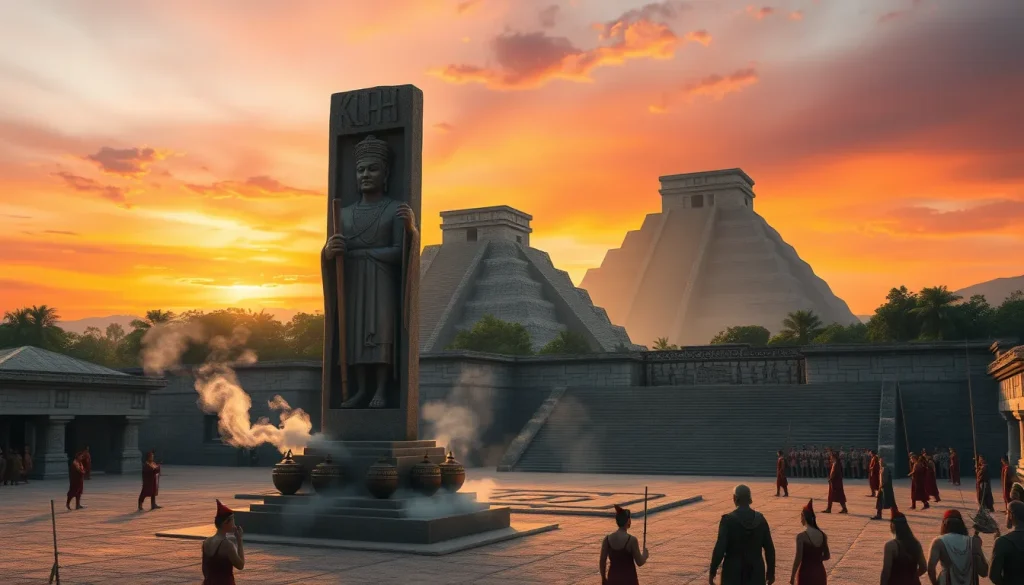
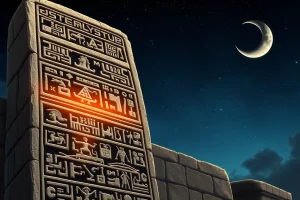
The erection of stelae by Maya kings at the conclusion of K’atun periods represents one of the most pervasive and significant practices of the Classic Maya civilization. These sculpted pillars of stone were not merely artistic expressions or historical records in the modern sense; they were holy objects and ritual shrines integral to the fusion of religion and ruling power. Scholars have long dedicated efforts to unraveling the complex imagery of stelae, recognizing that they portray kings engaged in rituals requiring blood sacrifice which resulted in visionary revelations of the otherworld. Yet, the significance of the stela itself, as a sacred entity within the ritual landscape, requires careful definition grounded in archaeological and epigraphic evidence. The practice of raising stelae on period endings coincides with the political dominance of Maya states, marking a temporal boundary where the human and divine realms intersected through the agency of the ruler.
Main Explanation
The primary motivation for erecting stelae at K’atun endings was to manifest the king’s role as the paradigm for human behavior toward the deities and the cosmos. In the Maya worldview, time was not a linear progression but a cyclical burden carried by the gods, requiring human intervention to ensure continuity. The K’atun, a period of approximately 19.7 years, was a significant cycle within the Long Count calendar. At the conclusion of each K’atun, the king performed specific rituals to bind time and renew the cosmic order. The stela served as a static image of the ruler engaged in self-sacrifice or depicted as a victorious warrior and protector, providing the populace with a permanent focal point for public rituals enacted in the plazas. For the common people, these monuments acted as mnemonic devices, integrating the current ceremony with previous times the same ceremonies occurred. The word for stela survives in Yucatec as manak’, glossed in the Cordemex dictionary as a track or sign that appears from afar, while the related term manak’ chi’ means to bring to memory. This linguistic evidence underscores the function of the stela as a trigger for collective memory and communal participation in the sacred timeline.
Furthermore, the stela cult was pervasive, and its temporal boundaries coincide with those of the political dominance of the Classic Maya states. The kings used the stelae as proclamations of their piety, commissioning the carving of tall stone shafts to demonstrate their capacity to communicate with the divine. The imagery often depicts the king engaged in bloodletting rituals, which were believed to induce visionary states allowing access to the otherworld. By erecting these stones, the king was not just recording history but actively participating in the maintenance of the cosmos. The physical act of raising the stone was itself a ritual performance, often involving the binding of stone (k’altun) or the setting of stone (chumtun), depending on the regional tradition. In the western lowlands, such as Palenque, the custom of setting stones rather than erecting them reflected different creation accounts, yet the underlying purpose of marking time through stone ritual remained consistent. The stela thus became a tangible anchor for the intangible flow of sacred time, ensuring that the king’s authority was literally set in stone alongside the gods.
Evidence & Sources
Archaeological and epigraphic evidence provides robust support for the ritual function of period-ending stelae. At the site of Yaxchilan, over thirty stelae once towered over people gathered in spacious ceremonial plazas. A subset of eleven nearly identical stelae was erected in the Late Classic era, between approximately A.D. 636 and 800. These monuments formed the focus of investigations into how stelae served as focal points for public rituals with pyramids as backdrops. The uniformity of these stelae suggests a standardized ritual protocol followed over generations, reinforcing the stability of the ruling lineage. Inscriptions on these monuments often detail the specific rituals performed, including bloodletting and the invocation of ancestors, linking the current ruler to a dynastic past that stretched back into mythological time.
Textual evidence further elucidates the connection between stone rituals and cosmogony. Christie has argued that the inscription on Stela 38 at Naranjo demonstrates a direct connection between stone rituals performed at period-ending dates and the creation account on the east side of Stela C at Quirigua. The fact that three K’atun ending rites are reported alongside creation mythology indicates that each period ending was viewed as a reenactment of the original creation. This ritual practice of time was not merely reproduced in ceremonial language but imitated cosmogonic actions at the inauguration of the contemporary Long Count calendar. Additionally, the distinction between chumtun (setting) and tz’aptun (erecting) found in inscriptions highlights regional variations in how these rituals were physically enacted. While Palenque embodies many stone-binding ceremonies, the lack of sources regarding the creation account of this site leaves some uncertainty about the specific cosmological connections there. However, the broader pattern across the Classic Maya lowlands confirms that stone rituals were a common technique for managing sacred time and legitimizing political power through religious performance.
Deep Dive Analysis
Module A: Definition of the Stela Cult
Definition: The Stela Cult refers to the systematic practice among Classic Maya kings of erecting or setting carved stone monuments to commemorate period endings, specifically K’atuns. It is defined not merely as an artistic tradition but as a religious institution where the stone object itself is treated as a holy shrine and a ritual participant.
How it works: The process begins with the selection of the period ending date within the Long Count calendar. The king commissions the stone, often quarrying it from sacred mountains. The carving depicts the king in ritual attire, often holding symbols of authority or performing bloodletting. Upon completion, the stela is raised in a public plaza during a ceremony that involves incense, blood sacrifice, and the binding of the stone with cloth or rope. This act activates the stela as a conduit for divine energy.
Key components: The essential elements include the stone shaft (the body of the monument), the iconography (depicting the ruler and deities), the hieroglyphic text (recording the date and ritual actions), and the plaza context (the stage for public viewing). The blood sacrifice performed by the king is a critical component, as it provides the spiritual energy necessary to animate the stone and sustain the cosmos.
Example: At Yaxchilan, the Late Classic stelae (A.D. 636–800) serve as prime examples. These nearly identical monuments were raised in sequence to mark successive K’atun endings. They depict the ruler standing over captives or engaged in bloodletting, reinforcing his role as a warrior and priest. The placement of these stelae in the plaza ensured maximum visibility for the populace, integrating the community into the ritual cycle.
Historical evidence: Epigraphic records such as those on Stela 38 at Naranjo and Stela C at Quirigua link these rituals to creation myths. The Cordemex dictionary definitions of manak’ and manak’ chi’ provide linguistic evidence of the stela’s function as a mnemonic device. Archaeological surveys confirm the alignment of stelae with architectural features like pyramids, indicating planned ceremonial landscapes.
Common misconceptions: A common misconception is that stelae were solely historical records intended for future archaeologists. In reality, they were contemporary ritual tools meant for the living populace and the gods. Another error is viewing them as secular propaganda; while they promoted political power, this power was inherently religious and cosmological. Finally, some assume all stelae were erected; however, regional variations like the setting of stones at Palenque show diversity in the physical execution of the cult.
FAQ
What was the primary purpose of Maya stelae?
Stelae served as holy objects and ritual shrines that fused religious power with political authority, commemorating K'atun endings through blood sacrifice and visionary rituals.
Did all Maya cities erect stelae in the same way?
No, regional variations existed. For example, Palenque practiced stone-setting (chumtun) and binding (k'altun), while other sites like Yaxchilan focused on erecting tall stone shafts (tz'aptun).
How did the populace interact with stelae?
The populace gathered in plazas where stelae acted as mnemonic devices, reminding them of previous ceremonies and integrating the community into the sacred cycle of time.

Leave a Reply