
Short Answer
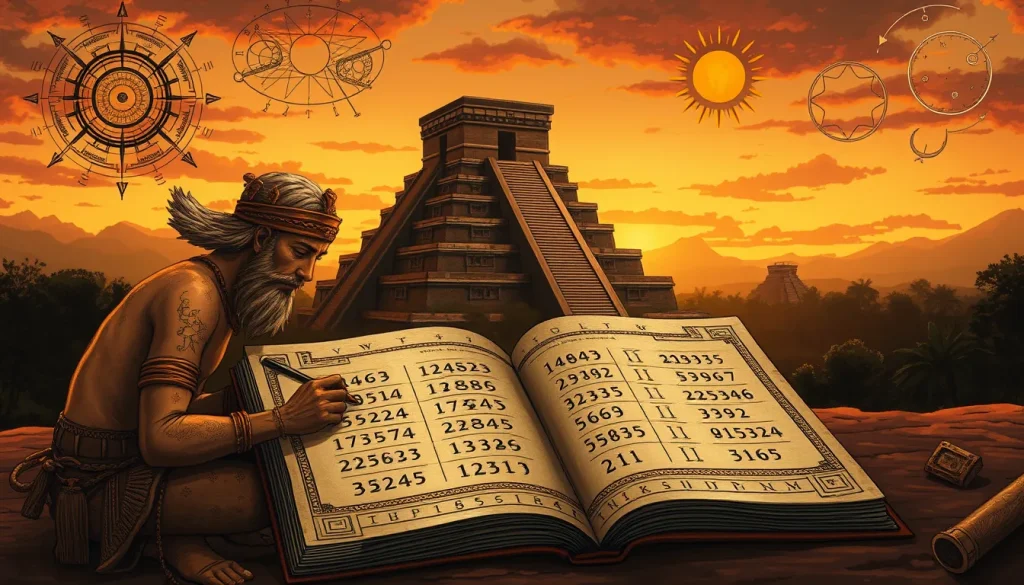
The ancient Maya civilization stands out in the history of science for its exceptional achievements in mathematics and astronomy. Central to these achievements was the Maya vigesimal number system, a base-20 numerical framework that allowed priests and scribes to record and calculate vast intervals of time. Unlike many contemporary cultures, the Maya developed a positional notation system that included a concept of zero, facilitating complex computations required for tracking celestial bodies. This mathematical infrastructure was not merely abstract; it was deeply integrated into their cosmology, architecture, and ritual life, supporting the precise observation of Venus, eclipses, and the solar year.
Main Explanation
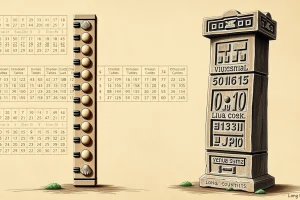
The Maya number system was fundamentally vigesimal, meaning it was based on units of twenty rather than the decimal (base-10) system common in modern Western mathematics. This system was additive and positional, where the value of a symbol depended on its vertical position within a number. Numbers were written vertically, with the most significant digit at the top. The system utilized three primary symbols: a dot representing one, a horizontal bar representing five, and a shell-like symbol representing zero or a placeholder. This inclusion of zero was a significant mathematical innovation, allowing for the representation of large numbers necessary for astronomical reckoning.
However, the application of this system was not uniform across all contexts. While a purely base-20 system was used for simple recording of commodities, the calendrical and astronomical computations employed a modified vigesimal system. In this modified version, the third place value was adjusted from 400 (20×20) to 360 (18×20) to better approximate the solar year of 365 days. This unit, known as the tun, became the cornerstone of the Long Count calendar. This modification demonstrates a pragmatic adaptation of mathematics to fit astronomical reality, prioritizing the alignment of numerical cycles with celestial observations over strict mathematical consistency.
The support this system provided for astronomical calculations was profound. By using large place values such as the katun (7,200 days) and the baktun (144,000 days), Maya astronomers could project planetary positions and eclipse cycles far into the past and future. This capability allowed them to create “distance numbers” that linked historical dates to mythological events thousands of years away. The precision of these calculations is evident in inscriptions that differentiate between the sidereal year and the tropical year, indicating a deep understanding of astronomical nuances that required robust numerical tools to express.

Evidence & Sources
Archaeological and textual evidence confirms the sophistication of Maya mathematical astronomy. Inscriptions found across the Maya lowlands, from the Classic period (circa 3rd to 9th centuries CE), contain numerous examples of long intervals counting backward and forward from fixed historical reference points. Scholars such as Michael J. Grofe have analyzed these inscriptions, noting that they incorporate precise calculations of both the sidereal and tropical years. These distance numbers were not random; they were intentionally calculated to incorporate specific astronomical measurements, validating the hypothesis that the number system was designed to support deep time reckoning.
Further evidence is found in the surviving codices, such as the Dresden Codex, which contains tables for Venus cycles and eclipse reckoning. Floyd G. Lounsbury’s work on Maya numeration and calendrical astronomy highlights how these tables rely on the modified base-20 system to track the 584-day Venus cycle and the 177/148-day eclipse half-years. The mathematical notation allowed scribes to accumulate errors over centuries and correct them through empirical observation, a process known as calibration. The historical context provided by sources like the MacTutor History of Mathematics notes that these achievements occurred before the decline of the Classic Maya civilization around 900 AD, preserving a legacy of scientific inquiry that survived the Spanish conquest.
The uniqueness of the system is also a point of scholarly discussion. As noted by mathematicians Pedro J. Freitas and Amy Shell-Gellasch, the Maya system loses uniqueness in certain contexts due to the modified third place value. However, this “flaw” was actually a feature that aligned the mathematical grid with the solar calendar. The place values were tied directly to the Calendar Round and Long Count calendars, ensuring that numerical computations remained synchronized with ritual and agricultural cycles. This integration of mathematics, astronomy, and culture is visible in the architectural remains of administrative and ceremonial centers, where alignment with celestial events often mirrored the numerical relationships found in the inscriptions.
Deep Dive Analysis
Definition of the Vigesimal System
The Maya vigesimal system is a positional numeral system based on powers of twenty. In its pure form, each position represents a power of 20 (1, 20, 400, 8000, etc.). However, for calendrical purposes, the third position was modified to 18×20=360 to approximate the solar year. This hybrid system allowed for both commercial counting and astronomical precision.
How It Works
Numbers are constructed vertically. The bottom position represents units (0-19). The next position up represents multiples of 20. The third position represents multiples of 360 (in the calendar system). Values are summed additively within each level. For example, two dots and a bar in the bottom level equal 7. If placed in the second level, they equal 7×20=140.
Key Components
- Dot: Represents the value of one.
- Bar: Represents the value of five.
- Shell: Represents zero or a placeholder, crucial for positional notation.
- Vertical Position: Determines the multiplier (powers of 20 or 18×20).
Example: The Long Count
A typical Long Count date might read 9.15.0.0.0. This represents 9 baktuns, 15 katuns, 0 tuns, 0 uinals, and 0 kins. Using the modified system, this calculates to a specific number of days since the mythological creation date. This large number format was essential for tracking astronomical cycles over centuries.
Historical Evidence
Inscriptions from the Classic period demonstrate the use of these numbers to track Venus and eclipses. Research by Grofe (2011) indicates that distance numbers in inscriptions were intentionally calculated to incorporate sidereal and tropical year measurements. Lounsbury’s analysis of the Dresden Codex confirms the use of these numbers for eclipse reckoning and Venus cycles.
Common Misconceptions
A common misconception is that the Maya used a pure base-20 system for all purposes. In reality, the calendar system was modified (18×20) to fit the solar year. Another misconception is that the shell symbol was merely decorative; it functioned as a true numeric zero, enabling complex calculations that would otherwise be impossible in a non-positional system.
FAQ
Did the Maya invent the concept of zero?
The Maya independently developed a symbol for zero (the shell) for use in their positional number system, contemporaneous with or prior to its widespread use in other parts of the world.
Why did the Maya modify their base-20 system for calendars?
They modified the third place value to 360 (18x20) instead of 400 to better approximate the 365-day solar year, aligning mathematics with agricultural and ritual cycles.
How accurate were Maya astronomical calculations?
They were highly accurate, capable of distinguishing between sidereal and tropical years and predicting Venus cycles and eclipses over centuries with minimal error.


Leave a Reply