
Short Answer
The Platform of Venus, known locally as the Plataforma de Venus, is a prominent archaeological structure located within the ancient Maya city of Chichén Itzá in the Yucatán Peninsula, Mexico. Unlike modern space exploration concepts bearing similar names, this ancient edifice is a testament to the sophisticated astronomical knowledge and cosmological beliefs of the Post-Classic Maya civilization. Dedicated to the planet Venus, specifically its manifestation as the Morning Star, the platform served as a stage for ritual performances, ceremonies, and possibly dances that reinforced the political and spiritual power of the city’s rulers. The structure is renowned for its precise dimensions, symbolic bas-reliefs, and its integral role within the sacred landscape surrounding the Great Terrace and the Sacred Cenote.
Main Explanation
The Platform of Venus is a square platform situated in the Great Terrace area of Chichén Itzá, immediately to the east of the Temple of Warriors and near the Group of the Thousand Columns. Its primary function was ceremonial, acting as a podium for rites, ceremonies, or dances associated with the cult of Venus. In Maya cosmology, Venus was not merely a celestial body but a deity associated with warfare, rain, and agricultural cycles. The planet’s heliacal rising as the Morning Star was considered an auspicious yet dangerous time, often linked to military campaigns and sacrificial rituals. The platform’s design reflects this duality, combining architectural stability with iconography that evokes the celestial movements and mythological narratives of the planet.
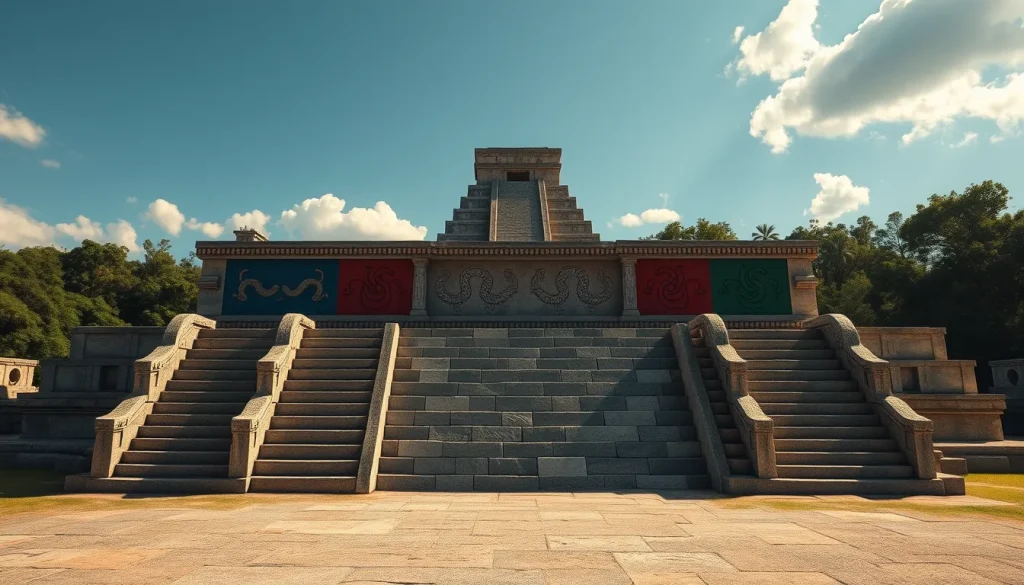
Architecturally, the platform is defined by its symmetry and orientation. It measures approximately 25 meters (82 feet) on each side, creating a substantial stage visible to gatherings in the main plaza. The structure features stairways on each of its four sides, allowing access from all cardinal directions, which may symbolize the universal reach of the Venus deity or the four corners of the Maya world. The raised panels and recessed spaces are adorned with detailed bas-reliefs that depict specific astronomical and mythological symbols, including the planet Venus in the form of a “knot” of years, jaguar claws, and plumed serpents. These carvings were originally painted in vibrant ochre, blue, red, green, and black, making the platform a visually striking focal point during ceremonies.
Evidence & Sources
Archaeological investigation and documentation of the Platform of Venus provide concrete evidence of its construction, use, and symbolic intent. According to detailed site records, the platform’s dimensions are consistent at 25 meters per side, with four stars depicted on each side alongside square-shaped balustrades where the snake’s head is projected. The iconography is specific and deliberate; on the raised panels, bas-reliefs show the planet Venus as a “knot” of years beside a half flower with asps on the petals. Additionally, the shape of the plaited mat, known as pop in Maya, appears as a symbol of power and authority. In the recessed spaces, Venus is depicted with jaguar claws emerging from the jaws of a plumed serpent, linking the celestial body to earthly power and predatory strength.
Physical evidence recovered from the site further underscores its ritualistic function. Excavations revealed an offering consisting of a skull of a decapitated man found in the stairway on the east side. This finding aligns with historical accounts of Venus-related warfare and sacrifice, suggesting that the platform was not merely observational but actively used in rites involving human dedication. Remnants of paint in red, blue, and yellow can still be noticed in the stone bas-reliefs, confirming the original polychrome decoration described in historical analyses. These material remains allow archaeologists to reconstruct the visual impact of the platform during its active use in the Post-Classic period.
Deep Dive Analysis
Location
The Platform of Venus is strategically located within the ceremonial core of Chichén Itzá. It sits on the Great Terrace, positioned between the Temple of Warriors and the Sacred Cenote. This placement is significant as the Cenote was a natural sinkhole used for offerings and sacrifices, often associated with rain deities and the underworld. By situating the Venus Platform nearby, the builders created a spatial relationship between the celestial (Venus), the terrestrial (the platform itself), and the underworld (the Cenote). This triad of locations facilitated rituals that sought to balance cosmic forces.
Construction and History
Constructed during the Post-Classic period (approximately 900–1200 CE), the platform reflects the architectural styles prevalent at Chichén Itzá during its peak. The masonry work demonstrates high precision, typical of the Toltec-Maya influence seen throughout the site. The structure was built to endure, using stone blocks fitted without mortar in many sections, though later restorations have stabilized the edifice for modern visitors. The historical timeline places its construction during a period of heightened militarism and religious consolidation, where Venus symbolism was used to legitimize ruling dynasties.
Architecture
The architecture is defined by its square footprint and four-sided stairways. Each side measures 25 meters, creating a balanced geometric form. The balustrades are square-shaped, terminating in projected snake heads, a motif common in Kukulkan imagery. The raised panels and recessed spaces create a play of light and shadow, enhancing the visibility of the bas-reliefs during different times of the day. The original paint scheme of ochre, blue, red, green, and black would have made these architectural details pop against the limestone background.
Astronomical Interpretation
The platform is explicitly dedicated to Venus, known to the Maya as Chak Ek’ (Great Star). The bas-reliefs depict Venus in various forms, including the “knot” of years, which likely references the synchronization of the Venus cycle with the Maya calendar. The planet’s 584-day synodic cycle was tracked meticulously, and its appearances as the Morning Star were critical for timing warfare. The jaguar claws emerging from the plumed serpent jaws symbolize the aggressive aspect of Venus, reinforcing the connection between astronomy and military action.
Archaeological Evidence
Beyond the structure itself, archaeological evidence includes the decapitated skull found in the east stairway offering. This grim discovery supports the interpretation of the platform as a site of sacrificial ritual. The paint remnants on the bas-reliefs provide data on Maya aesthetic preferences and the importance of color coding in religious architecture. The “pop” mat symbol carved into the stone is a direct link to Maya glyphs denoting authority, found in other contexts throughout the site.
Alternative Interpretations
While the consensus views the platform as a ceremonial podium, some interpretations suggest it may have had acoustic properties designed to amplify voices during dances. Others propose that the four stairways align with specific zenith passages of Venus, though this is less supported than the general directional symbolism. A minority view suggests it might have served as a base for a temporary wooden structure, but the stone reliefs indicate the platform itself was the primary focus.
Scholar Consensus
Scholars agree that the Platform of Venus was a central element in the ritual landscape of Chichén Itzá. The combination of Venus iconography, sacrificial offerings, and prominent location confirms its role in state-sponsored religion. The association with the Morning Star and warfare is well-documented in Maya epigraphy and aligns with the political history of the city. The structure is widely accepted as a podium for rites, ceremonies, or dances rather than an observational instrument like El Caracol.
Visitor Misconception
A common misconception among visitors is confusing the Platform of Venus with an observatory. Unlike El Caracol, which has windows aligned to celestial events, the Venus Platform was a stage for human action, not a tool for viewing the sky. Visitors often overlook the bas-reliefs, focusing instead on the larger temples nearby. Additionally, the name sometimes causes confusion with modern space exploration projects, but the archaeological site is strictly related to ancient Maya astronomy and cosmology.
FAQ
What is the primary function of the Venus Platform?
The platform functioned as a podium for rites, ceremonies, or dances, rather than as an astronomical observatory.
What artifacts were found on the Venus Platform?
An offering consisting of a skull of a decapitated man was found in the stairway on the east side.
What colors were originally painted on the platform?
The platform was originally painted in ochre, blue, red, green, and black.
How large is the Venus Platform?
It measures 25 meters (82 feet) on each side, forming a square structure.
Leave a Reply