
Short Answer
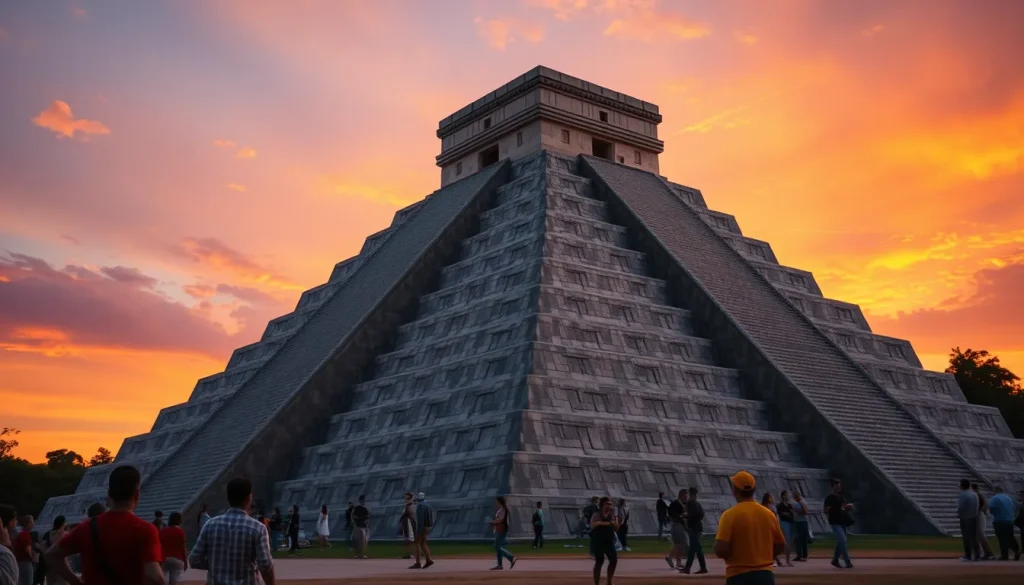
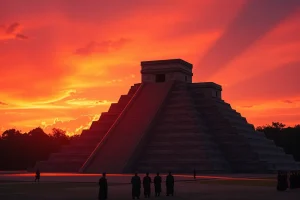
El Castillo, prominently situated at the center of the Chichén Itzá archaeological site in the Yucatán Peninsula, stands as one of the most recognizable symbols of the ancient Maya civilization. Formally designated by archaeologists as Structure 5B18, this Mesoamerican step pyramid was far more than a monumental tomb or a static relic. It functioned as a dynamic instrument of statecraft, religion, and timekeeping. Understanding what El Castillo was used for requires an interdisciplinary approach combining architectural analysis, archaeoastronomy, and excavation data. The structure served as a temple dedicated to the Feathered Serpent deity, Kukulcan, while simultaneously embodying the Maya calendar system through its physical dimensions. Furthermore, recent archaeological insights suggest the pyramid concealed earlier structures used for elite rituals and possibly royal interments, highlighting its evolving role from a private sacred space to a public calendrical monument.
Main Explanation
The primary function of El Castillo was religious and cosmological. As the Temple of Kukulcan, it was the focal point for ceremonies honoring the Feathered Serpent, a deity associated with wind, water, and agricultural fertility. The pyramid’s design is not merely aesthetic but deeply symbolic, encoding cosmological beliefs into stone. The structure’s four sides face the cardinal directions, representing the Maya conception of the universe. Each side features 91 steps, which, when summed across the four sides and added to the top platform, total 365. This number corresponds precisely to the haab’, or the solar year, indicating the building’s use as a massive stone calendar. This architectural choice suggests that the pyramid was used to ritualize the passage of time, anchoring the community’s agricultural and ceremonial cycles to the physical structure.
Beyond its calendrical function, El Castillo served as a stage for astronomical phenomena that reinforced the authority of the ruling elite. The most famous example occurs during the spring and fall equinoxes. As the sun sets, the interaction of light and shadow along the northwest staircase creates the illusion of a serpent undulating down the pyramid. This phenomenon, visible for approximately a week before and after each equinox, was likely interpreted by the ancient Maya as the manifestation of Kukulcan descending from the heavens. Such events would have been used to legitimize the power of the rulers, who claimed divine connection or lineage from the deity. The pyramid thus functioned as a tool of political propaganda, demonstrating the rulers’ ability to command cosmic forces and ensure the continuity of the natural order.
Internally, the structure housed sacred spaces for high-status rituals. Excavations have revealed an inner pyramid, often referred to as the Castillo-sub, which predates the visible outer structure. Within this older temple, archaeologists discovered a chacmool (a reclining figure used for offerings), a jaguar throne, and walls embedded with human femurs. These findings point to the use of the inner chamber for sacrificial rituals and possibly as a royal burial place. The final construction phase, dated to the tenth century, appears to have encapsulated this earlier sacred space, transforming the building into a more public monument while preserving its sanctity. Therefore, El Castillo was used both as a restricted sanctuary for elite rites and as a public spectacle for communal worship and observation.
Evidence & Sources
The understanding of El Castillo’s functions is derived from a combination of early explorations, modern archaeological excavations, and archaeoastronomical analysis. One of the most significant sources of evidence comes from the discovery of the inner substructure. According to archaeological records, the inner Castillo was found intact in the 1930s. This substructure contained varied offerings and a temple chamber that provided direct evidence of ritual activity. The presence of the chacmool and the jaguar throne within the inner chamber supports the interpretation of the site as a location for sacrificial rituals and elite power displays. The embedding of femurs in the walls is a particularly grim indicator of the violent or sacrificial nature of some ceremonies conducted within the sacred space.
Architectural measurements provide quantitative evidence for the calendrical function. Sources indicate that the pyramid stands approximately 24 meters (79 feet) high without the temple, and 30 meters (98 feet) with the temple structure included. The base measures 55.3 meters (181 feet). The precise count of steps—91 per side—is consistently documented across archaeological surveys. This numerical consistency reinforces the hypothesis that the 365-day solar year was a deliberate design constraint. The construction period is estimated between the 8th and 12th centuries CE, with some sources narrowing the final construction phase to the 10th century. This timeline aligns with the rise of the cult of the Feathered Serpent in the region, linking the building’s use to specific historical religious shifts.
Astronomical alignment studies further substantiate the building’s observational role. Research into the equinox shadow phenomenon suggests that the effect was intentional rather than a happy accident. The angle of the stairs and the positioning of the terraces were calculated to produce the serpent shadow effect specifically during the equinoxes. While it is impossible to read the minds of the Maya who built the structure around AD 1000, various signs suggest the effect was designed to manifest the god Kukulcan. Additionally, the pyramid’s orientation in relation to topographical features and potential cenotes (natural sinkholes) suggests a connection to the underworld, or Xibalba. Some theories propose the pyramid was placed over a cenote, enhancing its role as a axis mundi connecting the heavens, the earth, and the underworld.
Deep Dive Analysis
Module B: Building/Site Analysis
Location
El Castillo dominates the center of the Great Terrace at Chichén Itzá, located in the Tinúm Municipality of Yucatán, Mexico. Its central placement within the UNESCO World Heritage Site underscores its importance as the primary focal point of the city’s ceremonial core. The structure is positioned to maximize visibility from surrounding plazas, ensuring that astronomical events and public rituals could be witnessed by large gatherings.
Construction and History
Constructed between the 8th and 12th centuries CE, with significant activity in the 10th century, El Castillo was built using limestone. The visible structure is actually a shell built over an earlier pyramid, known as the Castillo-sub. This layering of construction is typical of Mesoamerican architecture, where new rulers would often build over existing temples to assert legitimacy while maintaining sacred continuity. The outer layer was likely completed between 1050 and 1300 CE, giving the building its current form and public calendrical role.
Architecture
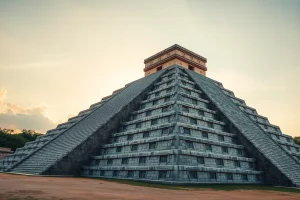
The building is a Mesoamerican step pyramid with four steep sides. Each side has a staircase leading to a temple at the summit. The temple itself is approximately 6 meters (20 feet) high. The slope of the edges is approximately 37°29’44”, while the sides have a steeper slope of 47º19’50”. The architecture incorporates specific acoustic properties; a clap of hands at the base can produce an echo resembling the chirp of the Quetzal bird, sacred to Kukulcan, though this is often considered a secondary feature compared to the visual astronomical alignments.
Astronomical Interpretation
The pyramid functions as a physical calendar. The 365 steps represent the solar year. The equinox shadow phenomenon creates the appearance of a snake undulating down the stairway, composed of seven triangular shadows cast by the stepped terraces. This event occurs twice each year at the spring and fall equinoxes. The alignment demonstrates sophisticated knowledge of solar cycles and geometric precision, used to mark critical agricultural and ritual times.
Archaeological Evidence
Excavations in the 1930s revealed the inner Castillo. Inside, archaeologists found a chacmool, a jaguar throne painted red with jade spots, and human femurs embedded in the walls. These artifacts suggest the inner chamber was a setting for sacrificial rituals. The presence of these items intact indicates that the inner temple was sealed carefully during the construction of the outer pyramid, preserving a snapshot of earlier religious practices.
Alternative Interpretations
While the calendrical and religious functions are widely accepted, some debate exists regarding the extent of its use as a royal burial place. Some scholars argue the inner chamber may have served as a tomb for a high priest or ruler, given the richness of the offerings. Others suggest the femurs indicate trophy-taking rather than formal burial. Additionally, the placement over a cenote remains a hypothesis supported by topographical analysis but not fully confirmed by direct excavation of the bedrock beneath the pyramid.
Scholar Consensus
The consensus among archaeologists and historians is that El Castillo served a dual role: a sacred temple for elite rituals and a public monument for calendrical observation. The integration of the Feathered Serpent cult into the architecture marks a shift in Chichén Itzá’s religious landscape during the Terminal Classic period. The structure is recognized as a masterpiece of engineering designed to embody Maya cosmology.
Visitor Misconception
A common misconception among modern visitors is that the pyramid was built solely as a tomb for a king, similar to Egyptian pyramids. While burial is possible, the evidence points more strongly toward its use as a temple and astronomical device. Another misconception is that climbing the pyramid is permitted; however, to preserve the structure and ensure safety, climbing has been prohibited since 2006. Additionally, some New Age interpretations attribute mystical energy properties to the site that are not supported by archaeological evidence, conflating modern spiritual beliefs with historical Maya practices.
FAQ
Why does El Castillo have 365 steps?
The pyramid has 91 steps on each of its four sides. When added together (91 x 4 = 364) and combined with the top platform as the final step, the total equals 365, representing the days in the solar year.
What is the shadow serpent phenomenon?
During the spring and fall equinoxes, the sun casts shadows on the pyramid's staircases that create the illusion of a snake undulating down the steps, symbolizing the descent of the god Kukulcan.
Is there a pyramid inside El Castillo?
Yes, archaeologists discovered an older substructure, known as the Castillo-sub, inside the current pyramid in the 1930s, which contained a chacmool and jaguar throne.
Can visitors climb El Castillo today?
No, climbing the pyramid has been prohibited since 2006 to preserve the ancient structure and ensure visitor safety, though it can be viewed from all sides.
Leave a Reply