
Short Answer
Introduction to Venus in Maya Cosmology
The study of Venus within the context of ancient Mesoamerican civilization represents one of the most sophisticated intersections of astronomy, mathematics, and ritual practice in the pre-Columbian world. For the Maya, Venus was not merely a celestial body but a potent deity whose cyclical movements dictated the timing of agriculture, warfare, and ceremonial life. Archaeological evidence, ranging from monumental hieroglyphic inscriptions to codical texts, attests to a deep familiarity with the regularities of the apparent motion of the Sun, the Moon, and bright planets, particularly Venus. This knowledge was not abstract; it was embedded in the very fabric of society, influencing the orientation of civic and ceremonial buildings and the scheduling of critical activities in the yearly cycle.
According to research by Ivan Šprajc, the observation of the sky had an important role among the Maya, Aztecs, and other prehispanic peoples of Mesoamerica. Their familiarity with these celestial regularities is attested in a large amount of astronomical data contained in codices and monumental hieroglyphic inscriptions, as well as in their sophisticated calendrical system. The integration of astronomical data into architecture allowed for the use of observational calendars that facilitated a proper scheduling of agricultural and the associated ritual activities. This article explores the multifaceted role of Venus in Maya astronomy, grounding its analysis in archaeological evidence, calendrical mechanics, and modern digital heritage perspectives.
Observational Methods and Architectural Alignments
The Maya achieved their astronomical precision through sustained observation and the strategic use of architecture. The study of architectural alignments has disclosed that civic and ceremonial buildings were largely oriented on astronomical grounds. These orientations were mostly to sunrises and sunsets on certain dates, but significant attention was also paid to the extreme northerly and southerly rising and setting points of Venus. These alignments served as physical calendars, allowing priests and astronomers to mark specific days in the Venus cycle without the need for complex calculations on every occasion.
Architectural Orientations
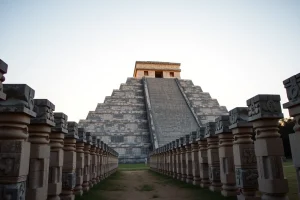
Structures such as the Caracol at Chichén Itzá are frequently cited in archaeoastronomical literature as potential Venus observatories. While some alignments are solar, others correspond to the extreme declinations of Venus. The placement of windows and sightlines within these structures suggests a deliberate intent to frame the appearance of the Morning Star or the Evening Star at critical junctures in its 584-day synodic cycle. These architectural features underscore the importance of visual confirmation in Maya astronomy.
Observational Calendars
The use of observational calendars facilitated a proper scheduling of agricultural and the associated ritual activities in the yearly cycle. By aligning buildings with specific astronomical events, the Maya could synchronize their ritual calendar with the celestial sphere. This synchronization was crucial for maintaining cosmic order, a central tenet of Maya cosmology. The physical landscape thus became a tool for timekeeping, embedding astronomical knowledge into the environment itself.
The Dresden Codex Venus Table
The most renowned documentary evidence for Maya Venus astronomy is found in the Dresden Codex, specifically on pages 46 through 50, often referred to as the Venus Table. This section of the codex contains a complex series of glyphs and numbers designed to track the appearances and disappearances of Venus over long periods. Recent scholarship has provided new readings of the Dresden Codex Page 24, the “Preface” to the Venus Table, demonstrating a much-improved overall coherence.
Structure of the Table
The Venus Table is structured to predict the heliacal rising of Venus as the Morning Star. It accounts for the synodic period of Venus, which averages 584 days. The Maya understood that five Venus cycles approximate eight solar years (5 x 584 = 2920 days; 8 x 365 = 2920 days). This commensuration allowed them to integrate the Venus cycle into the broader Haab’ (solar year) and Tzolk’in (sacred round) systems. The table includes correction mechanisms to adjust for the slight discrepancy between the actual synodic period (584.018 days) and the rounded 584 days used in the table.
Historical Correction
Gerardo Aldana’s research on the Dresden Codex Venus Table highlights 10th Century Mayan Astronomical Innovation. A new reading of the hieroglyphic text, mathematical intervals, and calendric data specifically identifies the Mayan Long Count dates of the Venus Table’s historical correction. The resulting Long Count placement of the manuscript’s Venus Table suggests that it was an innovative adjustment to maintain accuracy over centuries. This demonstrates that Maya astronomy was not static but evolved through empirical observation and mathematical refinement.
Calendrical Mechanics and Commensuration
The mathematical sophistication required to maintain the Venus Table over centuries is evident in the structures found in Mesoamerican divinatory books. Common approaches to commensuration and correction reveal a deep understanding of planetary periods. The Maya utilized a base-20 numerical system and the concept of zero to manage these large numbers and complex intervals.
Commensuration of Cycles
The core mechanical challenge was aligning the 584-day Venus cycle with the 365-day solar year and the 260-day sacred round. The least common multiple of these cycles creates a grand cycle known as the Calendar Round, but Venus required specific attention due to its irregularities. The Maya developed correction tables to subtract days at specific intervals to prevent the predicted dates from drifting away from the actual observed phenomena.
Correction Mechanisms
Calendar structures for Venus in Mesoamerican divinatory books show common approaches to commensuration and correction. These corrections were essential because the actual synodic period of Venus is approximately 584.018 days. Over time, the use of 584 days would result in a significant drift. The Dresden Codex includes specific intervals where days are subtracted to realign the table with observation. This level of precision indicates a tradition of record-keeping that spanned generations.
Mythological Manifestations: Morning and Evening Star
In Maya cosmology, Venus was not a single entity but manifested differently depending on its phase. Ethnographic and ethnohistoric sources link the morning star aspect of Venus with a series of bearded hunting deities. The evening star aspect often carried different connotations, sometimes associated with death or the underworld. This duality is central to understanding the ritual implications of Venus observations.
Deity Manifestations
Studies on Venus lore in the Postclassic Maya codices explore the mythology surrounding the appearances and disappearances of Venus from the sky. The role the morning and evening star aspects of Venus played in Maya divinatory and astronomical texts was distinct. The Morning Star was often viewed as a warrior figure, launching arrows of light, while the Evening Star was associated with descent and vulnerability. These manifestations were not merely poetic but informed the timing of rituals.
Divinatory Texts
The codices contain divinatory texts that associate specific Venus phases with auspicious or inauspicious outcomes. The appearance of Venus as the Morning Star was often considered a dangerous time, requiring specific rituals to protect the community and the ruler. The mythology surrounding these appearances provided a narrative framework for understanding the celestial mechanics observed by the astronomers.
Ritual Significance and Warfare
The appearance of Venus was closely tied to warfare and political legitimacy in the Maya region. Rulers often timed military campaigns to coincide with the heliacal rising of Venus as the Morning Star. This practice linked earthly conflict with celestial power, suggesting that victory was assured by cosmic alignment.
Warfare and Timing
Archaeological evidence suggests that major battles and conquests were scheduled according to the Venus cycle. The association of the Morning Star with hunting and warrior deities reinforced this connection. By engaging in warfare under the auspices of Venus, rulers demonstrated their ability to harness cosmic forces for the benefit of their polity.
Ritual Activities
Both accurate knowledge and other ritual activities were scheduled in the yearly cycle based on these observations. The scheduling of agricultural and the associated ritual activities was facilitated by the observational calendars. This ensured that rituals were performed at the correct time to maintain cosmic balance, ensuring rain, harvest, and protection from celestial threats.
Digital Heritage and Modern Analysis
Modern technology has revolutionized the study of Maya astronomy. Digital heritage perspectives, including LiDAR scans and 3D modeling, allow researchers to analyze architectural alignments with unprecedented precision. These tools help verify hypotheses about observational lines of sight that were previously difficult to assess on the ground.
LiDAR and Landscape
LiDAR technology has revealed extensive networks of causeways and structures that may have had astronomical functions. By digitally stripping away vegetation, researchers can identify alignments that were obscured for centuries. This digital approach complements traditional archaeoastronomy, providing a more comprehensive view of how the Maya interacted with their environment.
3D Modeling of Codices
Digital imaging and 3D modeling of codices like the Dresden Codex allow for the enhancement of faded glyphs. This technology aids in the decipherment of astronomical data that might be invisible to the naked eye. It ensures the preservation of these fragile documents while making their data accessible for new generations of researchers.
Comparative Perspectives in Mesoamerica
While the Maya are renowned for their Venus astronomy, they were not alone in Mesoamerica. The Aztecs and other prehispanic peoples also observed the sky with great attention. Comparative studies reveal shared knowledge systems and distinct regional variations in how Venus was interpreted and utilized.
Shared Knowledge Systems
The observation of the sky had an important role among the Maya, Aztecs, and other prehispanic peoples of Mesoamerica. Their familiarity with the regularities of the apparent motion of the Sun, the Moon and bright planets is attested in a large amount of astronomical data. This suggests a pan-Mesoamerican tradition of astronomy that was adapted to local cultural contexts.
Regional Variations
Different regions emphasized different aspects of the Venus cycle. While the Maya focused heavily on the heliacal rising for warfare, other cultures may have prioritized agricultural markers. Understanding these variations helps contextualize the Maya achievements within the broader scope of Mesoamerican intellectual history.
Legacy and Contemporary Understanding
The legacy of Maya Venus astronomy endures in both academic study and contemporary Maya communities. Modern research continues to refine our understanding of the Dresden Codex and architectural alignments. The integration of archaeological data with astronomical modeling ensures that interpretations remain grounded in scientific accuracy.
Scientific Accuracy
It is crucial to maintain strict scientific accuracy when discussing Maya astronomy. Avoiding pseudoscience, alien theories, or mystical exaggerations common in pop culture is essential for respecting the intellectual achievements of the Maya. The evidence points to human ingenuity and sustained observation rather than external intervention.
Continuing Research
Ongoing research into the Venus Table and architectural alignments continues to yield new insights. As digital tools improve and new excavations occur, our understanding of how the Maya integrated Venus into their worldview will deepen. This pillar of knowledge remains a testament to the sophistication of pre-Columbian science.
“A new reading of Dresden Codex Page 24, the ‘Preface’ to the Venus Table, is presented, demonstrating a much-improved overall coherence. This reading of hieroglyphic text, mathematical intervals, and calendric data specifically identifies the Mayan Long Count dates of the Venus Table’s historical correction.” — Gerardo Aldana, Journal of Astronomy in Culture (2016).
Summary of Key Features
- Synodic Period: The Maya tracked the 584-day cycle of Venus.
- Commensuration: Five Venus cycles were equated to eight solar years.
- Architectural Alignment: Buildings were oriented to Venus extremes.
- Divinatory Use: Venus phases dictated ritual and warfare timing.
- Correction Tables: Mathematical adjustments maintained long-term accuracy.
Venus Cycle Data Comparison
| Parameter | Maya Value | Modern Astronomical Value | Discrepancy |
|---|---|---|---|
| Synodic Period | 584 days | 584.018 days | 0.018 days |
| Five Cycles | 2920 days | 2920.09 days | 0.09 days |
| Eight Solar Years | 2920 days | 2921.94 days | ~1.94 days |
| Correction Interval | Varies | N/A | Adjusted in Codex |
FAQ
Why was Venus so important to the Maya?
Venus was associated with warfare, agriculture, and divine power. Its cycles dictated the timing of rituals and military campaigns, linking earthly events to cosmic order.
How accurate was the Maya Venus Table?
The Dresden Codex Venus Table was highly accurate, using correction mechanisms to account for the discrepancy between the 584-day cycle and the actual 584.018-day period.
Did the Maya use telescopes to observe Venus?
No, the Maya relied on naked-eye observation and architectural alignments to track Venus. Their precision came from sustained record-keeping over generations.


Leave a Reply