
Short Answer
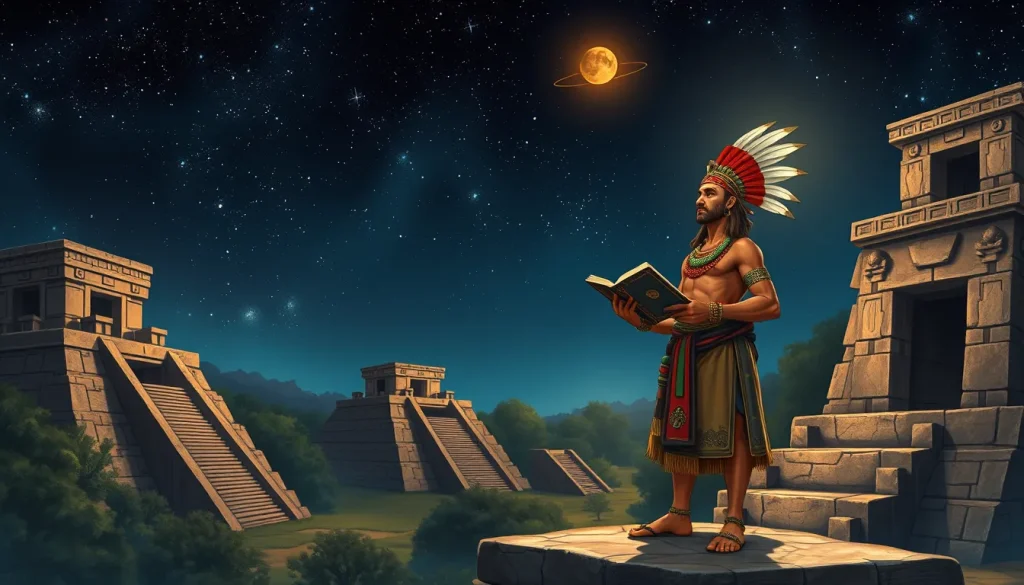
The question of who served as the astronomers in ancient Maya society is intrinsically linked to the structure of the Maya priesthood. Until significant epigraphic breakthroughs in the 1960s revealed that Maya stelae depicted kings rather than high priests, the priesthood and their preoccupations were a primary scholarly concern. Over the following decades, dynastic research came to dominate interest, and a concept of royal shamanism, chiefly propounded by scholars like Linda Schele and David Freidel, came to occupy the forefront instead. However, Classic Maya civilization, being highly ritualistic, would have been unthinkable without a developed priesthood. Like other Pre-Hispanic Mesoamerican priesthoods, the early Maya priesthood consisted of a hierarchy of professional priests serving as intermediaries between the population and the deities. These individuals were the custodians of astronomical knowledge, responsible for observing the sky to facilitate agricultural and ritual activities.
Main Explanation
The social role of the Maya astronomer was embedded within the religious hierarchy. Priests were usually male and could marry, distinguishing them from celibate clergy in other traditions. Their primary function was to maintain the cosmic order through ritual and observation. The priesthood as a whole was the keeper of knowledge concerning the deities and their cult, including calendrics, astrology, divination, and prophecy. In addition, they were experts in historiography and genealogy. This broad scope of knowledge indicates that astronomy was not an isolated science but integrated into the political and spiritual governance of the city-state. The basic skill required for this role was the art of reading and writing, as the complex hieroglyphic system was the medium through which astronomical data was recorded and transmitted.
Most of the current knowledge concerning these roles stems from the Yucatán in the Late Postclassic period, with additional data stemming from contemporaneous sources in the Classic Period. The existence of priests in Classic society has been questioned by some researchers, while others have seen the religious specialists and political leaders as identical entities. However, a thematic model of Classic Maya priesthood suggests a distinct class of religious specialists. The observation of the sky had an important role among the Maya, Aztecs, and other prehispanic peoples of Mesoamerica. Their familiarity with the regularities of the apparent motion of the Sun, the Moon, and bright planets is attested in a large amount of astronomical data contained in codices and monumental hieroglyphic inscriptions. This knowledge allowed for the use of observational calendars that facilitated a proper scheduling of agricultural and the associated ritual activities in the yearly cycle.
Evidence & Sources
Archaeological and textual evidence provides the foundation for understanding the Maya astronomer-priests. The study of architectural alignments has disclosed that civic and ceremonial buildings were largely oriented on astronomical grounds, mostly to sunrises and sunsets on certain dates. These structures served as the physical instruments for the priests, allowing them to track celestial cycles. The sophisticated calendrical system used by the Maya required precise observation, which was likely conducted by trained specialists within the priesthood. Epigraphic evidence further supports the existence of a literate class capable of recording these observations. A study employing a conjunctive, interdisciplinary approach to contemporary iconographic, epigraphic, and archaeological evidence sheds light on the role of religious specialists and religious practice in Maya society of the Classic Period (A.D. 250 – 900).
Furthermore, methodological insights from the history of science suggest that archaeoastronomical research should bear as much attention to the external context of early astronomies as it does to their internal content. Insights into the origins of science can be gained by paying greater attention to the practitioners of early astronomies—to the skywatchers themselves. This approach validates the study of the priesthood as a means to understand Maya astronomy. The data contained in codices and monumental hieroglyphic inscriptions confirms that specific individuals were tasked with interpreting celestial omens and maintaining the calendar. Without this developed priesthood, the highly ritualistic nature of Classic Maya civilization would have been unsustainable. The integration of astronomical data into architecture and text demonstrates a systemic approach to knowledge preservation managed by these specialists.
Deep Dive Analysis
Definition
The Maya astronomer is defined as a professional priest within the hierarchical religious structure of Maya society. These individuals were not merely observers but served as intermediaries between the population and the deities. Their role encompassed the stewardship of sacred knowledge, including the movements of celestial bodies and the maintenance of complex timekeeping systems. They were the intellectual elite responsible for ensuring that human activities aligned with cosmic cycles.
How it works
The function of the astronomer-priest operated through a combination of observation, calculation, and ritual intervention. They utilized architectural alignments to track solstices, equinoxes, and planetary movements, particularly Venus. This data was used to schedule agricultural activities and ritual ceremonies. By interpreting celestial events, they provided legitimacy to political actions and ensured cosmic balance. The priesthood acted as the bridge between the divine order observed in the sky and the terrestrial order maintained on earth.
Key components
The training and role of the priest involved several key components. First, literacy was essential, as the basic skill was the art of reading and writing hieroglyphs. Second, they mastered calendrics and astrology, required for divination and prophecy. Third, they were experts in historiography and genealogy, linking current events to ancestral precedents. Finally, they managed the cult of the deities, performing the rituals necessitated by astronomical observations. This combination of skills ensured that the priesthood remained the sole authority on cosmic matters.
Example
A primary example of this role is found in the Late Postclassic Yucatán. Most of our knowledge concerns this period and region, where the continuity of priestly traditions is well-documented. Here, priests were responsible for the codices that contain astronomical tables. These documents illustrate the practical application of their knowledge, such as predicting eclipses or the heliacal rising of Venus, which were critical for timing wars and ceremonies.
Historical evidence
Historical evidence for the astronomer-priest is found in monumental hieroglyphic inscriptions and codices. The large amount of astronomical data contained in these sources attests to their familiarity with the regularities of the apparent motion of the Sun, the Moon, and bright planets. Additionally, civic and ceremonial buildings were largely oriented on astronomical grounds. This architectural evidence suggests that the priests had the authority to dictate urban planning based on celestial orientations. The interdisciplinary approach to iconographic and archaeological evidence further confirms their central role in Classic Period society.
Common misconceptions
A common misconception is that Maya kings performed all astronomical functions themselves. Until the discovery that Maya stelae depicted kings instead of high priests, the Maya priesthood and their preoccupations had been a main scholarly concern. In the course of the 1960s and over the following decades, however, dynastic research came to dominate interest in the subject. A concept of royal shamanism came to occupy the forefront instead. While kings certainly had religious roles, the existence of a developed priesthood is supported by the complexity of the knowledge kept. Another misconception is that their astronomy was purely scientific; in reality, it was deeply embedded in ritual and cosmology, serving to sustain the religious and political order rather than abstract inquiry.
FAQ
Did Maya kings replace priests as astronomers?
While scholarly focus shifted to royal shamanism in the 1960s, evidence suggests a developed priesthood remained essential for maintaining calendrical and astronomical knowledge alongside kings.
What was the primary skill required for a Maya priest?
The basic skill was the art of reading and writing, as they were the keepers of knowledge concerning deities, calendrics, and historiography.
How do we know about Maya astronomical practices?
Knowledge comes from codices, monumental hieroglyphic inscriptions, and architectural alignments oriented on astronomical grounds like sunrises and sunsets.

Leave a Reply