
Short Answer
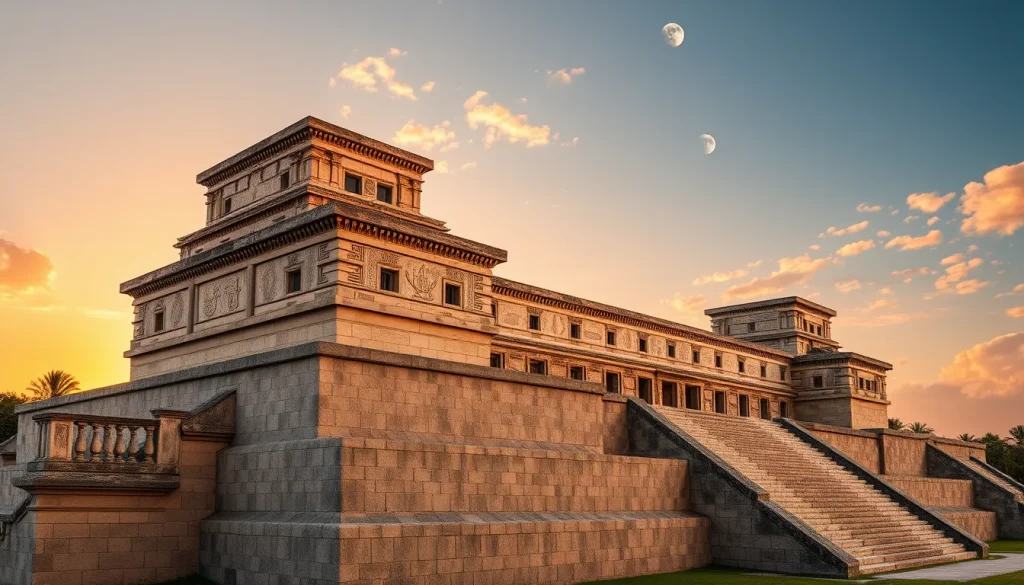
The Governor’s Palace at the ancient Maya city of Uxmal stands as one of the most sophisticated examples of pre-Columbian architecture in the Americas. Beyond its aesthetic grandeur, the structure serves as a monumental testament to Maya archaeoastronomy, specifically regarding the observation and reverence of the planet Venus. Built around AD 900 under the rule of Lord Chac, the palace is not merely a residential or administrative building but functions as a calibrated instrument aligned with celestial events. The building’s orientation deviates from the cardinal grid of the site, a deliberate choice made to track the extreme rising and setting points of Venus on the horizon. This alignment underscores the profound cosmological significance Venus held for the Maya, influencing warfare, kingship, and ritual calendars.
Main Explanation
The architectural orientation of the Governor’s Palace is distinctively off-kilter relative to other structures at Uxmal. While most buildings in the city adhere to cardinal compass directions, the Palace faces east-southeast. Archaeoastronomers have determined that this specific azimuth aligns with the extreme positions of Venus on the horizon. The planet Venus follows a complex cycle of approximately 584 days, alternating between appearing as the Morning Star and the Evening Star. During this cycle, Venus reaches northern and southern extremes in its rising and setting points. The Palace was constructed to face these extremes, allowing observers standing at the central doorway to track the planet’s movements with precision. This alignment was not accidental but was integral to the building’s design and purpose.
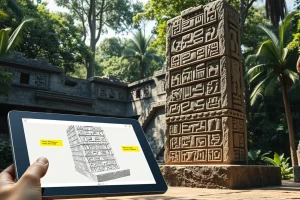
The facade of the Palace is covered with over 350 Venus glyphs, reinforcing the building’s association with the celestial body. These iconographic elements clearly indicate an association with the planet, serving as a visual declaration of the ruler’s connection to cosmic forces. The sculptural decoration includes motifs that scholars interpret as references to Venus cycles. Furthermore, the hieroglyphic inscription above the central doorway, known as the Throne Inscription, relates specifically to the concern with Venus and other celestial phenomena. Part of this inscription depicts zodiacal constellations, functioning as a map of the constellations at the base of the sky at the time of the Venus alignment. This integration of text, image, and architecture demonstrates a holistic approach to cosmology where the building itself becomes a record of astronomical knowledge.
Evidence & Sources
Archaeological and epigraphic evidence supports the theory of Venus alignment at the Governor’s Palace. Research by Harvey M. Bricker and Victoria R. Bricker has shown that the Throne Inscription from Uxmal is one of the major sources of information about the pre-Columbian Maya zodiac. Their analysis indicates that the uppermost row of the inscription acts as a sort of map of the constellations relevant to the Venus alignment. This textual evidence complements the architectural orientation, providing a dual layer of verification for the building’s astronomical function. The presence of zodiacal constellations in the inscription suggests that the Maya at Uxmal were tracking not just Venus, but its position relative to the fixed stars.

Additional evidence comes from the sheer volume of Venus symbols on the building’s exterior. Sources indicate that over 350 Venus glyphs adorn the facade, indicating the cultural importance of the planet to the Uxmal polity. The building’s dimensions also reflect careful planning; it is 328 feet long and set on an immense four-tiered platform which rises 50 feet above ground level. This elevated position would have provided an unobstructed view of the horizon, essential for accurate astronomical observation. Frank Lloyd Wright, the renowned architect, considered it the finest example of ancient American architecture, noting its architectural symmetry and grandeur. The combination of epigraphic data, iconographic density, and architectural positioning creates a robust case for the Palace serving as an astronomical observatory.
Deep Dive Analysis
Location and Context
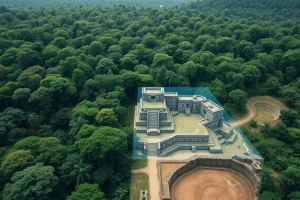
The Governor’s Palace is located at the Classic Maya city of Uxmal on Mexico’s Yucatan Peninsula. It rises above a number of major structures including a pyramid, a ball court, and courtyards. Its placement on a high platform distinguishes it from the surrounding architecture, emphasizing its importance within the urban landscape. The building was constructed around AD 900 by the Uxmal ruler Lord Chac, standing as the symbol of a pivotal moment in the history of Maya architecture. Its location was chosen to maximize visibility of the horizon, crucial for the astronomical observations conducted there.
Construction and History
The House of the Governor was built around AD 900. It is a tripartite building composed of three parts connected by soaring transverse vaults. The structure stands on the summit of an immense four-tiered platform that rises more than 50 feet above the ground level. This massive foundation required significant labor and engineering, reflecting the resources dedicated to its construction. The building’s longevity and preservation allow modern researchers to study its orientation and inscriptions in detail. The construction period coincides with the Late Classic to Terminal Classic period, a time of significant political and cultural development in the Puuc region.
Architecture and Design
The gigantic building is 328 feet long, making it one of the largest structures of its kind. The design wears an air of architectural symmetry and grandeur, with no rudeness or barbarity in the design or proportions. The facade is covered with Venus symbols, integrating astronomical data into the aesthetic design. The central doorway serves as the primary vantage point for observation. The transverse vaults connect the three parts of the building, creating a unified structure that dominates the skyline. The architectural precision required to align such a large structure with a celestial event demonstrates advanced surveying capabilities.
Astronomical Interpretation
The orientation of the Governor’s Palace can be related to the extremes of the planet Venus on the horizon. In general, Venus was tracked intensely by the Mayans and its celestial movements played key roles in devising their calendar cycles. The Palace faces the rising of Venus as morning star according to some interpretations, while others suggest it refers to the northerly extremes of the evening star. The face of the Palace of the Governor is covered with Venus symbols, further supporting the astronomical interpretation. Standing at the doorway of the Palace, one notices an alignment to the east-southeast, matching the extreme rising points of the planet.
Archaeological Evidence
Archaeological evidence includes the hieroglyphic inscription above the central doorway. This inscription is shown to relate specifically to the concern with Venus and other celestial phenomena. Part of the inscription depicts zodiacal constellations, providing a celestial map. Over 350 Venus glyphs on the Palace’s facade indicate the cultural importance of the planet. The physical orientation of the building off-kilter with the rest of the buildings serves as structural evidence of its specialized function. The platform height of 50 feet ensures a clear line of sight over the surrounding jungle and structures.
Alternative Interpretations
Two opposing interpretations have been forwarded regarding its orientation. One interpretation links it with the southernmost rising point of the morning star. The other suggests it refers to the northerly extremes of the evening star. While the Governor’s Palace at Uxmal likely aligns with Venus’s northerly extremes as the evening star according to some key takeaways, the debate highlights the complexity of archaeoastronomical analysis. Some sources state the Palace faces Venus as morning star, showing that consensus is still being refined. These differing views stem from the difficulty in reconstructing ancient horizon profiles and the precise definition of extreme positions.
Scholar Consensus
Scholars agree that the Palace served in part as an astronomical observatory at least for the planet Venus. The Throne Inscription from Uxmal may now be recognized as one of the major sources of information about the pre-Columbian Maya zodiac. There is consensus that the building’s orientation is intentional and not random. The association with Venus is supported by both sculptural decoration and orientation. The integration of the zodiac in the inscription is a significant finding that expands understanding of Maya astronomy. The building is widely recognized as a major source of information about pre-Columbian astronomy.
Visitor Misconception
A common misconception is that the Palace was solely a residential structure for a governor, a misnomer given by early researchers. In reality, it served a ceremonial and observational function. Visitors often overlook the astronomical significance of the off-kilter orientation, assuming it is due to terrain constraints. Another misconception is that the Venus alignment was purely symbolic rather than functional. The precision of the alignment suggests it was used for actual tracking of celestial events. Understanding the building as an observatory changes the perception of its role in Maya society from administrative to cosmological.
FAQ
Why is the Governor's Palace oriented off-kilter?
The Palace is built off-kilter to align with the extreme rising and setting points of the planet Venus on the horizon, serving as an astronomical observatory.
Who built the Governor's Palace at Uxmal?
It was built around AD 900 by the Uxmal ruler Lord Chac, representing a pivotal moment in Maya architecture.
What evidence supports the Venus alignment theory?
Evidence includes the building's orientation, over 350 Venus glyphs on the facade, and the Throne Inscription depicting zodiacal constellations related to Venus.

Leave a Reply