
Short Answer
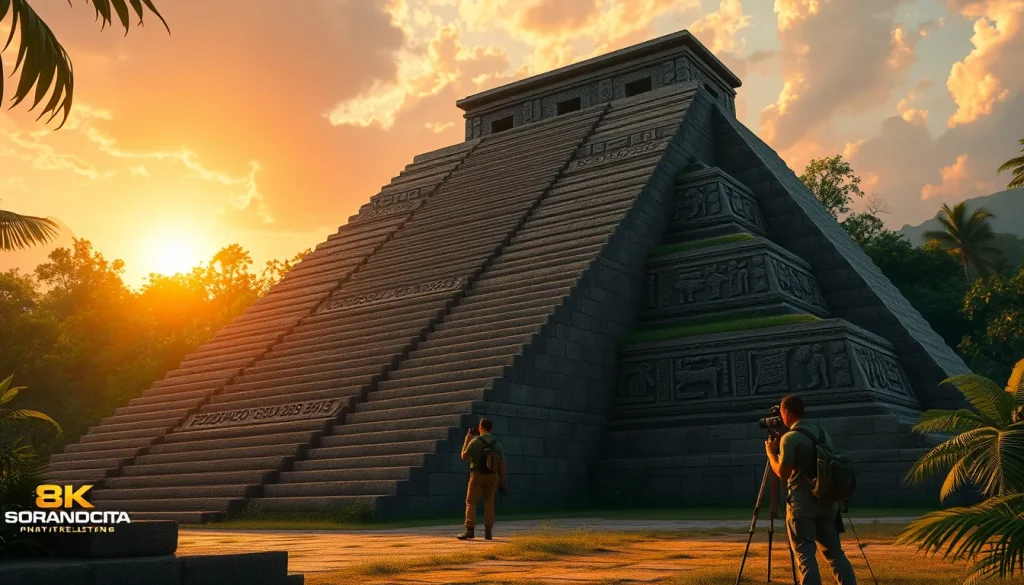
Maya inscriptions serve as one of the most sophisticated historical archives of the ancient Americas, documenting complex dynastic histories that span centuries. Far from being merely ritualistic or astronomical records, these hieroglyphic texts function as political chronicles, detailing the accession, reign, and death of rulers within established lineages. Decipherments over recent decades have transformed our understanding of Maya civilization from a peaceful society of stargazers to a network of competitive kingdoms governed by divine kingship and strict hereditary succession. The epigraphic record reveals numbered-successor titles, founding ancestors identified archaeologically, and hierarchical political organizations that defined the Classic Period.
Main Explanation
The dynastic histories revealed in Maya inscriptions are structured around the concept of lineage legitimacy. Rulers did not simply claim power; they inscribed their position within a numerical sequence of successors tracing back to a founding ancestor. Work on the inscriptions of Copan has shown that these “counts of successors” began with a single founding ancestor, who has been identified archaeologically. This practice was not isolated to Copan; rulers of other kingdoms calculated their legitimacy similarly, creating a pan-Maya standard for political authority. The inscriptions typically record the Long Count date of accession, the ruler’s name, their title (often including the emblem glyph of their city), and significant events such as wars, marriages, and ritual performances.
Political organization during the Classic Period was hierarchical, as evidenced by epigraphic records in the Southern Maya Mountains region of Belize and beyond. These texts illustrate macro-political structures where dominant kingdoms exerted influence over subordinate sites. For instance, the hieroglyphic stair dedicated in A.D. 642 by K’an II, the great king of Caracol, provides an account of the kings of Kanu’l. Constituent panels of this stair have been found at Caracol, Ucanal, Naranjo, and Xunantunich, archaeological sites spread between Guatemala and Belize. This distribution suggests a political network where historical narratives were disseminated across allied or subordinate territories to reinforce the dominance of the Caracol dynasty.
The Kalakmul (Kaan) dynasty offers another robust example of dynastic recording. Inscriptions list rulers such as Yuknoom Ch’een I, Sky Witness, and Yuknoom the Great, with specific accession and death dates recorded in the hieroglyphic corpus. Yuknoom the Great, for example, is recorded with a birth date of 11 September 600 and a reign spanning significant portions of the 7th century. These records allow archaeologists to correlate textual data with archaeological strata, providing a chronological framework that anchors material culture to specific historical actors. The integration of these texts reveals that Maya history was consciously constructed and preserved on stone monuments to ensure the permanence of dynastic memory.

Evidence & Sources
The primary evidence for these dynastic histories comes from stone monuments, including stelae, altars, and hieroglyphic stairways. The decipherment of numbered-successor titles, presented by scholars such as Peter Mathews and Bertold Riese, led to the identification of individual rulers according to their numerical position in a historical succession of kings. This epigraphic breakthrough allows researchers to reconstruct kinglists even when physical monuments are damaged. The hieroglyphic stair at Caracol is a paramount example, where panels recorded the lineage of the Kanu’l kings. The discovery of Panels 3 and 4 at various sites underscores the effort made to preserve and broadcast this dynastic history across the landscape.
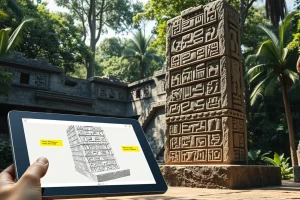
Archaeological evidence supports the textual claims. At Copan, the founding ancestor identified in the inscriptions has been correlated with archaeological findings, bridging the gap between mythohistory and material reality. Furthermore, dissertations on Classic Maya political organization provide epigraphic evidence of hierarchical organization, confirming that inscriptions were not merely local records but part of a broader political discourse. Digital heritage initiatives now play a crucial role in preserving these inscriptions. High-resolution 3D modeling and digital epigraphy allow researchers to analyze weathered glyphs that are invisible to the naked eye, ensuring that the dynastic records survive even as the stone monuments erode.
The FAMSI records on Maya Royal Dynasties provide compiled data on rulers such as those from Calakmul, including glyphic spellings and approximate reign dates. For instance, the ruler known as Scroll Serpent is recorded with a reign from A.D. 579 to 611, with accession noted on 2 September 579. Such precision demonstrates the Maya commitment to chronological accuracy. These sources collectively form a corpus of evidence that validates the historical nature of Maya inscriptions. They are not abstract cosmological diagrams but concrete records of human political activity, verified through cross-referencing sites and correlating textual dates with radiocarbon dating of associated organic materials.
Deep Dive Analysis
Definition: In the context of Maya epigraphy, dynastic history refers to the recorded lineage of rulers within a specific polity, documented through hieroglyphic inscriptions on monuments. It encompasses the sequence of kings, their relationships, and the legitimizing narratives that connected them to founding ancestors and divine forces.
How it works: Dynastic histories function through the use of successor titles. Rulers are identified not just by name but by their numerical position in a line (e.g., “10th successor”). This system ensured that every king could trace their authority back to the founder of the lineage. The inscriptions typically follow a standard formula: date of accession, name of the ruler, title of the ruler, and often the name of the predecessor or parent. This created an unbroken chain of legitimacy that was publicly displayed on stelae and stairways.
Key components: The essential elements of these records include the Emblem Glyph (identifying the kingdom), the Long Count date (providing absolute chronology), and the Royal Name (often incorporating divine attributes). For example, the Kaan dynasty records include names like “Yuknoom Ch’een” and titles like “Holy Lord of Calakmul.” Additionally, events such as “star wars” or ritual bindings are recorded to highlight the ruler’s prowess and divine favor.
Example: The dynasty of Calakmul provides a clear example. The records list Yuknoom Ch’een I (ca. A.D. 520-546), followed by Sky Witness (ca. A.D. 561-572), and later Yuknoom the Great (A.D. 636-686). Each ruler’s accession is marked with a specific Calendar Round date, such as Yuknoom the Great’s birth on 11 September 600. These records allow historians to map the rise and fall of this superpower over two centuries.
Historical evidence: The hieroglyphic stair of K’an II of Caracol, dedicated in A.D. 642, serves as physical evidence of these histories. Panels found at Caracol, Ucanal, Naranjo, and Xunantunich confirm that this history was distributed across a wide region. Similarly, Copan’s inscriptions identify a founding ancestor archaeologically, proving that the textual lineage had a basis in historical burial practices and monument dedication.
Common misconceptions: A common misconception is that Maya dynastic records are purely mythological. While they incorporate cosmological elements, such as linking rulers to gods, the core data—dates, names, and succession orders—is historical. Another misconception is that each city-state was entirely independent; epigraphic evidence reveals hierarchical organizations where sites like Caracol influenced others like Ucanal. Finally, some believe the inscriptions are static; however, digital heritage technologies show that many texts were revised or recarved to update political narratives, reflecting the dynamic nature of Maya history.
FAQ
How do Maya inscriptions prove historical dynasties?
Inscriptions record numbered-successor titles and accession dates that correlate with archaeological findings, such as the founding ancestor at Copan.
What is the Hieroglyphic Stairway at Caracol?
A monument dedicated in A.D. 642 by K'an II that records the kings of Kanu'l, with panels found across multiple sites like Ucanal and Naranjo.
Are Maya kinglists purely mythological?
No, while they include divine associations, the dates and succession orders are historical records verified by epigraphic and archaeological evidence.
How does digital heritage help study these inscriptions?
Digital epigraphy and 3D modeling allow researchers to read weathered glyphs and preserve the records against further erosion.


Leave a Reply