
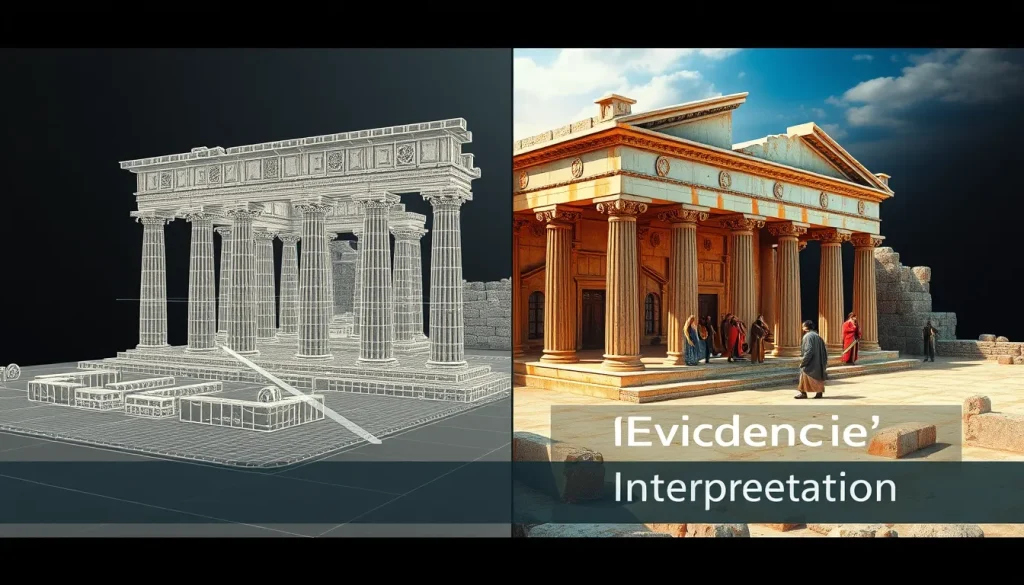
Short Answer
Archaeological reconstruction serves as a pivotal bridge between fragmented material data and public understanding of the past. From rudimental sketches in notebooks to immersive three-dimensional worlds experienced through virtual reality, the spectrum of quality, media, and reliability in these visualizations is broad. While reconstructions are a popular way of communicating history to broader audiences in museums, magazines, and documentaries, they carry an inherent risk. In most cases, viewers are not able to see the variety of uncertainty in the visualization itself and are misled into believing exactly what the past looked like. The effect of an elaborated reconstruction is often preferred over the truthfulness of the underlying sources, creating a tension between evidence and imagination that defines modern archaeological practice.
Main Explanation
The core challenge of archaeological reconstruction lies in managing the spectrum of reliability. A reconstruction is never a photograph of the past; it is an interpretation based on available data, which is often incomplete. As noted in contemporary research, the visualisation itself often hides the variety of quality and reliability inherent in the source material. When an artist or archaeologist creates a depiction of a ancient structure or burial, they must make countless decisions about what to portray and what to omit. These selection processes highlight the contextual nature of the knowledge claims embedded in the image.
Historically, reconstructions ranged from simple line drawings to painted dioramas. Today, digital technologies allow for photorealistic renders that can be indistinguishable from reality to the untrained eye. This technological leap has exacerbated the issue of perceived certainty. An elaborated 3D model carries an air of scientific authority that a sketch does not, even if both are based on the same fragmentary evidence. Consequently, guidelines and ethical frameworks have been developed to ensure that the level of conjecture is transparent. The goal is to shift the perception of reconstructions from definitive depictions of archaeological fact to tools for archaeologists and the public to think with. This shift requires a conscious effort to prioritize transparency over aesthetic appeal, ensuring that the audience understands where evidence ends and imagination begins.
Evidence & Sources
The foundation of any credible reconstruction is the rigorous analysis of archaeological, textual, and comparative evidence. In practice, however, levels of uncertainty and conjecture can easily become less than obvious in interpretations, perhaps especially visual ones. Researchers interrogate multiple textual and visual accounts to demonstrate how selection processes influence the final output. For instance, in mortuary reconstructions, the decision to include specific grave goods or body positions relies on specific finds, but the condition of those items or the presence of organic materials often requires inference.
Archaeological knowledge production emphasizes the contingent nature of understandings of the past. Circulation of reconstructions shorn of textual nuance leads to misperceptions among the public and even within the academic community. To combat this, sources of evidence must be clearly categorized. Direct evidence includes excavated materials, architectural footprints, and contemporary inscriptions. Indirect evidence involves ethnographic analogy, comparative architecture from similar cultures, and environmental data. The integration of these sources requires interdisciplinary collaboration. Artists with practical experience in materials and working environments, such as those with backgrounds in fine arts or craftsmanship, contribute significantly to authenticity. Their understanding of how materials interact with the environment informs design work, ensuring that reconstructed structures behave physically as they would have in antiquity. This practical experience informs and gives a greater authenticity to design work, grounding the imagination in physical reality.
Deep Dive Analysis
Technology Description
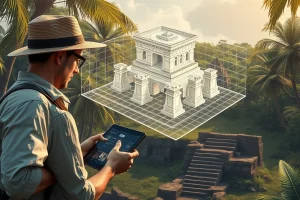
Modern archaeological reconstruction heavily relies on digital archaeology technologies, specifically 3D surveying and modeling software. These tools allow for the creation of virtual reality applications and augmented reality experiences that place users within the reconstructed environment. The technology encompasses laser scanning, photogrammetry, and geometric modeling, enabling the precise digitization of existing ruins and the hypothetical addition of missing elements.
How It Works
The process involves integrating disparate data sets into a unified spatial model. Archaeologists provide the spatial data and constraints, while digital specialists build the geometry. The scientific methodology in hypothetical reconstruction requires that every added element be tagged with a level of certainty. This transforms the 3D model from a mere image into a database of information where each polygon can be traced back to a source of evidence or a specific hypothesis.
Field Workflow
The workflow begins with fieldwork, including total station surveying and drone photography to capture the current state of a site. This data is processed into a point cloud or mesh. Subsequently, researchers overlay historical data and hypotheses onto this base model. This stage involves continuous feedback between field archaeologists and digital modelers to ensure that the reconstruction remains grounded in the physical evidence recovered during excavation.
Output and Data
The final output varies from static images for publications to interactive applications for museums. The data structure often includes metadata describing the reliability of each component. This allows users to toggle between different states of certainty, viewing only what is known versus what is hypothesized. The three-dimensional model is increasingly treated as a ‘scientific fact’ in terms of its methodological rigor, provided the underlying data is transparent.
Example
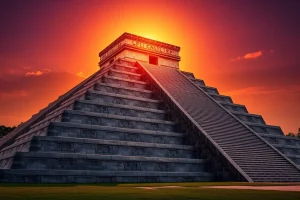
A prime example involves the reconstruction of complex architectural sites or burial contexts. In Viking-Age burial studies, multiple visual accounts are analyzed to show how selection processes highlight knowledge claims. Similarly, in Maya archaeology, digital models of temples allow researchers to test astronomical alignments without physically altering the site. These models serve as testing grounds for hypotheses regarding light and shadow during solstices.
Strengths
The primary strength of digital reconstruction is communication. It allows complex spatial relationships and temporal changes to be understood quickly by non-specialists. Immersive worlds engage audiences in ways that text cannot, fostering a deeper emotional connection to heritage. Furthermore, it preserves the state of knowledge at a specific point in time, allowing future researchers to see exactly what was hypothesized and why.
Limitations
The major limitation is the potential for misleading certainty. The effect of an elaborated reconstruction is often preferred over the truthfulness of the underlying sources. Viewers may accept the visualization as absolute truth rather than a hypothesis. Additionally, the cost and technical expertise required can limit access for smaller projects, potentially skewing the digital record toward well-funded sites.
Accuracy
Accuracy is maintained through the implementation of a Scientific Reference Model. This methodological approach ensures that hypothetical 3D reconstruction follows strict guidelines regarding data provenance. Accuracy is not just about visual fidelity but about epistemological honesty. Models must accurately reflect the limits of the data, distinguishing clearly between measured points and interpolated surfaces.
Cultural Heritage Considerations
Transparency in the creation of these images is a critical ethical requirement. Reconstructions offer tools for archaeologists and the public to think with, rather than definitive depictions. Cultural heritage considerations also involve respecting descendant communities. Visualizing sacred spaces or burials requires sensitivity to modern beliefs and the potential for misrepresentation of ancestral histories. Digital heritage projects must balance the desire for visualization with the responsibility to protect the integrity of the past.
FAQ
Are archaeological reconstructions considered factual evidence?
No, reconstructions are interpretations based on evidence. They should be viewed as tools to think with rather than definitive depictions of archaeological fact, as uncertainty is often less obvious in visual forms.
Why are 3D models preferred in modern archaeology?
3D models allow for immersive communication and can serve as scientific reference models if methodology is transparent. They help audiences understand spatial relationships that sketches cannot convey.
How is uncertainty communicated in visual reconstructions?
Uncertainty is communicated through transparency in creation, metadata tagging of model elements, and distinguishing between measured data and hypothesized structures in the final output.
Leave a Reply