
Short Answer
Introduction to Chichén Itzá and Maya Urbanism
Chichén Itzá stands as one of the most significant archaeological sites in the Maya Lowlands, representing a zenith of Mesoamerican urban planning, architectural innovation, and astronomical knowledge. Located in the northern Yucatán Peninsula, the site flourished during the Terminal Classic and Early Postclassic periods. The urban layout of Chichén Itzá is not merely a collection of structures but a deliberate manifestation of cosmological principles, where architecture serves as a terrestrial mirror of celestial movements. Recent systematic studies of architectural orientations in the Maya Lowlands have revealed widespread and enduring alignment patterns, which can only be explained with the use of astronomical references at the horizon. These findings suggest that the important civic and ceremonial buildings were oriented predominantly to sunrises and sunsets on certain dates separated by calendrically significant intervals.
The integration of astronomy into architecture at Chichén Itzá reflects a society where timekeeping and ritual were inextricably linked. The builders utilized easily manageable observational schemes intended to regulate agricultural cycles, ceremonial events, and political legitimacy. This article examines the archaeological evidence supporting claims about the site’s astronomical functions, integrating digital heritage perspectives to understand how modern technology is reshaping our interpretation of ancient Maya science. By analyzing structures such as the Kukulcán Pyramid and the Caracol Observatory, we gain insight into a worldview where the boundary between the built environment and the sky was permeable and symbolic.
The Kukulcán Pyramid and Solar Phenomena
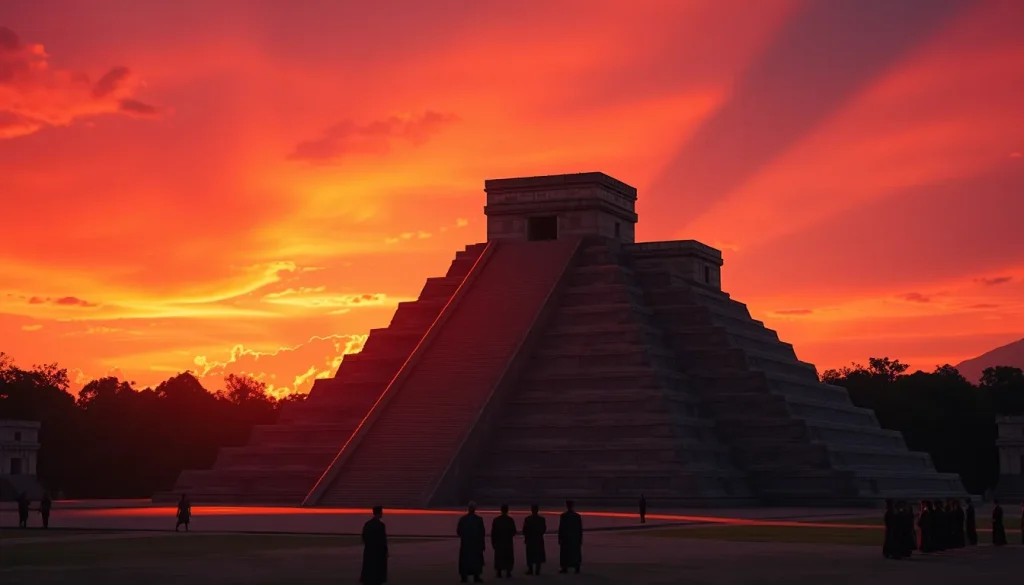
The Pyramid of Kukulcán, often referred to as El Castillo, is the most iconic structure at Chichén Itzá and serves as a primary example of archaeoastronomical engineering. The pyramid is renowned for the sunlight effect that occurs during the equinoxes. When the sunlight bathes the Kukulcán Pyramid in the Mayan city of Chichén-Itzá during the equinox sunset, it casts seven triangles of light and shadow that creep downwards along its northeast stairway. This visual phenomenon creates the illusion of a serpent descending the staircase, associated with the deity Kukulcán, the Feathered Serpent.
Geometry and Construction Intent
According to the Popol Vuh, the effect can be interpreted as the myth of the gods of the Heart of Sky coming to the Sovereign Plumed Serpent. Unfortunately, neither the event nor the kind of geometry used to build the pyramid is reported in the extant Mayan codices. However, architectural analysis provides concrete data. There are two reliable facts: first, a line across the pyramid’s base coincides with the orientation of the summer-winter solstice; second, an earlier, smaller pyramid is concealed beneath the current one. Hence the major question here is whether the light and shadow effect was intended or occurs accidentally. Perspective as a surveying tool likely played a role in its construction.
The precision required to achieve the equinox effect suggests a high level of mathematical and astronomical sophistication. The nine bodies of the pyramid represent the nine levels of the Maya underworld, while the 365 steps correspond to the solar year. This structural numerology reinforces the idea that the building was designed to function as a calendar in stone. The alignment with solstice dates further indicates that the builders were tracking the extremes of the solar cycle, which were critical for agricultural planning in the Yucatán.
The Caracol Structure as an Astronomical Observatory
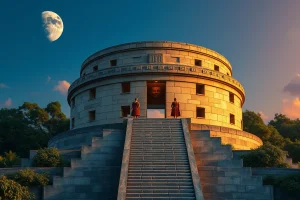
The Caracol, a unique round tower structure at Chichén Itzá, has been the subject of intense archaeological scrutiny regarding its function as an astronomical observatory. The study of the possible astronomical orientation of man-made structures has received considerable attention in the past decade, particularly with regard to the megalithic sites of Great Britain. But few systematic studies involving careful measurement have been made in Mexico, where pre-Conquest documents give us reason to believe that positional astronomy may have been widely practiced. Researchers have initiated an interdisciplinary approach in order to test certain works of ancient Mesoamerican architecture for astronomical orientation.
Windows and Celestial Tracking
The subject of investigation is the Caracol of Chichen Itza, Yucatan, Mexico, the appearance of which has elicited some strong feelings regarding its aesthetic and functional design. The windows and shafts within the Caracol tower are aligned to specific celestial events, including the extremes of Venus’s orbit. Venus was of paramount importance in Maya cosmology, associated with warfare and the deity Kukulkan. The alignment of the Caracol’s diagonal sightlines corresponds to the northernmost and southernmost setting points of Venus. This suggests that the structure was used to track the synodic period of the planet, allowing priests to predict auspicious times for battle and ritual.
Furthermore, the base of the Caracol is oriented to the sunset on the summer solstice. This dual function—tracking both solar and planetary cycles—demonstrates the complex role of the structure within the site’s ceremonial landscape. The Caracol represents a specialized tool for elite astronomers, distinct from the more public calendrical functions of the Kukulcán Pyramid. Its elevated position provided a clear view of the horizon, essential for accurate observations of celestial bodies rising and setting over the flat Yucatán landscape.
Systematic Architectural Orientations in the Maya Lowlands
Recent scholarship has moved beyond analyzing individual structures to understanding broader patterns across the Maya region. A recently accomplished systematic study of architectural orientations in the Maya Lowlands has revealed the existence of widespread and enduring alignment patterns, which can only be explained with the use of astronomical references at the horizon. The analyses of a large data sample have led us to conclude that the important civic and ceremonial buildings were oriented predominantly to sunrises and sunsets on certain dates separated by calendrically significant intervals.
Horizon Astronomy and Urban Planning
These findings suggest the use of easily manageable observational schemes intended to facilitate the regulation of time. At Chichén Itzá, this is evident in the layout of the Great North Platform. The orientations of the Temple of the Warriors and the Group of the Thousand Columns align with specific solar dates that mark the beginning and end of the agricultural cycle. This systematic approach indicates that urban planning was not arbitrary but followed a master plan based on celestial mechanics. The consistency of these orientations across different buildings implies a centralized authority capable of enforcing astronomical standards in construction.
The use of horizon astronomy allowed the Maya to create a calendar that was both accurate and culturally meaningful. By aligning buildings with the rising sun on specific dates, architects created permanent markers of time that could be observed annually by the population. This reinforced the power of the ruling elite, who claimed the ability to interpret and control these celestial cycles. The architectural orientations thus served a dual purpose: practical timekeeping and political legitimization.
Calendrical Intervals and Ceremonial Alignments
The architectural alignments at Chichén Itzá are deeply connected to the Maya calendar systems. The dates marked by the building orientations are often separated by multiples of 13 and 20 days, the foundational numbers of the Maya vigesimal system. These intervals correspond to significant periods in the Tzolk’in (260-day sacred calendar) and the Haab’ (365-day solar calendar). The intersection of these cycles creates the Calendar Round, a period of 52 years that was celebrated with great ceremony.
Significance of Specific Dates
Buildings oriented to sunrises and sunsets on certain dates separated by calendrically significant intervals suggest that the Maya were tracking more than just the solstices and equinoxes. They were likely observing dates that held mythological importance, such as the beginning of the creation era or the birthdays of deities. For example, an orientation might mark a date 40 days before the summer solstice, a period associated with the planting of maize. Another might mark a date 40 days after the winter solstice, associated with the first rains.
These calendrical intervals were not merely abstract numbers but were embedded in the physical landscape. When a priest stood at the base of a temple on a specific day, the sun would rise directly over the axis of the building, validating the calendar and the ritual being performed. This integration of time and space is a hallmark of Maya cosmology. The architecture acted as a machine for living in time, ensuring that human activities remained synchronized with the rhythms of the cosmos.
Cosmological Symbolism Embedded in Architecture
Beyond practical astronomy, the architecture of Chichén Itzá is laden with cosmological symbolism. The Maya viewed the universe as a layered structure, with the underworld below, the earth in the middle, and the sky above. Buildings often replicated this cosmic structure. The Kukulcán Pyramid, with its nine tiers, represents the nine levels of the underworld (Xibalba). The temple on top represents the surface of the earth and the entrance to the sky.
The Axis Mundi and Sacred Space
The central plaza of Chichén Itzá functions as an axis mundi, a center point where the celestial, terrestrial, and underworld realms intersect. The Sacred Cenote, a natural sinkhole located north of the pyramid, was viewed as a portal to the underworld. Offerings thrown into the cenote were believed to reach the gods directly. The alignment of the sacbeob (white roads) connecting the cenote to the pyramid reinforces this connection, creating a ritual pathway for processions.
Symbolism is also evident in the decorative elements. The feathered serpent motifs on the Kukulcán Pyramid link the structure to the sky (birds) and the earth (snakes). The jaguar thrones inside the temple represent power and the night sun. Every element of the architecture was designed to convey a specific cosmological message. This symbolism was not static; it was activated by light and shadow during specific astronomical events, bringing the stone to life in the eyes of the observers.
Digital Heritage and Modern Archaeological Methods
In the 21st century, the study of Chichén Itzá has been revolutionized by digital heritage technologies. LiDAR (Light Detection and Ranging) scans have allowed archaeologists to map the site in unprecedented detail, revealing structures hidden beneath the vegetation. 3D modeling enables researchers to simulate astronomical alignments without physically disturbing the site. These tools provide a non-invasive way to test hypotheses about architectural orientations.
Virtual Reconstruction and Analysis
Digital reconstructions allow us to visualize how the site looked in antiquity, including the original stucco colors that would have reflected sunlight differently than the current stone surfaces. Virtual reality experiences can simulate the equinox light show on the Kukulcán Pyramid, helping researchers understand the viewer’s perspective from different locations in the plaza. These digital methods complement traditional archaeological excavation, providing a holistic view of the site’s development.
Furthermore, digital archives ensure the preservation of data for future generations. As the site faces threats from climate change and tourism, digital records serve as a backup of the architectural information. Researchers can use these models to analyze wear and tear, plan conservation efforts, and study the acoustic properties of the structures. The integration of digital heritage ensures that the legacy of Chichén Itzá is preserved not just in stone, but in data.
Intentionality versus Accident in Archaeoastronomy
A critical debate in the field of archaeoastronomy concerns the intentionality of architectural alignments. Hence the major question here is whether the light and shadow effect was intended or occurs accidentally. Skeptics argue that with enough structures, some will inevitably align with celestial events by chance. However, the systematic nature of the orientations at Chichén Itzá argues against accident. The repetition of specific alignments across multiple buildings suggests a deliberate design protocol.
Evaluating Statistical Significance
Researchers use statistical methods to determine the likelihood of alignments occurring by chance. When a large data sample reveals consistent patterns, as noted in systematic studies of the Maya Lowlands, the probability of accident diminishes. The combination of astronomical alignment with calendrical significance strengthens the case for intentionality. For instance, an alignment that marks both the solstice and a significant calendar date is unlikely to be coincidental.
Moreover, the presence of underlying structures, such as the earlier pyramid beneath the Kukulcán, suggests a long-term tradition of astronomical construction. If the first iteration of the building was aligned, and the second iteration maintained that alignment, it indicates a conscious effort to preserve the astronomical function. This continuity across generations of builders supports the hypothesis that astronomy was a core component of Maya architectural ideology.
Preservation Challenges and Future Research Directions
Chichén Itzá faces significant preservation challenges due to its status as a major tourist destination. The physical wear caused by millions of visitors threatens the integrity of the structures. Climbing the Kukulcán Pyramid is now prohibited to protect the steps, but the sheer volume of foot traffic in the plaza causes erosion. Conservation efforts must balance access with preservation, ensuring that the site remains intact for future study.
Future Archaeological Priorities
Future research should focus on expanding the systematic study of orientations to include smaller residential structures, not just civic buildings. This will help determine if astronomical knowledge was confined to the elite or shared more broadly. Additionally, further interdisciplinary collaboration between archaeologists, astronomers, and computer scientists is needed to refine digital models. As technology advances, our ability to analyze the site will improve, potentially revealing new alignments or functions.
Protection of the surrounding landscape is also crucial. Light pollution from nearby developments can interfere with astronomical observations, even if they are now primarily symbolic. Maintaining the dark sky around Chichén Itzá allows modern visitors to appreciate the same celestial view that the Maya did. Ultimately, the preservation of Chichén Itzá is not just about saving stones; it is about safeguarding a unique human achievement in the understanding of time and space.
| Structure | Primary Alignment | Astronomical Event | Cosmological Significance |
|---|---|---|---|
| Kukulcán Pyramid | Northeast Stairway | Equinox Sunset | Descent of Feathered Serpent |
| Kukulcán Pyramid | Base Line | Summer-Winter Solstice | Solar Cycle Extremes |
| The Caracol | Diagonal Sightlines | Venus Extremes | Warfare and Deity Associations |
| The Caracol | Base Orientation | Summer Solstice Sunset | Agricultural Cycle Marker |
| Temple of the Warriors | Facade Orientation | Sunrise (Specific Dates) | Ceremonial Intervals |
- Terminal Classic Period: The primary phase of construction at Chichén Itzá, characterized by significant astronomical alignment.
- Equinox Effect: The shadow phenomenon on the Kukulcán Pyramid occurring twice a year.
- Venus Cycle: Tracked by the Caracol, essential for Maya warfare timing.
- LiDAR Technology: Modern tool used to map hidden structures beneath the jungle canopy.
- Calendar Round: The 52-year cycle resulting from the intersection of sacred and solar calendars.
“A recently accomplished systematic study of architectural orientations in the Maya Lowlands has revealed the existence of widespread and enduring alignment patterns, which can only be explained with the use of astronomical references at the horizon.” — Šprajc & Sanchez Nava, Estudios de cultura maya (2013)
In conclusion, Chichén Itzá represents a sophisticated synthesis of architecture, astronomy, and cosmology. The evidence supports the view that the site was designed as a monumental calendar, encoding celestial knowledge in stone. While debates on intentionality persist, the systematic nature of the alignments and the integration of calendrical intervals suggest a deliberate and highly skilled application of astronomical science. Through the lens of digital heritage and continued archaeological inquiry, we continue to uncover the depths of Maya intellectual achievement preserved at this remarkable site.
FAQ
Was the serpent shadow effect on the Kukulcán Pyramid intentional?
While extant Mayan codices do not explicitly report the event, architectural analysis shows the base coincides with solstice orientations. Systematic studies suggest such alignments were predominantly intentional rather than accidental.
What is the function of the Caracol Tower?
Research indicates the Caracol served as an astronomical observatory, with windows aligned to track the extremes of Venus's orbit and solar solstices.
How do modern researchers study these alignments?
Researchers use an interdisciplinary approach involving careful measurement, LiDAR scanning, and 3D modeling to test architectural orientations without disturbing the site.
Leave a Reply