
Short Answer
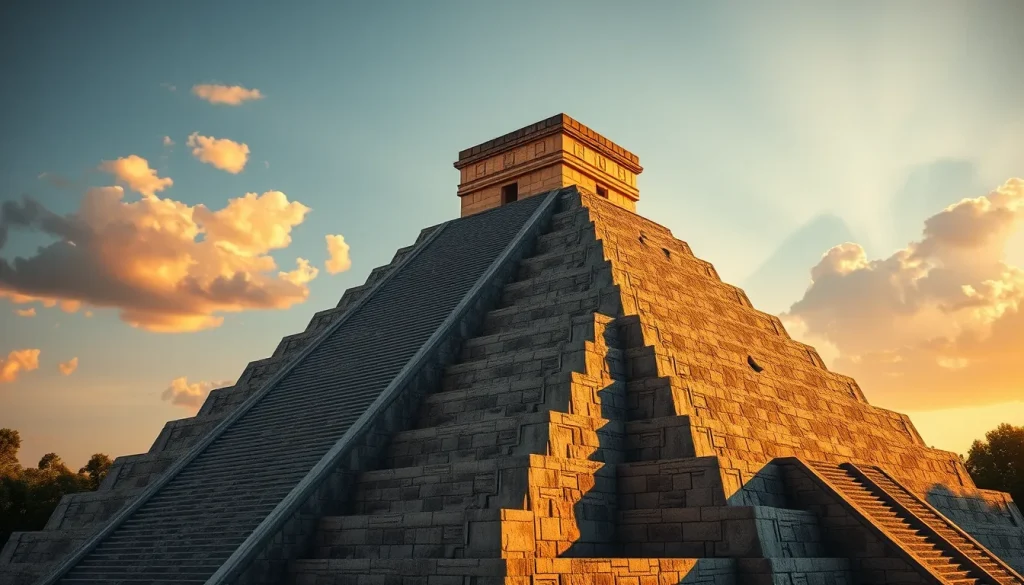
The phenomenon of the serpent shadow at El Castillo, the central pyramid of Chichén Itzá, stands as one of the most recognizable examples of Maya archaeoastronomy. Twice each year, during the spring and autumn equinoxes, sunlight bathes the structure in a specific manner that casts a series of triangular shadows along the balustrade of the northern staircase. These shadows connect to form the undulating image of a feathered serpent, widely associated with the deity Kukulkán. While popularly described as an event occurring precisely on the equinox, recent archaeological research indicates the temporal patterns of light and shadow are more nuanced. Understanding this effect requires an analysis of the pyramid’s geometry, the solar cycle, and the historical context of its construction.
Main Explanation
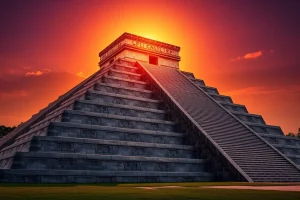
The visual effect known as the descent of Kukulkán is fundamentally a product of architectural geometry interacting with solar positioning. As the sun sets on the days surrounding the equinoxes, its angle relative to the pyramid creates a play of light and shadow across the nine stepped terraces of the structure’s northern face. According to architectural studies, the sunlight casts seven triangles of light and shadow that appear to creep downwards along the stairway. This sinuous pattern mimics the movement of a snake, specifically a diamond-backed serpent, which seems to come to life as the sun sinks lower toward the horizon.
The geometry of El Castillo is precise enough to facilitate this effect over a period of time rather than a single moment. Observations indicate that the effect is viewable for a week before and after each equinox, suggesting the builders achieved a broad alignment rather than a pinpoint date-specific trigger. The pyramid’s orientation is critical to this phenomenon. A line across the pyramid’s base coincides with the orientation of the summer-winter solstice, establishing a cardinal framework upon which the equinoctial alignments are built. The slopes of the pyramid are also specific; the edges maintain a slope of approximately 37 degrees, while the sides are steeper at roughly 47 degrees. These angles, combined with the height of the structure at 30 meters including the temple, create the necessary conditions for the shadows to project correctly onto the staircase balustrades.
Evidence & Sources
Archaeological and archaeoastronomical evidence regarding the serpent shadow has evolved over time. Early interpretations often relied on visual observation and general astronomical knowledge. However, formal studies have provided rigorous data. A seminal paper by Tomás García-Salgado, published in the Nexus Network Journal in 2010, analyzed the history of the line and the sunlight effect. García-Salgado noted that neither the event nor the specific geometry used to build the pyramid is reported in the extant Mayan codices. This lack of textual evidence leaves researchers to rely on physical alignment and architectural analysis to determine intent.
More recently, a study published in Arqueología Mexicana in 2026 has rethinking how the phenomenon is understood. The research team, including Orlando Casares Contreras and Arturo Montero García, found that the temporal patterns in light and shadow are not as simple as a precise equinox event. Their work suggests that the display occurs across a broader window of time, challenging the popular narrative that it happens only on the exact day of the equinox. This aligns with earlier observations from the Exploratorium’s Ancient Observatories project, which noted the week-long visibility window. The convergence of these sources indicates that while the effect is intentional, the modern emphasis on the precise equinox date may be a simplification of a more complex astronomical design.
Deep Dive Analysis
Location
El Castillo dominates the center of the Chichén Itzá archaeological site in the Tinúm Municipality of Yucatán, Mexico. It is part of a UNESCO World Heritage Site and serves as the focal point of the ancient city’s ceremonial center. The structure is positioned to maximize visibility from the Great North Platform, ensuring that the shadow effect could be witnessed by large gatherings of people.
Construction and History
Constructed between the 8th and 12th centuries CE, the temple building is formally designated by archaeologists as Chichen Itza Structure 5B18. It is built primarily of limestone. A critical historical fact established by archaeological investigation is that an earlier, smaller pyramid is concealed beneath the current one. This layering suggests that the site underwent significant renovation or expansion, potentially refining the astronomical alignments over time. The current structure stands 24 meters high without the temple and 30 meters with it, resting on a base of 55.3 meters.
Architecture
The architecture is defined by its Mesoamerican step-pyramid style. The structure features four staircases, one on each side, leading to the temple at the summit. The northern staircase is the specific locus of the serpent shadow phenomenon. The precision of the masonry allows for the sharp definition of shadows required to create the triangular segments. The slope angles are not uniform across all surfaces; the edges are calculated at 37°29’44”, while the sides are 47º19’50”. These variations are essential for the light to interact with the terraces to produce the seven distinct triangles of shadow described in architectural analyses.
Astronomical Interpretation
The primary astronomical interpretation is that the pyramid functions as a calendar marker for the equinoxes. The setting sun during these periods aligns with the northwest or northeast stairway (sources vary on the specific cardinal nuance, though the northern face is consistent) to produce the serpent effect. According to some interpretations referencing the Popol Vuh, the effect can be interpreted as the myth of the gods of the Heart of Sky coming to the Sovereign Plumed Serpent. However, it is crucial to distinguish that the Popol Vuh is a K’iche’ text, while Chichén Itzá is Yucatec, indicating this interpretation may be a later syncretic layer rather than original Classic Maya intent.
Archaeological Evidence
Physical evidence supports the intentionality of the design. There are two reliable facts cited in geometric studies: first, a line across the pyramid’s base coincides with the orientation of the summer-winter solstice; second, the concealment of an earlier pyramid suggests iterative design. The major question remaining in archaeology is whether the light and shadow effect was intended or occurs accidentally. Given the solstice alignment and the complexity of the structure, most scholars lean toward intentionality, despite the absence of codex reports confirming the specific shadow play.
Alternative Interpretations
Alternative interpretations focus on the temporal flexibility of the event. The 2026 study by Casares Contreras et al. implies that the phenomenon is part of broader temporal patterns in light and shadow rather than a singular equinoctial miracle. This suggests the pyramid may have been used to mark a season rather than a specific day. Additionally, some researchers propose that the serpent imagery is a byproduct of the step-pyramid form common throughout Mesoamerica, rather than a unique feature designed solely for this effect. However, the specific alignment with the equinox sunset argues against it being purely accidental.
Scholar Consensus
The scholarly consensus acknowledges the effect as a sophisticated integration of architecture and astronomy. While the 2010 analysis by García-Salgado highlights the lack of written records, the physical evidence of solstice and equinox alignments supports the view that the Maya builders possessed advanced surveying knowledge. The 2026 research reinforces this by adding nuance to the timing, suggesting the Maya understood the sun’s movement over a period of days rather than fixating on a single calendar date. The structure is widely accepted as a testament to Maya cosmological knowledge.
Visitor Misconception
A common visitor misconception is that the serpent shadow appears only on the exact day of the spring or autumn equinox. In reality, the effect is viewable for a week before and after each equinox. Furthermore, tourists often believe the shadow represents a literal god descending in real-time, whereas archaeologically it is understood as a symbolic manifestation of the god Kukulkán, representing cyclical time and agricultural renewal. The belief that the effect is a modern accident is also prevalent, but the solstice orientation of the base suggests deliberate design.
FAQ
Does the serpent shadow only appear on the exact day of the equinox?
No. Research indicates the effect is viewable for a week before and after each equinox, not just on the precise day.
Was the shadow effect intended by the Maya builders?
While no codices explicitly report it, the solstice orientation of the base and geometric precision suggest the effect was intentional.
How many triangular shadows form the serpent?
The phenomenon is composed of seven triangular shadows cast by the stepped terraces of the pyramid.
Leave a Reply