
Short Answer
The Maya numeral system stands as one of the most significant intellectual achievements of the pre-Columbian Americas. Developed by the Maya civilization of Mesoamerica, this system allowed for complex astronomical calculations, architectural planning, and the tracking of deep time through the Long Count calendar. To read Maya numerals effectively, one must understand that they operate on a vigesimal, or base-20, structure rather than the decimal base-10 system common in modern Western mathematics. This system is positional, meaning the value of a symbol depends on its placement, and it notably includes a symbol for zero, a concept that was rare in ancient mathematics.
Main Explanation
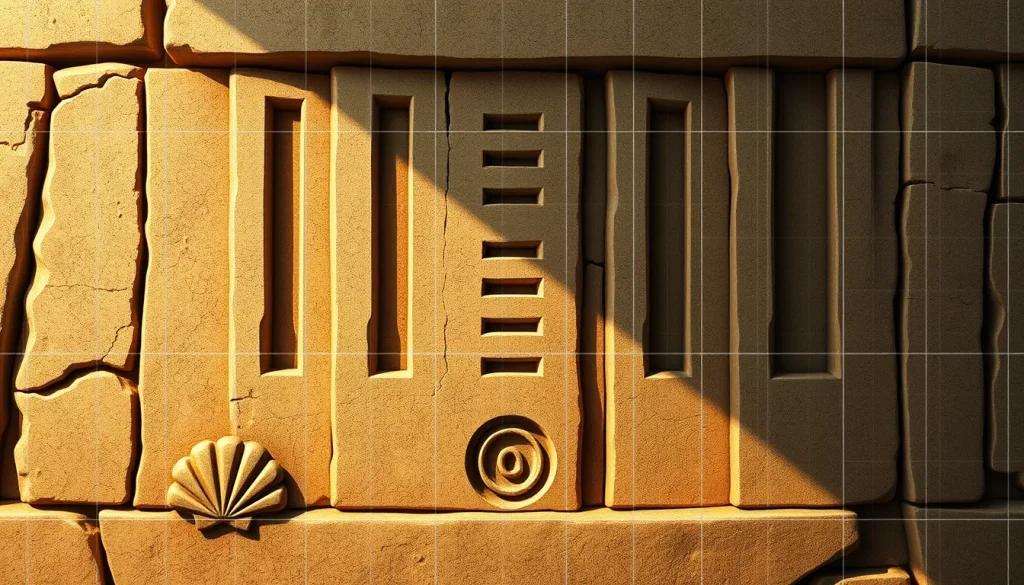
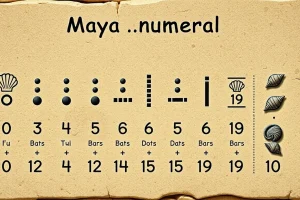
Reading Maya numerals begins with recognizing the three fundamental symbols used to construct all numbers. The first symbol is the dot, which represents a value of one. The second is the bar, which represents a value of five. The third is the shell glyph, which signifies zero. These symbols are combined additively within a single level to represent numbers from zero to nineteen. For example, the number thirteen is written as three dots placed above two horizontal bars. The dots represent three units, and the bars represent ten units, totaling thirteen. No more than four dots or three bars are used in a single position; once the value reaches twenty, the notation moves to the next positional level.
The positional nature of the system is vertical. Unlike Hindu-Aabic numerals which are written horizontally from left to right with powers of ten increasing to the left, Maya numbers are written vertically from bottom to top. The lowest position represents the ones place (20 to the power of 0). The position immediately above it represents the twenties place (20 to the power of 1). The next position up represents the four-hundreds place (20 to the power of 2), and so on. To calculate the total value, one sums the products of the symbol value and its positional power. For instance, the number thirty-three is written with a single dot in the second position (representing one twenty) and the symbol for thirteen in the bottom position. The calculation is (1 × 20) + 13 = 33.
There is a critical modification to this pure vigesimal system when used in the context of the Calendar Long Count. In standard mathematics, the third position would represent 400 (20 × 20). However, in the Long Count calendar system, the third position represents 360 (18 × 20). This adjustment was made to align the mathematical system with the approximate 360-day civil year (Haab). Therefore, when reading dates inscribed on stelae or codices, one must be aware of this irregularity in the third positional value. Numbers greater than 399 or 7999 follow these positional rules, stacking vertically to represent increasingly large values such as 8,000 or 160,000.
Evidence & Sources
Archaeological and textual evidence for the Maya numeral system is abundant across the Maya region, spanning from the Preclassic to the Postclassic periods. The primary sources for understanding these numerals include stone monuments, such as stelae and lintels, as well as surviving bark-paper books known as codices. The Dresden Codex, for example, contains astronomical tables that rely heavily on these vigesimal calculations to predict celestial events like eclipses and the cycles of Venus. The numerals found in the codices are often written in a shorthand bar-and-dot notation, while monumental inscriptions may use elaborate head-variant glyphs where each number from zero to nineteen is represented by a distinctive deity head.
Modern academic research has verified the consistency of this system across different Maya sites. Sources such as the Foundation for the Advancement of Mesoamerican Studies (FAMSI) provide detailed analyses of glyph books that break down the numerical notations found at sites like Palenque, Mexico. These studies confirm that the shell glyph for zero was not merely a placeholder but functioned as a true number within calculations, allowing for complex arithmetic operations including addition and subtraction. The use of the zero symbol is testimony to the sophistication of Maya mathematics, predating or developing concurrently with other ancient civilizations that utilized zero. Digital heritage projects now utilize 3D scanning and LiDAR to document these numerals on eroded monuments, ensuring that the numerical data preserved in stone is not lost to time.
Deep Dive Analysis
Definition
The Maya numeral system is defined as a vigesimal (base-20) positional numeral system. It is characterized by the use of three specific symbols to represent all numerical values and relies on vertical positioning to denote powers of twenty. This system was integral to Maya cosmology, facilitating the recording of historical time and astronomical cycles.
How it works
The system operates on an additive principle within each level and a multiplicative principle between levels. Within a single horizontal row, dots are added to bars (e.g., one bar and two dots equal seven). When a level reaches twenty, a dot is placed in the level above, and the lower level resets. The values increase vertically: the bottom level is units (1s), the next is twenties (20s), the next is four-hundreds (400s), and so forth. In the Long Count calendar context, the third level is modified to 360s (18 × 20) to approximate the solar year.
Key components
There are three essential components to the notation. First, the Dot (•) represents the value of 1. Second, the Bar (—) represents the value of 5. Third, the Shell (☉) represents the value of 0. These symbols are combined to form the twenty vigesimal digits (0-19). For example, the number 19 is written as four dots above three bars. The shell glyph is crucial as it allows for the representation of empty positional values, enabling the system to function positionally.
Example
Consider the number 429. In a pure vigesimal system, this would be written with one dot in the third position (400s), one dot in the second position (20s), and nine in the bottom position (1s). However, in the Long Count context, the calculation adjusts. A standard example found in educational resources is the number 33. This is written as one dot in the second position (1 × 20) and the symbol for 13 (three dots over two bars) in the first position. The total is 20 + 13 = 33.
Historical evidence
Evidence for this system is found throughout the Maya world. The earliest known use of the zero symbol in the Americas appears on Maya monuments dating back to the 4th century CE. The Dresden Codex provides the most mathematically explicit sacred corpus, showing astronomical tables that utilize these numerals for precise predictions. Inscriptions at Palenque demonstrate the use of these numbers to record dynastic histories and calendar rounds.
Common misconceptions
A common misconception is that the Maya system is identical to a base-10 system scaled up. It is strictly base-20, likely derived from counting on both fingers and toes. Another misconception is that the zero was only a placeholder; evidence suggests it was treated as a number in its own right during calculations. Additionally, some assume the system was purely horizontal; while head-variant glyphs can be arranged horizontally, the bar-and-dot notation is predominantly vertical. Finally, New Age interpretations sometimes assign mystical properties to the numbers themselves, whereas archaeological evidence points to pragmatic usage in astronomy, agriculture, and governance.
FAQ
What do the dots and bars represent in Maya numerals?
A dot represents the value of one, and a bar represents the value of five. They are combined additively within a single positional level.
How is zero represented in the Maya number system?
Zero is represented by a shell glyph. It functions as a true number and a placeholder in the positional system.
Why is the third position in the Long Count 360 instead of 400?
The third position is modified to 18 × 20 (360) to approximate the 360-day civil year (Haab) used in the Maya calendar.
Leave a Reply